
GLP-1 medications like Ozempic, Wegovy, Mounjaro, Zepbound, and Foundayo (orforglipron) have changed the way people lose weight. But the medication is only part of the story.
What you eat while on a GLP-1 makes a real difference. It can determine how much weight you lose, how healthy you feel, whether you lose muscle or protect it, whether you feel your best or spend the week fighting nausea, and whether the results last.
As a dietitian who works with GLP-1 patients every day, I built this guide to answer the question I hear most: what does a GLP-1 diet plan actually look like? You’ll find a full week at a glance below, plus the free printable meal plan with all the recipes.
Disclaimer: This post is for informational purposes only. Talk with a registered dietitian or your prescriber for guidance specific to you.
Why a GLP-1 Diet Plan Looks Different
GLP-1 medications slow digestion, reduce hunger, and ease the constant mental pull toward food that many people describe as food noise. That quiet is often the biggest shift patients notice.
But slower digestion also means less room for food. With a smaller appetite, it becomes harder to get enough protein and fiber, and both matter more than ever. Protein protects your muscle, and fiber helps prevent or manage side effects. In a typical weight-loss plan, you often want more food volume to feel full. On a GLP-1, it works the other way. You want smaller, more concentrated portions so you can still fit in everything your body needs. That is why a generic weight-loss diet doesn’t work well here.
The 4 Goals of a GLP-1 Diet Plan
- Support your weight loss by choosing foods that keep you full and your blood sugar steady.
- Protect your muscle while the number on the scale drops.
- Reduce side effects like nausea, constipation, and sulfur burps.
- Build habits you can keep long after you reach your goal weight.
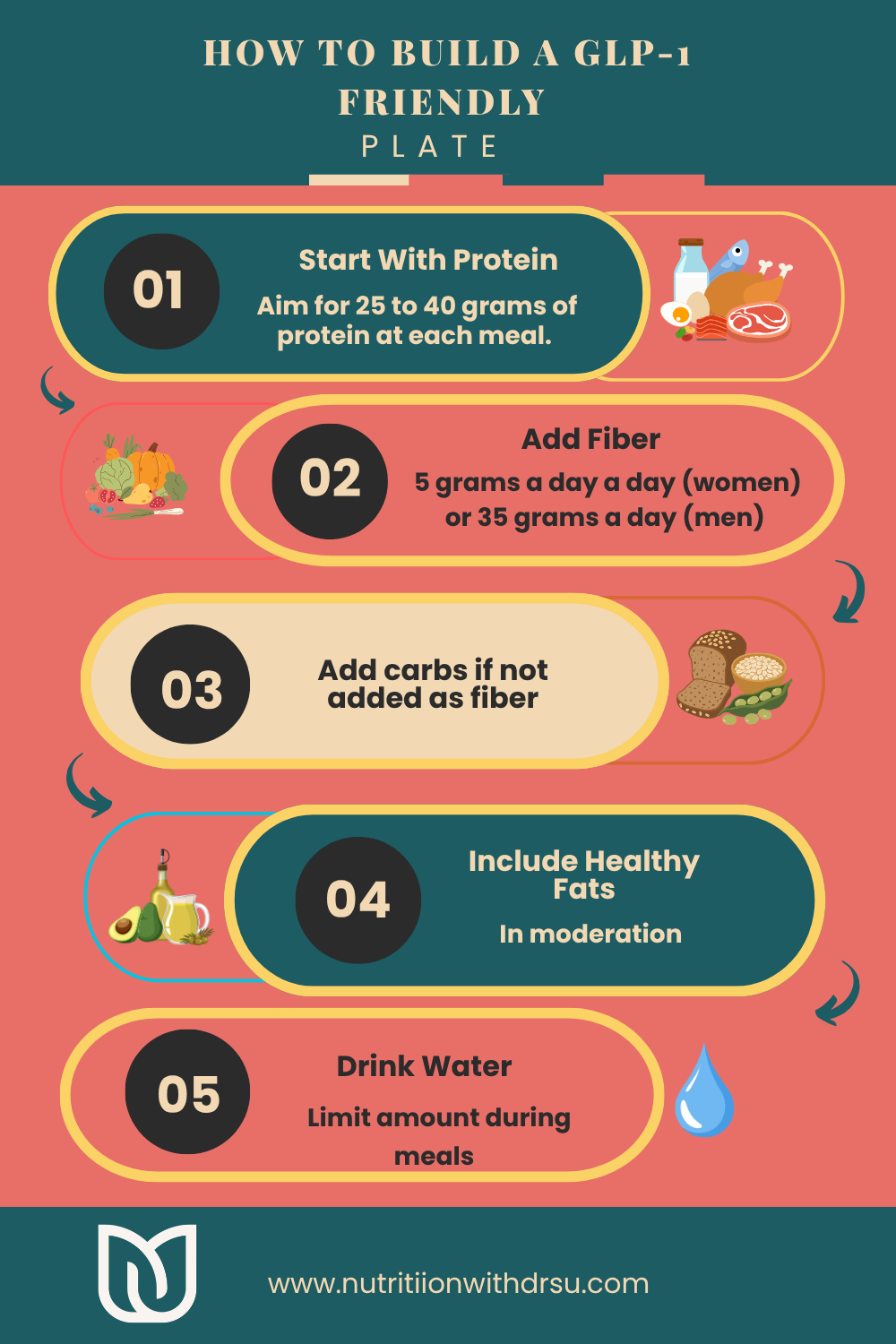
How to Build a GLP-1 Friendly Plate
Start With Protein
Here’s something that surprises a lot of my patients: it’s not really about eating more chicken.
When your appetite is low, forcing down more chicken, beef, fish, eggs, or other traditional forms of protein might not work. A few bites in, you’re full, and you might not meet your protein needs.
One fix that tends to help: think about your sides, not just your main. Peas, edamame, lentils, and beans carry protein and fiber in the same bite, so a simple swap, like lentils instead of rice, can do double duty. Stirring Greek yogurt into sauces adds protein the same way.
Aim for 15 to 30 grams of protein at breakfast and 30 to 40 grams each at lunch and dinner. Breakfast is where most people struggle, so if you get at least 15 grams in the morning, that’s a good start. The number matters, but so does how you get there. Keeping muscle while you lose weight helps keep your metabolism working for you.
On harder days, protein powder, bars, or shakes are a real option, not something to feel bad about.
Add Fiber
Vegetables are the obvious answer, and they’re a great place to start. Non-starchy vegetables like spinach, broccoli, peppers, and zucchini add fiber, vitamins, and volume without adding many calories to your plate. That fiber also helps prevent one of the most common GLP-1 side effects: constipation.
But vegetables are not your only source. Other high-fiber foods include:
- Legumes, like beans, lentils, and chickpeas
- Fruits, like berries, pears, and apples
- Whole grains, like oats, quinoa, and brown rice
These are carbohydrates too, and you don’t need to cut them to make progress on a GLP-1. Carbs with fiber slow digestion, help steady your blood sugar, and keep you fuller longer. Refined carbs like white bread, chips, or sugary cereal digest fast and leave you hungry again soon after. Keep these portions to roughly one cup or less, or about a quarter of your plate.
Eat protein- and fiber-rich foods first. Because these medications can drop your appetite quickly, front-loading the most nutrient-dense foods helps you get what your body needs before you feel full.
Some people also need to add fiber supplements. See my Amazon list of the supplements I suggest for people on a GLP-1.*
*As an Amazon affiliate, I make a small commission at no cost to you.
Include Healthy Fats in Moderation
Fat doesn’t need much attention here. A little olive oil, avocado, or nuts adds flavor and helps your body absorb certain vitamins. Nuts also add protein and fiber, so they do more work than people give them credit for.
A little goes a long way. You don’t need a strategy for fat the way you do for protein or fiber, just enough to make your meals satisfying.
Drink Enough Water
On a GLP-1, thirst can get just as quiet as hunger.
With appetite and thirst cues both muted, it’s easy to go hours without realizing you haven’t had anything to drink. And dehydration doesn’t just leave you tired, it can make constipation worse, which is already one of the most common complaints among people on these medications.
In my practice, I tell patients to aim for about half their body weight in ounces of water a day, and at least 2 liters (about 8 cups) no matter what. Water is the obvious choice, but it doesn’t have to be the only one. Sparkling water counts, and so do water-rich foods like soup and watermelon, especially on days when even a full glass of anything feels like too much.
Your 5-Day GLP-1 Meal Plan at a Glance
Here’s what the five days look like. Each day has about 1,400-1,500 calories and is high in protein and fiber. Your needs may differ, so think of this as a starting point your dietitian can adjust.
| Breakfast | Snack | Lunch | Snack | Dinner | |
| Day 1 | Chocolate Protein Yogurt with Raspberries | Strawberry Blueberry Smoothie | Deconstructed Burger Bowl | Orange | Salmon with Carrot & Lentil Mash |
| Day 2 | Egg White Omelet with Cottage Cheese, Orange | Strawberries & Almonds | Salmon with Carrot & Lentil Mash | Lemon Pepper Cucumbers | One Pan Lemon Shrimp & Asparagus |
| Day 3 | Cottage Cheese & Applesauce | Simple Vanilla Protein Shake | One Pan Lemon Shrimp & Asparagus, Greek Yogurt | Strawberries & Almonds | One Pan Orange, Jalapeño & Green Onion Chicken, Tuscan White Bean Soup |
| Day 4 | Chocolate Protein Yogurt with Raspberries | Orange | One Pan Orange, Jalapeño & Green Onion Chicken, Tuscan White Bean Soup | Lemon Pepper Cucumbers | Cottage Cheese Stuffed Chicken, Brown Rice |
| Day 5 | Cottage Cheese & Applesauce, Mixed Berry Fruit Salad | Strawberry Blueberry Smoothie | Cottage Cheese Stuffed Chicken, Brown Rice | Strawberries & Almonds | Deconstructed Burger Bowl |
Dinner leftovers become the next day’s lunch, so you cook less than it looks.
Download Your Free 5-Day GLP-1 Meal Plan
The printable PDF has every recipe from the week above, plus a grocery list, so you can shop once and take the guesswork out of what to eat.
Download your free meal plan here.
How Often Should You Eat on a GLP-1?
Most of my patients do best with three small meals, though this varies from person to person. Some prefer smaller, more frequent meals instead, and others do well with two meals and one or two snacks.
What matters most is not going too long without eating. Waiting until you are overly hungry tends to backfire, leading to overeating or reaching for whatever is easiest instead of what will actually make you feel good. You can also undereat and become malnourished (yes, it is possible to be overweight and malnourished at the same time).
What to Eat on Low Appetite Days
Some days, especially the first few after an injection, appetite can drop so low that it becomes hard to eat your normal meals. On those days, liquid foods are often easier to get down, like a protein shake or a smoothie. Soft foods that require little to no chewing, like Greek yogurt or cottage cheese, can also help. Hummus and nut butter are good options too.
Just do your best on these days. Pay attention to what your body can handle, and focus on getting in enough calories rather than sticking to your usual routine. Get creative with how you feed yourself; some days that might mean three real meals, and other days it might mean sipping on a shake every couple of hours.
Does the Diet Plan Change Depending on the Medication You Take?
The core nutrition principles stay the same no matter which medication you take, whether that’s Zepbound (tirzepatide), Wegovy (semaglutide), or Foundayo (orforglipron). Your body still needs enough protein, fiber, fluids, and overall calories to protect your muscle and energy while the medication reduces your appetite. The medication changes how hungry you feel. The nutrition plan is what makes sure your body still gets what it needs.
In Perimenopause or Menopause?
If you’re in perimenopause or menopause, I suggest one small change to the order you eat: a few bites of vegetables first, then your protein, and your carbs last. Eating in that order helps lower blood sugar spikes after meals, and that matters more now, since insulin resistance becomes more common as estrogen drops.
With this meal plan, that might mean a few bites of asparagus before the shrimp, or the romaine and tomatoes in the Deconstructed Burger Bowl before the beef. Just a few bites, so you still have room for your protein.
Learn more in Menopause and Insulin Resistance.
The Bottom Line
There is no single perfect way to eat on a GLP-1 medication, but the framework above gives you solid guidance. As a registered dietitian, this is what I recommend to my patients. The only difference is that I adjust it to each person’s needs, with meal ideas and foods that make sense for them. Protein first, fiber-rich foods at every meal, intentional carbs, and enough water will take you a long way, no matter which GLP-1 medication you are on.
If this guide helped you, share it with someone else starting their GLP-1 journey. It might be exactly what they need right now.

Dr. Su-Nui Escobar, DCN, RDN, FAND, is a Miami-based weight loss dietitian specializing in women in menopause who use GLP-1 medications. She holds a doctorate in clinical nutrition from the University of North Florida and is a national speaker, writer, and author of The GLP-1 Kitchen. She is a former spokesperson for the Academy of Nutrition and Dietetics.person.