
If you’re in perimenopause or menopause, eating well, moving more, and the scale still won’t budge, you’re not imagining it. One reason that almost nobody explains is insulin resistance. It usually has no symptoms, menopause raises your risk, and it can make losing weight a little harder.
When I first learned about it, it surprised me too. Most of us were never told about it. But once you understand that insulin resistance is one of the reasons you can’t lose weight as easily as before, there’s less guilt and less sense of personal failure. And you know what you can do differently, starting with simple changes like eating your salad first and taking a short walk after meals. That’s what makes it so powerful to know about.
What Is Insulin Resistance?
Insulin is the hormone that moves sugar from your blood into your cells, where it’s used for energy. Think of it as a key that opens the door.
With insulin resistance, the lock gets sticky. Your cells don’t respond to insulin as well, so your pancreas makes more of it to get the same job done. For a long time, that extra insulin keeps your blood sugar in the normal range.
That’s why insulin resistance is so easy to miss. Your blood sugar can look fine for years while your body is working harder and harder behind the scenes. Most people feel nothing at all. If it keeps going, it can lead to prediabetes and type 2 diabetes.
Why Menopause Raises Your Risk
Insulin resistance doesn’t just creep up with age. In a large study that followed more than 1,300 women through menopause, insulin resistance rose fastest in a 4-year window, from about a year and a half before the final period to two and a half years after. The researchers concluded the menopause transition itself plays a role, not only getting older.
A few changes work together:
- Estrogen drops. Estrogen helps your body use insulin well. As it declines, your body, and especially your liver, can become more resistant to insulin.
- Fat moves to your belly. Even without gaining much weight, more fat settles around your middle and deep around your organs. This deeper belly fat is one of the main drivers of insulin resistance.
- Muscle declines. Muscle is where your body stores a lot of the sugar from your meals. Less muscle means fewer places for that sugar to go.
- Sleep gets harder. Night sweats and waking up at 3 a.m. are common, and short sleep makes your body less sensitive to insulin (more on that below).
You may have also read that hot flashes are linked to insulin resistance. Studies do show a link, but it isn’t clear yet which one causes the other.
How Insulin Resistance Affects Your Weight
Insulin resistance can make it a little harder to lose weight. Here’s what we know, and what we don’t.
What we know: belly fat and insulin resistance feed each other. Deeper belly fat makes insulin resistance worse, and high insulin levels encourage your body to store fat and hold on to it. Menopause gives that cycle a push, because it shifts fat toward your middle at the same time.
What we don’t know: whether high insulin is what causes weight gain in the first place. Some researchers think high insulin drives fat storage and hunger. Others think weight gain comes first and insulin problems follow. The research can’t settle it yet.
What that means for you: you don’t need a special “insulin resistance diet.” In a year-long trial of more than 600 adults, people lost about the same amount of weight on a healthy low-carb or a healthy low-fat diet, and their insulin levels at the start didn’t predict which one worked better. The steps that help most are in the sections below.
The cycle also works in reverse. As you build muscle and lose some belly fat, your body becomes more sensitive to insulin, and the next step gets a little easier.
Clues You Might Have Insulin Resistance
There isn’t one routine test for insulin resistance, and many doctors don’t check for it. That’s a big reason so many women don’t know they have it. These clues can point you toward it:
- A growing waist, even if your weight hasn’t changed much
- Darker, velvety patches of skin on the neck or underarms, or skin tags
- High triglycerides and low HDL (“good”) cholesterol on your lab work
- Blood sugar in the prediabetes range: an A1C of 5.7 to 6.4%, or a fasting glucose of 100 to 125 mg/dL
Keep in mind that a normal blood sugar doesn’t rule out insulin resistance, because your body can keep it normal for years by making extra insulin. If any of these sound familiar, bring them up with your doctor. Cleveland Clinic explains the tests your doctor may order.
Simple Steps to Smooth Blood Sugar Spikes
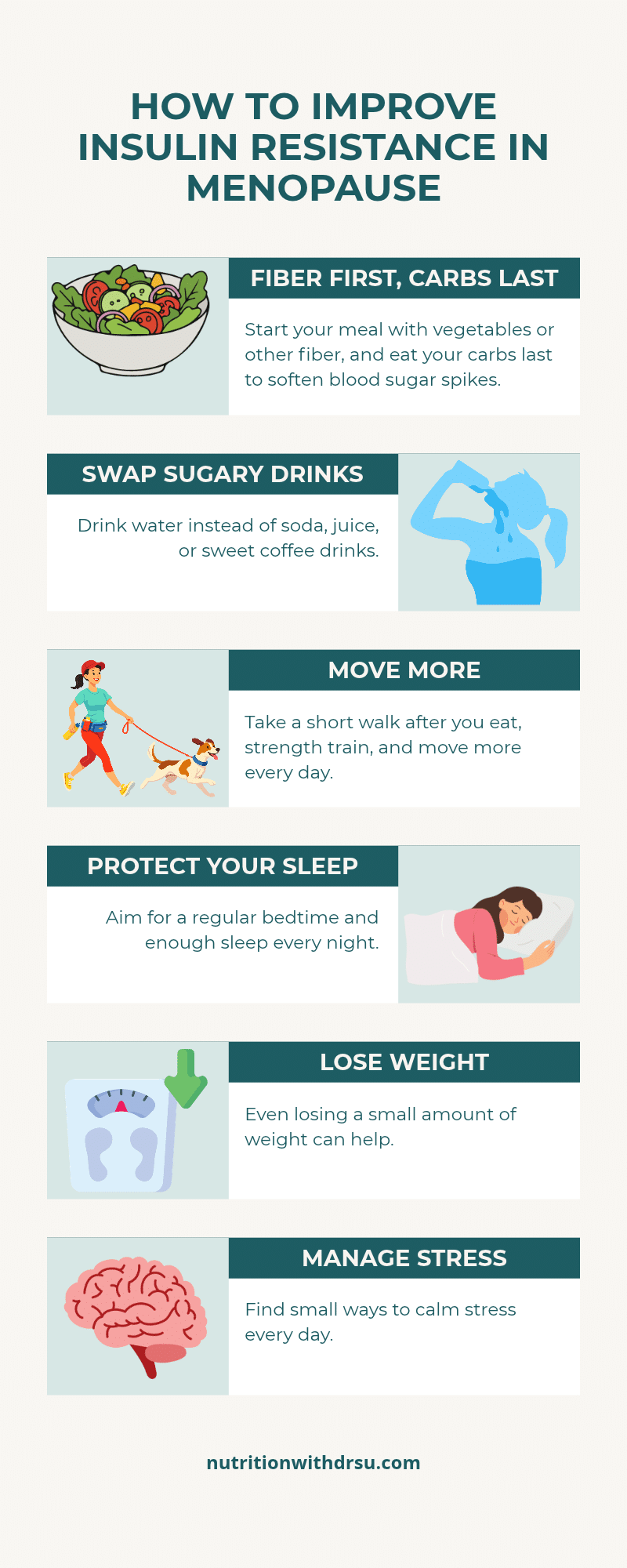
These are the easiest place to start, and you can try them at your very next meal. They lower the jump in blood sugar after you eat, which is helpful, especially if you’re already in the prediabetes range. On their own, they haven’t been shown to fix insulin resistance itself. For that, pair them with the bigger changes further down.
Eat Your Carbs Last
This is one of the simplest changes you can make, and it doesn’t take anything off your plate. You eat the same meal in a different order: vegetables and protein first, then the carbs.
What the studies show:
- In healthy adults: eating vegetables, fruit, or protein before carbs lowered the blood sugar rise after meals compared with eating carbs first or mixing everything. In a study of young women wearing glucose monitors, vegetables, then protein, then carbs kept blood sugar lower for the first one to two hours.
- In prediabetes: in a 16-week real-life study, people taught to eat their carbs last ate more vegetables and protein and lost a few pounds, and most said it was easy to stick with. Their results weren’t clearly better than the group that got standard advice, though, and their glucose tolerance didn’t change.
- In type 2 diabetes: across 17 trials, eating carbs last lowered blood sugar after meals and slightly lowered A1C over time.
What we don’t know yet: no one has tested food order in women in menopause, and we don’t know yet whether it improves insulin resistance over the long run. The studies are small and short.
How to do it with real plates:
- At a restaurant: skip the bread basket, or save a piece for later in the meal. Start with a small salad or the vegetables on your plate, then the protein, then your carbs.
- At home: start with your vegetables, then the chicken, fish, or beans, then the rice, pasta, or bread.
- When it’s cold out: have a cup of vegetable soup before your meal. A broth-based soup is a warm, easy way to get your vegetables in first.
You don’t need to wait between foods or be perfect about it. Starting with your vegetables and protein is enough.
Walk After You Eat
A short walk after a meal helps your muscles pull sugar out of your blood. Exercise after a meal lowered the blood sugar rise compared with exercising before the meal or not at all, and the sooner after eating, the better. Even short, light walking breaks lowered blood sugar and insulin after meals. Try 10 minutes after your biggest meal of the day.
Swap Sugary Drinks for Water
Soda, sweet tea, juice, and sweetened coffee drinks send sugar into your blood quickly, without anything to slow it down. Swapping them for water, sparkling water, or unsweetened tea or coffee is an easy place to start.
How a CGM Can Help
A continuous glucose monitor (CGM) is a small sensor you wear on your arm that tracks your blood sugar all day and night. Some are now sold over the counter, without a prescription, like Lingo. (This is an affiliate link. If you buy through them, I may earn a small commission at no extra cost to you.)
A CGM can show you how your body responds to the steps above, like eating your carbs last or walking after dinner, and to things like a bad night of sleep. That feedback can be motivating. In studies, CGMs worked best as part of a lifestyle or education program, not on their own.
A few things to keep in mind:
- A CGM doesn’t diagnose insulin resistance.
- Look for patterns over several days, not one spike after one meal. Everyone’s blood sugar goes up after eating, and that’s normal.
- The research on CGMs in people without diabetes is still early. Experts are still working out what the numbers should be for people with prediabetes.
When I wore a CGM myself, what surprised me most was that the food I ate didn’t change my overall blood sugar as much as walking at night did. Maybe that’s because my food was already on point. So instead of going crazy changing my diet, I added walks at night, and that really helped. I would never have known that without wearing one.
What Improves Insulin Resistance Over Time
These are the bigger changes. They take longer, but they make your body more sensitive to insulin itself.
Strength Training
Muscle soaks up sugar from your blood, and building more of it is one of the best things you can do. Strength training on its own lowers fasting insulin and insulin resistance. The effect is a little smaller in women over 40, but it’s still there. Aim for 2 to 3 sessions a week. Weights, resistance bands, and body weight all count.
Move More Every Day
Every kind of exercise helps. A review of 86 trials found that walking, strength training, combined workouts, and interval training all lowered insulin resistance. Interval training had the biggest effect. The amount that helped most was about 4 and a half hours of brisk walking a week, or less time if the exercise is harder. You don’t have to start there. Every walk counts.
Lose Some Belly Fat
Losing weight, especially belly fat, makes your body more sensitive to insulin. You don’t need to lose a lot. Losing 5 to 7% of your starting weight helps people at high risk for diabetes. For a 180-pound woman, that’s about 9 to 13 pounds.
While you lose weight, protein helps you hold on to the muscle you’re working to build. Aim for 80 to 120 grams a day, spread across your meals. My high-protein foods list can help you get there.
Protect Your Sleep
When healthy women cut their sleep by about an hour and a half a night for six weeks, their bodies became less sensitive to insulin, even though their body fat didn’t change. So losing sleep works against you. But in another study, adding an extra hour of sleep for six weeks improved sleep but didn’t fix insulin resistance on its own. Protect your sleep, and pair it with the other steps here.
Manage Stress
Stress can make it harder to sleep, move, and eat the way you want to. The research on stress hormones and insulin resistance is mixed, but taking care of your stress supports everything else on this list.
A few things I recommend to my patients: practice mindfulness and be kind to yourself. Try not to take things so personally, and let things go when you can. And honestly, if you need to see a therapist, go for it. It’s 2026.
Ask Your Doctor About Hormone Therapy
If you’re considering hormone therapy for menopause symptoms, it may help here too. A review of 17 trials in postmenopausal women without diabetes found that hormone therapy lowered insulin resistance, and estrogen alone lowered it more than estrogen with a progestogen. Hormone therapy isn’t right for everyone, so talk it through with your doctor.
Can GLP-1 Medications Help With Insulin Resistance?
GLP-1 medications like semaglutide (Ozempic, Wegovy), tirzepatide (Mounjaro, Zepbound), and the oral orforglipron (Foundayo) can help, mostly through the weight they help you lose.
How they help: GLP-1s lower blood sugar in several ways, like helping your body release insulin when you eat. And as you lose weight, especially fat, your body usually becomes more sensitive to insulin. In one trial, insulin sensitivity improved in step with weight and fat loss. Tirzepatide improved it a bit more than semaglutide, even beyond its extra weight loss.
What they don’t do: they don’t replace the basics. That trial was in people with type 2 diabetes, so we know less about women without diabetes. And GLP-1s work best alongside strength training and enough protein, which protect your muscle, one of your best tools against insulin resistance.
GLP-1s also work in menopause. A 2026 review found they help with weight in menopausal women, though larger and longer studies are still needed. Learn more in my post on GLP-1s and menopause.
I recommend GLP-1s for some of my patients because I acknowledge that biology plays a big role.
The Bottom Line
Insulin resistance is common in menopause; it often has no symptoms, and it can make losing weight a little harder. It isn’t your fault, and you’re not stuck with it.
These changes are small enough to be worth trying even if you only suspect you have insulin resistance and can’t confirm it yet. Start with whatever makes the most sense to you, or whatever feels easiest. Maybe that’s eating your salad first or a short walk after dinner. Once it feels like a habit, add the next step, and keep building from there.
A registered dietitian can help you put it all together in a way that fits your life. If you’d like to work with me, you can book an appointment here.

Dr. Su-Nui Escobar, DCN, RDN, FAND, is a Miami-based weight loss dietitian specializing in women in menopause who use GLP-1 medications. She holds a doctorate in clinical nutrition from the University of North Florida and is a national speaker, writer, and author of The GLP-1 Kitchen. She is a former spokesperson for the Academy of Nutrition and Dietetics.