

Menopause brings a lot of changes at once. Your body changes, your weight may shift, and the things that worked in your 30s may not work anymore. If you’ve tried diet after diet and feel more confused than when you started, you’re not alone.
A registered dietitian can help you sort through it. Here’s what a dietitian does, how it’s different from a nutritionist, and how working with one can help you in menopause, including if you’re on a GLP-1.
Registered Dietitian vs Nutritionist
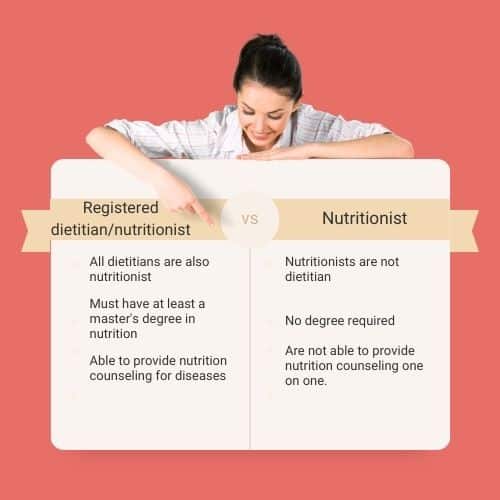
When it comes to nutrition advice, people often confuse a registered dietitian (RD) with a nutritionist. Although both are nutrition professionals, they differ in qualifications and scope of practice.
A registered dietitian has completed specialized education and training, including at least a master’s degree. They must also pass an exam administered by the Commission on Dietetic Registration (CDR).
All registered dietitians are also nutritionists. But a nutritionist is not necessarily a registered dietitian.
Nutritionists have less formal education requirements but may still possess valuable knowledge about how different foods can affect your health.
For the purpose of this blog, we refer to registered dietitians, as they have the qualifications to address specific concerns related to menopause.
How Can a Dietitian Help With Menopause?
A dietitian looks at your whole picture, including your health, your schedule, the foods you love, and what has gotten in the way before, and builds a plan that fits your real life.
Get the Most From a GLP-1 Medication
If you’re on a GLP-1 medication like semaglutide (Ozempic, Wegovy), tirzepatide (Mounjaro, Zepbound), or orforglipron (Foundayo), food still matters. When your appetite is smaller, every bite counts. A dietitian can help you:
- Get enough protein to protect your muscle while you lose weight
- Eat in a way that eases side effects like nausea and constipation
- Make sure you’re still getting the nutrients you need
- Build habits that help you keep the weight off, on or off the medication
Learn more in my post on GLP-1s and menopause.
Manage Your Weight in a Way That Lasts
Weight gain is one of the most common frustrations in menopause, and losing weight often feels harder than it used to. A dietitian can help you figure out what’s really going on and make changes you can keep, without crash diets or cutting out foods you enjoy. For more on why this happens, read why you gain weight during menopause.
Manage Health Conditions
Dietitians are trained in medical nutrition therapy, which means using food to help manage health conditions. This matters in menopause, when the risk of many of these conditions goes up. A dietitian can help with:
- Gut issues, like bloating, constipation, acid reflux, or IBS
- High cholesterol and heart health
- Prediabetes and type 2 diabetes
- High blood pressure
Support and Accountability
Knowing what to eat is only part of it. A lot of women come to a dietitian because they need support and someone to check in with. Regular visits help you stay on track, adjust as your body changes, and work through the weeks that don’t go as planned.
Support Your Relationship With Food
Menopause and eating disorders are more connected than many women realize. The changes in your body, your weight, and your life can bring up old struggles with food or start new ones. A dietitian can help you build a healthier relationship with food, alongside your therapist and doctor. Learn more about menopause and eating disorders.
FAQ
Do dietitians have specialties?
Yes. Many dietitians focus on certain areas, like weight loss, diabetes, sports nutrition, or menopause. Dietitians also have different approaches. Some are more structured, and some are more flexible. Ask about their experience and approach before you start, so you find someone who’s a good fit for you.
What should I look for in a dietitian for menopause?
Look for the RD or RDN credential, experience with women in midlife and menopause, and, if you’re on a GLP-1, experience with these medications. Most of all, look for someone who meets you where you are, without judgment.
Does insurance cover visits with a dietitian?
Many insurance plans cover visits with a registered dietitian, but coverage varies. Call your plan and ask about “medical nutrition therapy” visits.
The Bottom Line
A registered dietitian can help you eat well on a GLP-1, manage your weight, and build a healthier relationship with food, with a plan that fits your life. Menopause is a big transition, and you don’t have to figure it out alone.
I’m a registered dietitian who works with women in midlife, most of them in perimenopause or menopause, and many on a GLP-1. I offer virtual visits in English and Spanish, and I accept insurance. If you’re ready for support, learn more about working with me.
Dr. Su-Nui Escobar, DCN, RDN, FAND, is a Miami-based weight loss dietitian specializing in women in menopause who use GLP-1 medications. She holds a doctorate in clinical nutrition from the University of North Florida and is a national speaker, writer, and author of The GLP-1 Kitchen. She is a former spokesperson for the Academy of Nutrition and Dietetics.