

Mounjaro Diet Plan for Type 2 Diabetes and Weight Loss
What you eat on Mounjaro makes a big difference. It affects your blood sugar after every meal, whether you keep muscle as you lose weight, how you feel day to day, and whether the results last.
Mounjaro and Zepbound are the same compound, tirzepatide, and both are well known for weight loss. The difference is who they’re prescribed for. If you have type 2 diabetes, you’ll usually be prescribed Mounjaro because it’s the version made for type 2 diabetes. Zepbound is the version for weight management in people without diabetes.
This is a nutrition plan for people with type 2 diabetes taking Mounjaro: what to eat, how much, and in what order, so your meals support blood sugar control and weight loss at the same time. (If you don’t have diabetes and you’re on Zepbound, my Zepbound Diet Plan is the better fit for you.)
Medical disclaimer: This content is for educational purposes only and is not a substitute for medical advice, diagnosis, or treatment.
Want a copy to keep on your fridge? Get the free printable Mounjaro diet plan here.
The Goals of a Mounjaro Diet Plan
A good Mounjaro meal plan helps you:
- Keep blood sugar steady, without big spikes after meals or drops that leave you shaky.
- Eat enough protein to protect your muscle while you lose weight.
- Get enough vitamins and minerals, even when you’re eating a lot less.
- Have fewer side effects.
- Build habits that keep the weight off.
That last one matters. When people stop GLP-1 medications, up to two-thirds of the weight lost can come back within a year. The habits you build now are your insurance.
Eat Your Plate in the Right Order
Changing the order you eat your food is a simple change that makes a big difference for your blood sugar.
Start with your vegetables and protein. Eat your carbs last.
A 2025 review of 17 studies in adults with type 2 diabetes found that eating carbs last lowered blood sugar one hour after the meal by about 43 mg/dL, compared with eating carbs first or everything mixed together. Blood sugar was still lower two hours later, and A1C came down slightly in the longer studies.
Eating protein first also helps on Mounjaro for another reason. Your appetite is smaller, and you might only get through half your plate. If the half you finish is the protein and vegetables, you’ve covered the most important part.
Here’s the order:
- Vegetables
- Protein
- Carbs
If you get full before you finish, that’s okay. Just don’t save the carbs to eat on their own later. Carbs eaten alone, without protein, can spike your blood sugar. If you want them later, pair them with a protein, like crackers with cheese or fruit with Greek yogurt.
Building Your Plate
Every meal has the same four parts. When you can, eat them in this order: non-starchy vegetables first, then protein, then carbs, with a little fat along the way. You don’t have to get it perfect every time. Think of it as a guide, and it works really well.
Breakfast Food Choices
Breakfast is where you can get creative. It often looks different from lunch and dinner, and that’s fine. The goal is a breakfast with protein and fiber, because that combination helps keep your blood sugar under control through the morning.
If you can add non-starchy vegetables, great: spinach or mushrooms in your eggs, or tomato on the side. If not, protein and fiber still get you there. Think Greek yogurt with berries and chia seeds, or eggs with a whole-grain tortilla.
Protein can be harder to fit in at breakfast, especially when your appetite is low in the morning. If you can’t reach 3 ounces, do your best. It also helps to know that breakfast protein is usually measured in grams, not ounces. Look at the grams of protein on your yogurt, cottage cheese, or protein powder label.
A little trick: some people add protein powder or a fiber supplement to their coffee to help reach their targets.
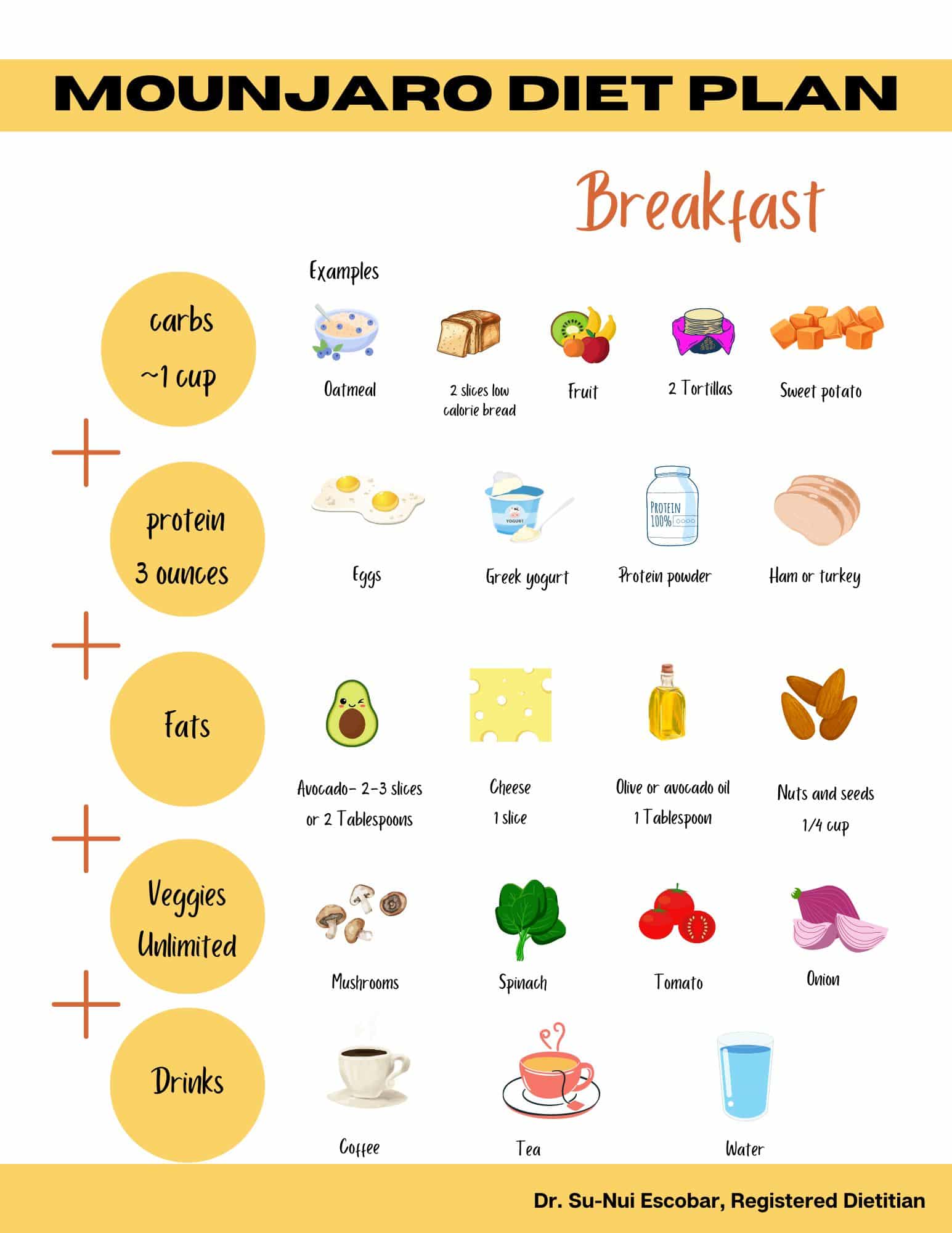
Get a free PDF here (printable)
Lunch and Dinner Food Choices
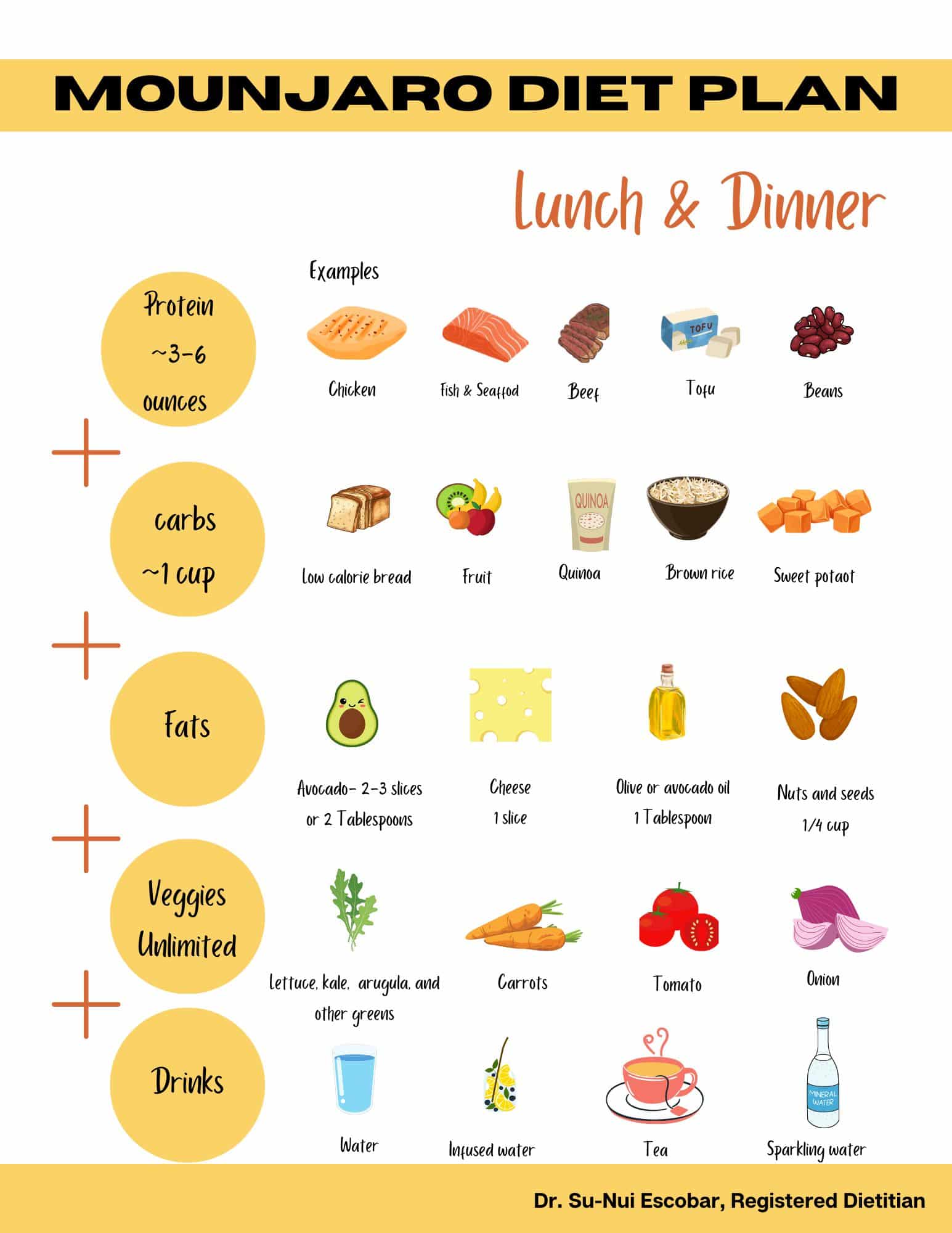
Measuring Without a Scale
You don’t need a food scale. Your hand works well:
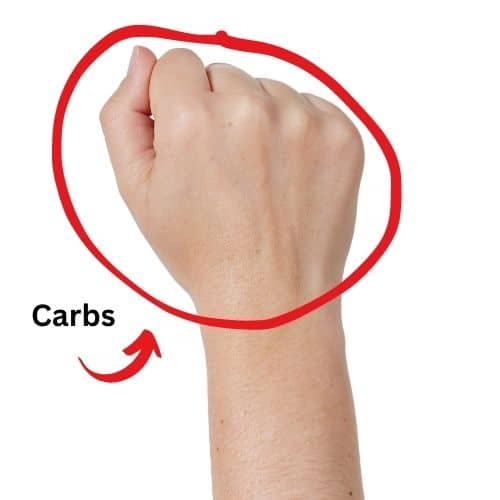
Carbohydrates: 1 cup (30-45 grams) = The fist of your hand
Bread, tortillas, wraps: 1 large or 2 small
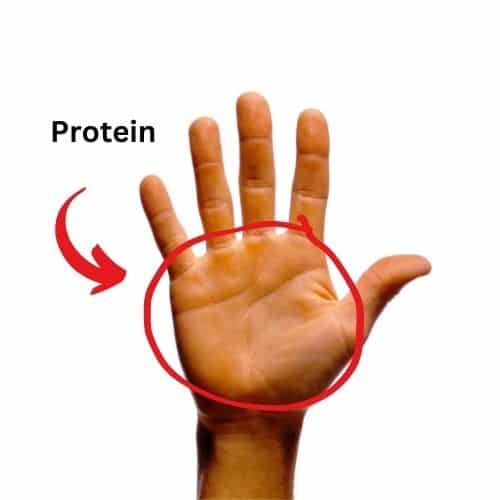
Protein: 3 to 6 ounces per meal = The palm of your hand
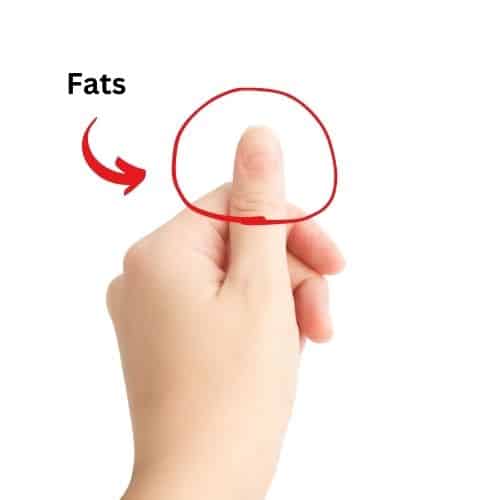
Fat: 1 tablespoon = The tip of your thumb
For avocados, you can have 2 tablespoons
Non-starchy vegetables: Unlimited
Snacks
It’s up to you. Some people like eating only meals, and that’s fine. But if your appetite is low and it’s hard to eat enough at your meals, snacks can fill the gap.
Others love snacking. If that’s you, keep it to 1 or 2 snacks a day, and plan them ahead so you always have one on hand that won’t spike your blood sugar. That usually means a snack with protein, or a carb paired with protein.
A few of my favorites are in 15 Non-Dairy High-Protein Snacks for Weight Loss and macro-friendly snacks.
Eating to Ease Side Effects
Nausea, constipation, and other stomach side effects are common on Mounjaro, especially in the first weeks and after each dose increase. What you eat can make them better or worse.
- Have protein with your meals.
- Eat throughout the day, in small meals, instead of once a day. Large meals make nausea and vomiting more likely.
- Get enough fiber from vegetables, fruit, beans, and whole grains.
- Drink enough water. Fluids and fiber together help with constipation, and staying hydrated matters for your kidneys too.
- Go easy on fatty and fried foods, especially in the first days and after a dose increase.
For more help, see my semaglutide nausea relief guide (the same tips work on Mounjaro), Semaglutide Constipation Relief: A Step-by-Step Protocol That Works, and Mounjaro foods to avoid.
FAQ
I’m in perimenopause or menopause. Does that change anything?
It can. When estrogen drops, your body often becomes more insulin resistant, so your blood sugar can run higher than it used to. It also gets easier to lose muscle and to store fat around your belly, and both make blood sugar harder to manage. I explain how this works in Can Menopause Cause High Blood Sugar?
The plan stays the same, and it helps even more at this stage. Eating your carbs last helps with the higher blood sugar. Getting enough protein helps you keep the muscle that menopause and weight loss both tend to take.
If your numbers started creeping up around the time your periods changed, that’s common, and you didn’t do anything wrong.
What kind of carbs should I eat on Mounjaro?
The type of carbs you choose makes a big difference. Choose carbs that come with fiber: whole grains like brown rice, quinoa, barley, and oatmeal; beans and lentils; fruit; and starchy vegetables like sweet potato, yuca, and malanga. Keep refined carbs, sweets, and sugary drinks to a minimum.
Keep the portion to about 1 cup per meal, eat your carbs last, and always pair them with protein.
Can Mounjaro cause low blood sugar? What should I watch for?
Mounjaro on its own rarely causes low blood sugar. It helps your body release insulin when your blood sugar is up, and not so much when it isn’t. In a study of people taking only tirzepatide for their diabetes, there were no serious lows.
The concern is combining Mounjaro with other diabetes medicines that lower blood sugar, like insulin or sulfonylureas. Add in eating much less than usual, which is exactly what Mounjaro does to your appetite, and blood sugar can drop too low.
That’s one reason this plan includes carbs at every meal, paired with protein.
Signs of low blood sugar include shakiness, sweating, a fast heartbeat, dizziness, confusion, and sudden hunger. Drinking a small glass of juice or eating a candy can help.
If you take insulin or a sulfonylurea, talk to your doctor before you start Mounjaro and again as your eating changes. Your doses may need to come down as you lose weight.
Why am I losing less weight than people on Zepbound?
People with type 2 diabetes tend to lose less weight on these medications than people without diabetes, even on the same dose. In the big tirzepatide studies, people without diabetes lost about 21% of their body weight on the highest dose after 72 weeks. People with type 2 diabetes on the same dose lost about 15%. Real-world numbers for semaglutide (Ozempic) show the same pattern: about 8% in people living with diabetes and 11% without.
So slower weight loss doesn’t mean Mounjaro isn’t working for you. Look at your A1C, your blood sugar readings, your energy, and how your clothes fit too. Those are real wins, and I wrote a whole post on non-scale victories because they matter.
The Bottom Line
Mounjaro can do a lot for your blood sugar and your weight, and the food you eat makes it work even better. Eat your vegetables and protein first and your carbs last. Get enough protein, pair your carbs with protein, and eat small meals.
And count the wins that don’t show up on the scale, like a better A1C and steadier blood sugar.
The studies that showed the biggest weight loss on these medications all included regular support from a registered dietitian. If you’d like help building a plan around your own medicines, foods, and schedule, work with me.
If you’d rather start in the kitchen, my cookbook The GLP-1 Kitchen is full of recipes made for eating on these medications.
Always talk to your prescribing doctor about your diet and physical activity.

Dr. Su-Nui Escobar, a Registered Dietitian/Nutritionist in Miami, FL, is dedicated to empowering women in perimenopause and menopause to live healthier, more satisfying lives.
With a doctorate in clinical nutrition from the University of North Florida, she has expertise in menopause and weight loss, including the unique challenges faced by those on weight loss medications.
Su-Nui’s passion for her field is evident in her previous role as the Academy of Nutrition and Dietetics spokesperson.