

Menopause and Constipation: Causes and Treatment
If you’re going through menopause and have been experiencing constipation, you’re not alone. Constipation is common during this transition, and your hormones might be to blame!
As you move through menopause, estrogen and progesterone drop, and that can slow things down in your gut. Hormone changes can also affect how your body holds on to water, which can leave stool harder and drier.
The good news: a few simple changes help most women feel better.
Causes of Constipation In Menopause
Constipation is common during menopause and is often attributed to hormonal and lifestyle changes.
Stress and Anxiety
Menopause can be a stressful time, and stress affects your gut. When you’re stressed, digestion often changes, so taking care of your mental well-being also helps keep things moving.
Age
As we age, digestion naturally slows down, which can also contribute.
Physical Inactivity
Lack of physical activity is a well-known cause of constipation. Movement matters for regular bowel movements, along with other aspects of menopause.
Medications
Certain medications, including some blood pressure or depression drugs, can cause constipation. GLP-1 medications are especially common culprits, since they slow digestion as part of how they work. If you’re on one of these, see this guide to managing GLP-1 constipation for more specific tips.
Practical Tips for Managing Menopause Constipation
Dietary Changes
Eat More Fiber
Eating more fiber-rich foods is key to combating this issue. Insoluble fiber helps move food through the intestines. Soluble fiber absorbs water, which helps form stool. Together, both types help your body excrete waste more regularly.
The Academy of Nutrition and Dietetics recommends about 14 grams of fiber for every 1,000 calories you eat. For most women, that’s about 25 grams a day.
Tips for increasing fiber in your diet:
- Incorporate whole grains: whole-wheat bread, pasta, oats, buckwheat, quinoa, and brown rice
- Eat fruit and vegetables raw and with the skin on when you can, for more insoluble fiber. Good options: strawberries, blackberries, kiwi, prunes, papaya, peaches, apricots, plums, apples, pears, pineapple, artichokes, celery, eggplant, zucchini, potatoes with skin, broccoli, and leafy greens like spinach, kale, and arugula
- Legumes are your friends: beans, lentils, chickpeas, added to salads, soups, or stews
- Nuts and seeds, snacked on or sprinkled onto meals
- Add oatmeal and other soluble fiber sources, which draw water into your gut to help soften stools
Increase fiber gradually to avoid gas or bloating.
Eat Foods That Help With Constipation
A few foods do more than just add fiber:
- Kiwi: two green kiwis a day can help keep things moving.
- Prunes: high in fiber and sorbitol, a natural sugar alcohol that draws water into the gut
- Flaxseed: fiber and healthy fat together, both of which help things move
- Yogurt with live cultures: supports the gut bacteria that keep digestion running smoothly
A couple of servings a day of any of these is an easy, real-food way to help.
Drink Enough Water
Staying hydrated is always important for good health, but it matters more during menopause. Dehydration contributes to constipation, creating an uncomfortable cycle of discomfort and distress.
Drink at least eight glasses of water daily to ensure that stools remain soft and well-lubricated as they move through your intestine.
Exercise Regularly
Moving more helps your gut move too.
Yoga and stretching can also help some women, and they’re a good way to lower stress.
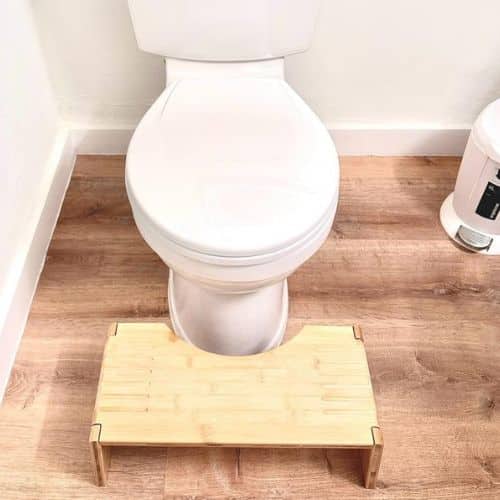
Use a Toilet Stool
The squatting position is believed to benefit digestion and elimination. If you want the benefits of squatting without actually doing it, consider using a toilet stool.
This simple device raises your knees above your hips while you sit on the toilet, putting you in an optimal position for easier bowel movements. Give it a try — you may be pleasantly surprised by the increased comfort and ease.
Over-the-Counter Medications
When lifestyle changes and natural remedies aren’t enough, over-the- counter options include:
- Bulk-forming laxatives (psyllium/Metamucil): add bulk and improve stool consistency
- Stool softeners (docusate sodium/Colace): moisten stool so it moves more easily
- Stimulant laxatives (bisacodyl/Dulcolax, sennosides/Senokot, Ex-Lax): stimulate intestinal muscles to contract
- Osmotic laxatives (polyethylene glycol 3350/Miralax): draw water into the colon to soften stool
Check with a healthcare professional before starting any of these. Overusing laxatives can lead to dependency, so use them as a last resort and for the shortest time needed.
When to Talk to Your Doctor
If you’re experiencing persistent or severe constipation, talk to your doctor. Sometimes, these symptoms can indicate a more serious problem. Your doctor will help determine the best course of action to relieve your symptoms.
In addition, if you find that these lifestyle changes and over-the-counter medications aren’t helping to manage your constipation, discussing other treatments with your doctor is a good idea. In some cases, prescription medications may be needed to help get your digestive system back on track.
Finally, consult a physician immediately if you see blood in your stools.
The Bottom Line
Constipation is common in menopause, but it doesn’t have to be your new normal. Start with fiber, water, and movement, add a few helpful foods like prunes or kiwi, and talk to your doctor if things don’t improve.
Foods and recipes that can help with constipation

Dr. Su-Nui Escobar, a Registered Dietitian/Nutritionist in Miami, FL, is dedicated to empowering women in perimenopause and menopause to live healthier, more satisfying lives.
With a doctorate in clinical nutrition from the University of North Florida, she has expertise in menopause and weight loss, including the unique challenges faced by those on weight loss medications.
Su-Nui’s passion for her field is evident in her previous role as the Academy of Nutrition and Dietetics spokesperson.