
Do you find yourself with more sugar cravings now than you did in your twenties? You might blame it on menopause, and you would be right. Here is why it happens, and what actually helps.
Causes of Menopause Sugar Cravings
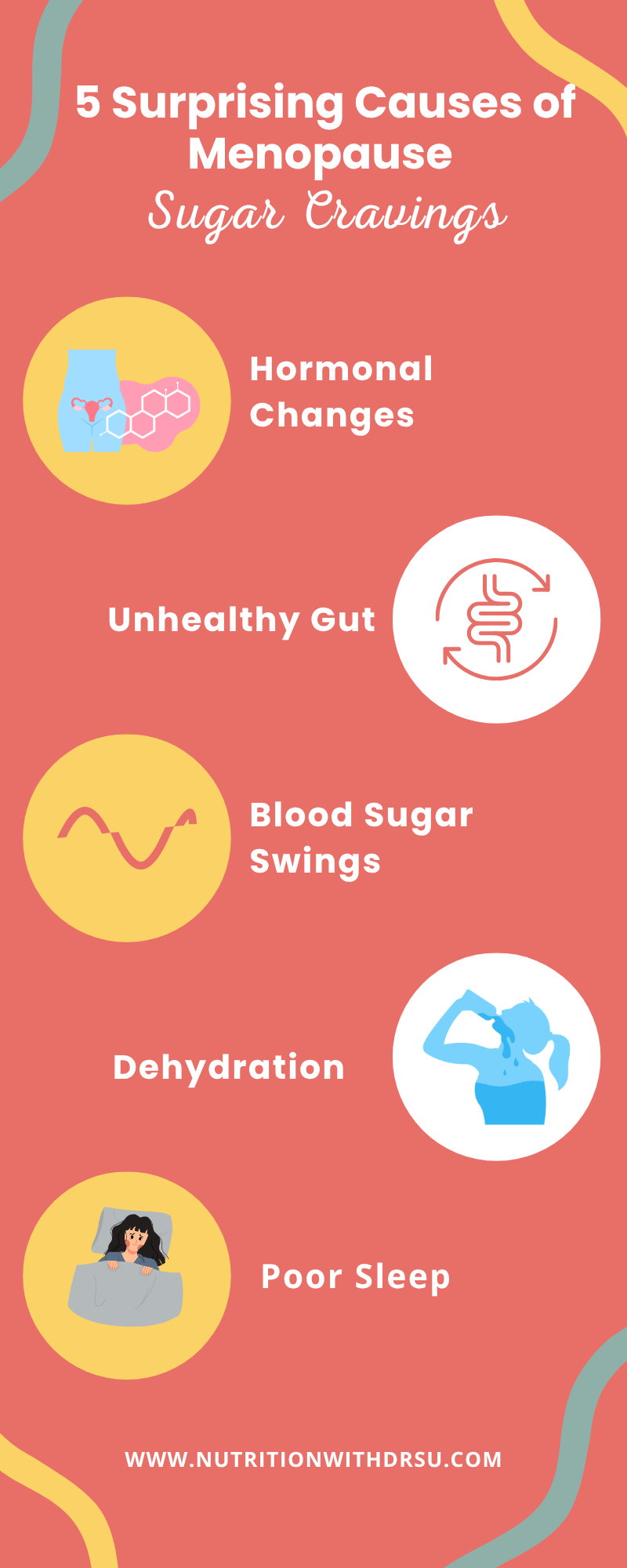
1. Hormonal Changes
Hormone changes play a role in menopause sugar cravings. Changes in estrogen and progesterone levels influence the stress hormone cortisol. Stress and higher cortisol can increase appetite, and many people find they crave sugary, fatty, and salty foods when they’re stressed.
Sugar also lights up the reward center in your brain, which is part of why it feels so good and why you may want more. Addiction-like patterns have been seen mostly in animal studies, so we don’t know how much this applies to people.
2. Unhealthy Gut
You can improve your gut health by eating more nutrient-dense, high-fiber foods and cutting back on sugar and processed food. Start with one change at a time to make it stick.
Early research suggests your gut bacteria may affect what you crave, and a diet high in sugar can shift the balance of bacteria in your gut. We still need more research to know how much this drives cravings.
Probiotics
One effective way to improve gut health is by eating more probiotics, found naturally in foods like kimchi, plain yogurt, sauerkraut, sourdough bread, and tempeh.
Read more about menopause and gut health.
3. Blood Sugar Swings
When you eat carbs or sugar on their own, your blood sugar can spike and then drop quickly. That fast drop is what often triggers a craving: your body senses the dip and pushes you to eat more sugar to bring it back up. Over time, this can turn into a cycle, with blood sugar swings feeding more cravings.
Balancing your meals with protein, fiber, and healthy fat, rather than carbs alone, helps slow that rise and fall and can ease cravings.
Curious how your own body responds? A continuous glucose monitor (CGM) is a small sensor you wear on your arm that shows your blood sugar in real time, so you can see which meals cause the biggest swings. Some are available without a prescription. Learn more about how a CGM can help.
4. Dehydration
Sugar cravings can also be plain old thirst in disguise. Thirst and hunger can feel alike, so before you reach for something sweet, try a glass of water and wait a few minutes. Staying hydrated throughout the day can take the edge off cravings.
Women need about 11.5 cups (2.7 liters) of fluid a day from food and drinks combined. For most women, that means about 9 cups from drinks.
5. Poor Sleep
Lack of good-quality sleep is a common symptom in perimenopause and menopause, and it can alter the hormonal balance around hunger and appetite. Restricted sleep has been shown to decrease leptin and increase ghrelin, leading to more hunger and more cravings, particularly for high-carb, high-fat, high-sugar snacks.
Aim for 7 to 9 hours. Read more about how lack of sleep can affect your weight and cravings.
What To Do About It
Add Protein and Healthy Fats to Your Breakfast
Replacing a sugary breakfast with one high in protein keeps you satisfied longer and helps prevent cravings later. A sugary breakfast like cereal digests quickly, drops your blood sugar, and makes you want more sugar soon after. Aim for 15 to 30 grams of protein at breakfast. For ideas, see my high-protein breakfasts for women over 40.
Eat Satisfying Meals at Regular Intervals
It’s much easier to resist sugar cravings when you’re not fighting them on an empty stomach. Aim for meals rich in vegetables, lean protein, healthy fats, and complex carbohydrates like whole grains or quinoa.
Minimize Sugar Spikes
A few small changes to how and when you eat can blunt the blood sugar swings that drive cravings in the first place:
- Eat vegetables with a bit of fat at the start of your meal, before the carbs.
- Include protein with your meals.
- Move within 60 to 90 minutes after eating. A simple 10-minute walk can make a real difference.
Less of a spike means less of a crash, and less of a crash means less of a craving.
Reconsider Your Drinks
Drinks can pack a surprising amount of sugar, and the more you drink, the more you want, since sugar metabolizes quickly and your levels drop again fast, triggering more cravings.
Take a Short Break From Added Sugar
Some people find that cutting back on added sugar for a week or so makes sweets taste sweeter and cravings easier to manage. Focus on added sugar, like soda, candy, and pastries, not fruit. It’s not easy, so try it when you’re ready.
Destress
Stress increases how much we eat overall, especially cravings for high-calorie, high-sugar foods, and it can make your blood sugar harder to manage, another driver of cravings. Meditation, regular exercise, mind-body practices, positive affirmations, journaling, therapy, or simply a different attitude toward a stressful day can all help.
Plan Ahead for Sugar Cravings
Cravings are often predictable: after a stressful day, after dinner, or out of boredom. Learn your own triggers, and have something ready to do instead of reaching for sugar. Sometimes something as simple as a glass of water and a 20-minute wait is enough.
Avoid Temptations
If you pass the same donut shop every day, take a different route. If your family keeps sweets in the house, stock satisfying, lower-sugar snacks instead.
Be Kind to Yourself
Cutting back on sugar is hard. If you give in to a craving, that’s not failure; just keep going. Being too hard on yourself tends to lead to more cravings, not fewer.
If You’re on a GLP-1 Medication
Many women on a GLP-1 medication, like semaglutide (Ozempic, Wegovy), tirzepatide (Mounjaro, Zepbound), or orforglipron (Foundayo), notice their sugar cravings quiet down. It’s one of the most common changes with these medications. The habits in this post still matter, because they help you keep cravings in check for the long run. Learn more in my post on GLP-1s and menopause.
Conclusion
Building these habits will do more than cut your sugar cravings; it will leave you with a healthier mind and body too. Start with one big change, like fixing your sleep, or one small one, like adding a probiotic food, and build from there once it sticks. Celebrate every small win along the way.
Dr. Su-Nui Escobar, DCN, RDN, FAND, is a Miami-based weight loss dietitian specializing in women in menopause who use GLP-1 medications. She holds a doctorate in clinical nutrition from the University of North Florida and is a national speaker, writer, and author of The GLP-1 Kitchen. She is a former spokesperson for the Academy of Nutrition and Dietetics.