

Forgetting why you walked into a room. Losing the word you were looking for. If that sounds familiar, or you want to keep it from happening, what you eat can help.
The MIND diet was designed to protect the brain as we age, and large studies show that people who ate closest to it had a lower risk of developing Alzheimer’s. It’s not a fix for brain fog, but a practical way to eat that supports your brain, heart, and blood sugar at the same time.
Here’s what the MIND diet is, what the research really shows, and a 5-day meal plan to get you started.
What is the MIND Diet?
MIND stands for Mediterranean-DASH Intervention for Neurodegenerative Delay. It blends two well-studied eating patterns: the Mediterranean diet and the DASH diet (Dietary Approaches to Stop Hypertension).
What makes it different is focus. Instead of “eat more plants,” the MIND diet names the specific foods most linked to brain health, like leafy greens, berries, beans, nuts, fish, and olive oil, and tells you how often to eat them. It also lists five foods to cut back on.
The MIND diet isn’t a weight-loss plan. But it’s built on fiber-rich, filling foods, so many women find it fits well with their weight goals in menopause.
The Mediterranean Diet
The Mediterranean diet is based on the traditional cuisines of Greece, Italy, and other Mediterranean countries.
The Mediterranean diet is high in vegetables, fruits, whole grains, beans, nuts, seeds, and olive oil. This meal pattern also includes lean meat and wine, while strongly discouraging processed foods. It also encourages enjoying meals with friends and family.
This diet is inclusive and delicious, making it easy to follow and, therefore, effective.
The DASH Diet
You might assume that the DASH diet is just a low-sodium diet. However, it isn’t the traditional low-sodium diet. In addition to restricting sodium, it emphasizes foods high in calcium, potassium, magnesium, and fiber.
The DASH diet includes vegetables, fruits, whole grains, fat-free or low-fat dairy, fish, poultry, beans, and nuts. This diet aims to limit sodium and foods high in saturated fats.
The MIND diet’s pros and cons are closely tied to both diets.
Can the MIND Diet Help With Menopause Brain Fog?
Brain fog is one of the most common things women bring up in perimenopause and menopause.
The good news: menopause brain fog is usually temporary, and it’s different from dementia. It tends to come and go, and it often shows up alongside poor sleep, hot flashes, and mood changes.
No diet has been tested for menopause brain fog itself. In the largest MIND diet trial, people who followed it thought more clearly after three years, but so did the group eating a healthy, lower-calorie diet without the MIND rules. So what helped was eating better overall.
That’s why I like the MIND diet as a framework, not a cure. The foods it focuses on (leafy greens, berries, beans, nuts, fish, and olive oil) are the same ones that steady your blood sugar and support your heart.
What helps most with brain fog:
- Protect your sleep. Brain fog often travels with poor sleep.
- Eat regular meals with protein and fiber, so you’re not running on empty.
- Move most days. Exercise helps your brain and your sleep.
- Ask your doctor about hot flashes and night sweats if they wake you up.
- Get your vitamin B12 and vitamin D checked if you’re low on energy.
MIND Diet Pros and Cons
MIND Diet Pros
The biggest benefit of the MIND diet is that it gives your brain the fiber and nutrients it needs.
MIND Diet and Memory
In a large study of older adults, people who ate the most MIND diet foods kept their memory and focus sharper for longer.
That matters because memory and focus can slowly slip with age. For some people it stays mild, like forgetting where you put your phone. For others, it becomes more serious, like dementia.
MIND Diet and Alzheimer’s Disease
Alzheimer’s starts in the brain years before you notice any signs. That means there’s time to take care of your brain now.
In the same study group, people who followed the MIND diet most closely were 53% less likely to get Alzheimer’s over about four and a half years. This kind of study shows a link, not proof.
Links Between MIND Diet Foods and Brain Health
Some MIND diet foods have their own research.
People who ate one serving of leafy greens a day kept their memory sharper as they aged.
Berries have natural plant compounds that may help memory and mood.
I like the MIND diet because it’s a healthy way to eat that you can stick with. We still need more research on the brain, but these same foods also support your heart, blood sugar, and gut.
MIND Diet Cons
The research is still new. In the biggest study so far, the MIND diet worked about as well as a healthy, lower-calorie diet, but not better.
Food is also just one piece. Sleep, movement, and managing stress matter for your brain too.
MIND Diet Principles
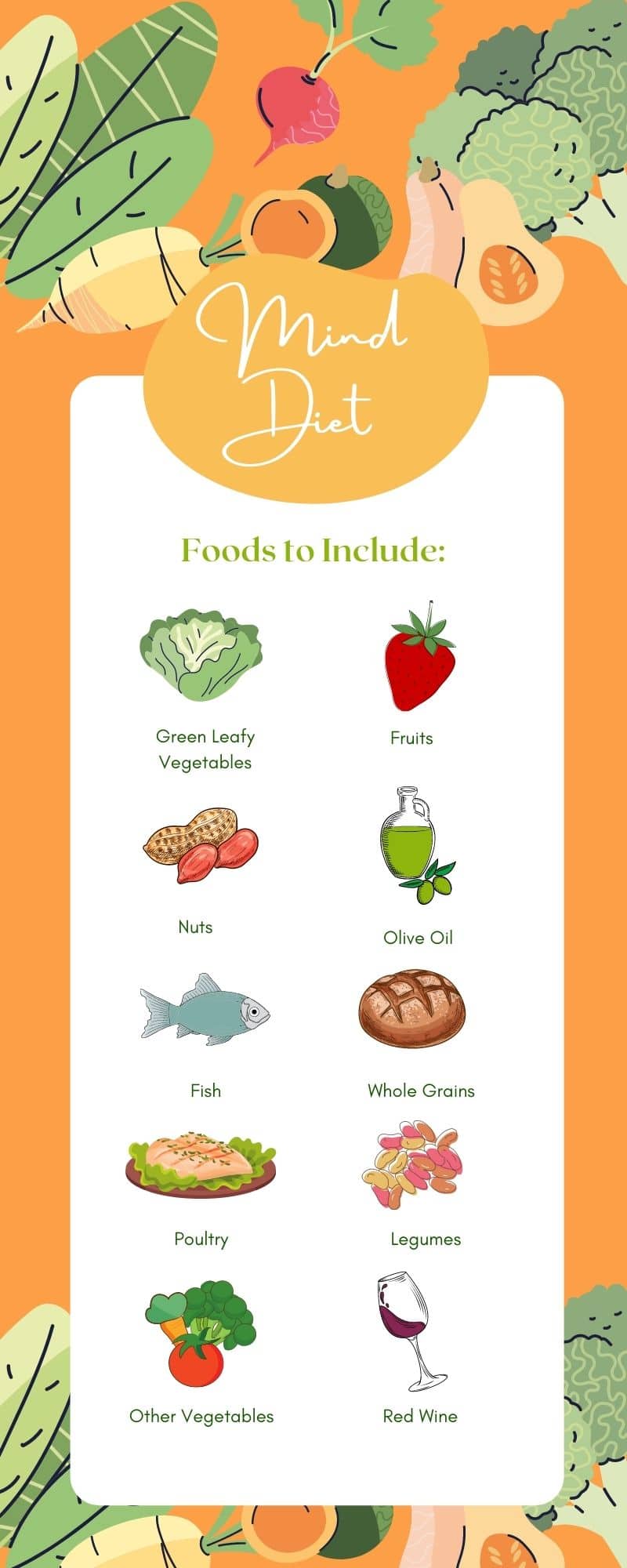
10 Foods to Include
- Eat green leafy vegetables most days, such as kale, arugula, spinach, and collard greens.
- Include fresh vegetables every day (two servings or more). If fresh vegetables are not available, frozen vegetables are a good choice.
- Eat berries at least two times per week.
- Snack on nuts or add nuts or seeds to your meals at least five days a week.
- Enjoy olive oil daily.
- Eat at least three servings of whole grains per day.
- Eat fish every week. Choose fatty fish such as salmon, mackerel, herring, and sardines often.
- Include lean proteins such as poultry at least twice per week.
- Include legumes like beans, garbanzo, and lentils at least three times a week.
- Drink wine in moderation (one glass a day).
5 Foods to Limit or Avoid
- Butter and margarine. Use healthier fats such as olive oil or ghee more often and limit or avoid butter and margarine.
- Cheese. Limit to one slice a week.
- Fried foods. Try using an air fryer as a way to enjoy your favorite fried foods.
- Sweets and pastries. Limit eating sweets to a few times a week. If you have a sweet tooth, choose healthier versions of your favorite foods or just eat them less often and in small quantities.
- Red meat. Limit to one time a week.
MIND Diet Shopping List
| Food Type | Foods to Eat | Tips |
| Fish/seafood | Fatty fish like salmon, tuna, herring, and mackerel are preferred, but all types of fish are a good choice. All seafood. | Avoid or limit fried and salted fish and seafood. |
| Poultry | Chicken, turkey, eggs. | Avoid or limit fried chicken and turkey. |
| Legumes | Beans, lentils, chickpeas, and all types of legumes. | If you buy canned legumes, rinse them in water before using. |
| Vegetables | Green leafy vegetables. All fresh or frozen vegetables. | Limit canned vegetables, fried vegetables, or vegetables cooked with large amounts of fat. |
| Fruit | Berries. All fresh and frozen fruits. | Avoid canned fruits packed in syrup. Limit fruit juice. |
| Nuts and seeds | Flaxseeds, walnuts, almonds, hazelnuts, pistachios, Brazil nuts, cashews, peanuts, sunflower, and sesame seeds. Nut butter such as almond and peanut butter. | Avoid salted nuts. Nut butter: choose natural versions and avoid added sugar. |
| Whole grains | Oats, whole wheat pasta, farro, millet, quinoa, buckwheat, brown rice, whole wheat bread, and other whole grains. | Limit white rice, white pasta, and anything without fiber. |
| Healthy fats | Olive oil | Limit butter and avoid margarine. |
| Herbs and Spices | Nutmeg, cinnamon, turmeric, ginger, garlic, cayenne, black pepper, basil, oregano, cumin, thyme, and clove. | Limit spices with salt. |
| Treats | Dark chocolate. | Limit all sweets and pastries. |
5 Day Sample Meal Plan
Monday
- Breakfast: Greek yogurt with blueberries, topped with walnuts.
- Lunch: Chicken breast sandwich on whole wheat bread with spinach or arugula and Dijon mustard instead of mayo. Serve with a piece of fruit.
- Dinner: Quinoa bowl with salmon, roasted vegetables, and a drizzle of olive oil.
- Snack: Baby carrots and bell pepper strips with hummus.
Tuesday
- Breakfast: Whole wheat toast with avocado, arugula, and a sliced hard-boiled egg.
- Lunch: Greek salad with grilled chicken and chickpeas (no feta). Dress with olive oil and lemon.
- Dinner: Whole wheat pasta with vegetables, tomato sauce, and 1 ounce of your favorite cheese.
- Snack: A handful of almonds.
Wednesday
- Breakfast: Overnight oats with strawberries and your favorite nuts.
- Lunch: Spinach or arugula salad topped with shrimp or fish, with olive oil and vinegar. Add farro or serve with whole wheat crackers.
- Dinner: One-pan chicken, sweet potatoes, and veggies, roasted in olive oil.
- Snack: An apple with 1 tbsp natural peanut butter.
Thursday
- Breakfast: Scrambled eggs with spinach and your favorite vegetables, plus whole wheat toast.
- Lunch: Lentil vegetable soup with grilled chicken and whole wheat crackers.
- Dinner: Shrimp kebabs with whole wheat couscous.
- Snack: A handful of walnuts.
Friday
- Breakfast: Oatmeal cooked with apples, topped with nuts.
- Lunch: Leafy green salad with roasted veggies and grilled salmon.
- Dinner: Baked chicken breast, brown rice, beans, and salad with olive oil and lime.
- Snack: A cup of strawberries or raspberries with a square of dark chocolate.
Conclusion
The research on the MIND diet is still growing, but what we have so far is encouraging. People who eat this way tend to keep their memory sharper as they age and are less likely to develop Alzheimer’s. It’s not a cure for brain fog, and it won’t work better than any other healthy diet. But it gives you a clear, simple way to eat more of the foods that support your brain.
In my expert opinion, the MIND diet is good for your brain and great for your overall health. Plus, the food is delicious, and it’s easy to follow. Start with one change this week, like adding a handful of berries or a side of leafy greens.
“The MIND Diet: Pros and Cons” was written by Su-Nui Escobar, DCN, RDN, FAND, in collaboration with Registered Dietitian Meagan Murphy.
Dr. Su-Nui Escobar, DCN, RDN, FAND, is a Miami-based weight loss dietitian specializing in women in menopause who use GLP-1 medications. She holds a doctorate in clinical nutrition from the University of North Florida and is a national speaker, writer, and author of The GLP-1 Kitchen. She is a former spokesperson for the Academy of Nutrition and Dietetics.