
Nausea is one of the best-known side effects of GLP-1 medications, and a good number of my patients feel it. Usually it’s not too bad. It tends to be worse in the first couple of days after the injection and usually goes away with time.
You can’t always avoid it completely, but you can do a lot to make it easier. Whether you take Zepbound, Wegovy, Ozempic, Mounjaro, or Foundayo, here’s why it happens, what to expect, what to eat, and when to call your doctor.
Medical disclaimer: This content is for educational purposes only and is not a substitute for medical advice, diagnosis, or treatment.
Why GLP-1 Medications Cause Nausea
GLP-1 medications slow down how fast food leaves your stomach. That’s a big part of why they keep you full longer and help you eat less. But when food sits in your stomach longer, it can also leave you feeling queasy, bloated, or “too full,” especially after a big or greasy meal.
It’s very common. In clinical trials, about 44% of people on semaglutide (Wegovy) had nausea, compared with 16% on a placebo. With tirzepatide (Zepbound), it was about 28%, compared with 8%. The good news: fewer than 1 in 10 people stopped their medication because of stomach side effects.
When It Happens and How Long It Lasts
- When you start or raise your dose. Nausea is most common in the first weeks and after each dose increase. It usually eases once you’ve been on a steady dose for a while.
- The couple of days after your shot. For many of my patients, nausea is worse in the next couple of days after the injection, then it eases for the rest of the week.
- It can be worse in the morning or after a long time without eating. An empty stomach can make it worse.
For most people, nausea lasts a few days to a few weeks. If it keeps going or gets worse, talk to your doctor.
Plan Around Your Shot Day
If you know the day after your shot is your hardest, plan for it:
- Shop before your injection day, so you’re not walking through a grocery store full of smells when you feel your worst.
- Cook ahead. Make meals the day before, so you don’t have to cook when you’re queasy.
- Keep easy foods on hand: Greek yogurt, protein shakes, broth, crackers, and frozen fruit for smoothies.
What to Eat When You Feel Nauseous
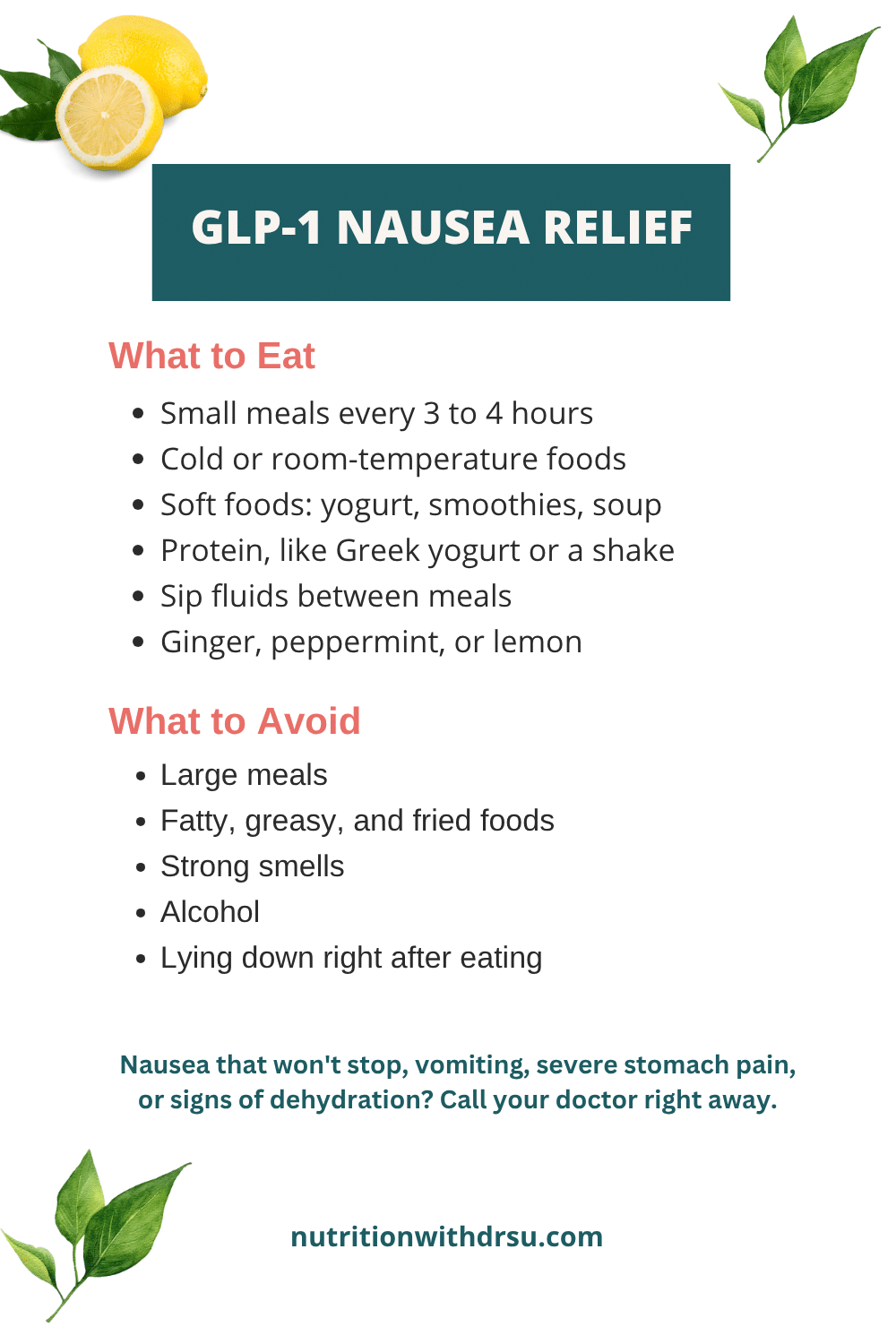
- Eat small meals often. Start with a small breakfast, then eat something small every 3 to 4 hours. An empty stomach and a too-full stomach can both trigger nausea.
- Choose cold or room-temperature foods. They have milder smells. Think overnight oats instead of a hot breakfast, or a chicken salad instead of a hot dinner.
- Try soft or liquid foods when solid food feels like too much: smoothies, soups, Greek yogurt, cottage cheese, or applesauce.
- Keep protein in. Protein is usually easier to tolerate than a carb-heavy meal, and you still need it to protect your muscle. Greek yogurt, a protein shake, or a smoothie with protein powder or nut butter are good options on rough days.
- Eat slowly, and stop at the first sign of fullness. With a GLP-1, full can quickly turn into too full.
- Sip fluids between meals. Stay hydrated with water, herbal tea, or a low-sugar electrolyte drink, but drink less during meals so your stomach doesn’t overfill.
What about crackers and toast? Bland foods like crackers, toast, and rice are often recommended for nausea, and a few crackers can help on a bad day. But I don’t usually push them for my patients on GLP-1s, because a day of refined carbs doesn’t give your body the protein it needs. Use them as a bridge, not the whole plan.
What to Avoid
- Fatty, greasy, and fried foods. Fat slows digestion even more. Fast food and rich baked goods often trigger it.
- Big meals. Overfilling your stomach is one of the most common causes of nausea and vomiting on a GLP-1.
- Strong smells. Cooking smells, perfume, and strong-smelling foods can set it off.
- Spicy or heavily seasoned foods, if they bother you.
- Too much high-fiber food in the first few days after starting or raising your dose. Add it back gradually.
- Alcohol, which can make nausea and reflux worse.
- Lying down right after eating. Stay upright for at least 30 minutes.
Natural Remedies That Can Help
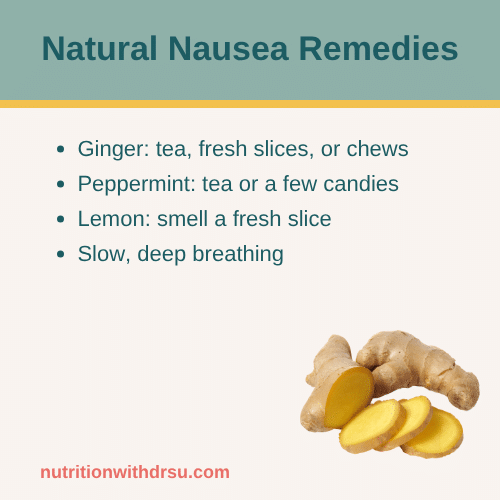
- Ginger. Sip ginger tea, chew a piece of fresh ginger, or try ginger chews or drops. A few I like: lemon ginger honey crystals, Organic Belly Comfort lemon ginger lozenges, and Ginger Tummydrops. Want something cool on a hot day? Try my Ginger Turmeric Lemonade.
- Peppermint. Peppermint tea or a couple of peppermint candies can settle your stomach, like YumEarth organic peppermint drops or Tummypops peppermint. A couple of candies won’t derail your progress.
- Lemon. Smell a freshly cut lemon, or squeeze some into water or tea.
- Try slow, deep breathing and rest sitting up with your head raised.
*This post contains Amazon affiliate links. As an Amazon affiliate, I earn from qualified purchases at no cost to you.
Is It the Medication or Menopause?
Nausea can also show up during perimenopause and menopause, as hormones shift. If your nausea doesn’t align with your shot or a dose change, tell your doctor. Read more in Menopause and Nausea.
When to Call Your Doctor
Call your doctor if you have:
- Nausea or vomiting that doesn’t get better after a few days, or keeps you from eating or drinking
- Signs of dehydration: very dark urine, dizziness, or a racing heart
- Severe belly pain that doesn’t go away, with or without vomiting
Your doctor may keep you on your current dose longer before increasing it, lower your dose, or prescribe an anti-nausea medication. In rare cases, your doctor may decide to stop the medication.
The Bottom Line
Nausea on a GLP-1 is common and usually improves over time. Small, cool, protein-forward meals, planning around your shot day, and a little ginger or peppermint go a long way.
If you’d like help making an eating plan for your GLP-1, I work with patients one-on-one and accept insurance. Book your appointment here.
More help for GLP-1 side effects: Semaglutide Constipation Relief.

Dr. Su-Nui Escobar, DCN, RDN, FAND, is a Miami-based weight loss dietitian specializing in women in menopause who use GLP-1 medications. She holds a doctorate in clinical nutrition from the University of North Florida and is a national speaker, writer, and author of The GLP-1 Kitchen. She is a former spokesperson for the Academy of Nutrition and Dietetics.person.