
How to Heal Your Gut in Menopause
Your stomach just feels off lately. Maybe you’re bloated most days, or foods you’ve eaten for years suddenly don’t sit well. Maybe it’s constipation, diarrhea, or acid reflux, and you can’t figure out where it’s coming from.
It’s easy to blame it on age. But did you know menopause plays a role in your gut health? As your hormones change, the bacteria in your gut change too, and that can show up as the stomach problems you’ve been dealing with.
I see this in my practice more often than you’d think. And many of my patients are also on a GLP-1, which can make these stomach problems even bigger.
The good news is there’s a lot you can do, from fiber and probiotics to supplements and foods to cut back on.
How Menopause Changes Your Gut
During menopause, your body makes less of some hormones than it used to. That can bring the typical symptoms we all know, such as hot flashes. What surprises many women is that this change affects your gut, too. You end up with fewer kinds of bacteria living in your intestines.
A study compared the gut bacteria of women before menopause, women after menopause, and men. Women after menopause had fewer kinds of gut bacteria than women before menopause. Their mix looked more like what was seen in men.
Your gut also helps your body handle estrogen. One group of bacteria and fungi in your gut, called the estrobolome, helps process estrogen. It includes about 60 different kinds. When your gut is out of balance, it can throw off your estrogen levels and make the hormone changes of menopause even stronger.
So it works like a cycle. Menopause changes your gut, and your gut then affects menopause symptoms.
Menopause isn’t the only thing that can throw your gut off balance. Other causes include stress, a diet high in processed foods and sugar, too much alcohol or coffee, antibiotics, and chronic diseases.
Gut Health Impact on Menopause Symptoms
GI Issues
Not surprisingly, many women in menopause have stomach and bowel problems, like constipation, diarrhea, indigestion, acid reflux, nausea, and bloating. Having fewer kinds of gut bacteria may be part of the reason. Keeping your gut bacteria healthy can help ease these symptoms.
Inflammation
Gut health and inflammation go hand in hand.
During menopause, hormonal changes can lead to chronic inflammation, which is inflammation that lasts a long time. An unhealthy gut can make it worse.
Inflammation can make joint pain worse, make weight harder to manage, and raise your risk of long-term disease.
Mood Changes and Anxiety
Your gut bacteria also affect how you feel. An unhealthy gut can raise feelings of anxiety and depression, which are already common in menopause.
How to Improve Your Gut Health During Menopause
The 2025-2030 Dietary Guidelines for Americans now call out gut health directly: vegetables, fruits, fermented foods, and high-fiber foods support a diverse microbiome, and highly processed foods can disrupt it.
Eat Foods High in Fiber
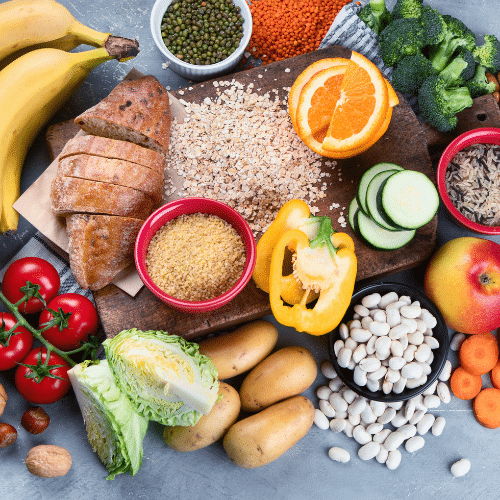
Fiber can help you increase the diversity of your gut microbiome, helping you balance your good and bad bacteria better.
Most women need about 25 grams of fiber a day. The Academy of Nutrition and Dietetics recommends 14 grams for every 1,000 calories you eat, so your exact number depends on how much you eat.
Good sources of fiber include vegetables, fruits, whole grains like oats, quinoa, brown rice, buckwheat, and whole-wheat pasta, and beans, lentils, and other legumes.
Increase your fiber intake slowly to prevent diarrhea and bloating.
Getting enough fiber is harder than it sounds. Over time, I’ve learned that unless you put some thought into it, it just doesn’t happen. So now I make sure everything on my plate has some form of fiber, and it’s the same advice I give my patients. Get creative with it. Add beans to your salad. Have rice and beans instead of plain rice. Toss some peas or edamame into whatever you’re making.
Eat Foods With Probiotics and Prebiotics
Prebiotics are a kind of fiber that feeds the good bacteria in your large intestine. You can find them in fruits, vegetables, beans, and whole grains.
Probiotics are good bacteria and yeasts. They live mostly in your gut and help keep bad bacteria from growing.
Foods with probiotics are fermented foods with live cultures, like yogurt, kefir, kimchi, sauerkraut, miso, tempeh, and sourdough bread. Fermented foods can add good bacteria to your gut and support your digestion.
A probiotic supplement can help some people. Whether you need one depends on your health and your needs. A registered dietitian can help you decide if you need one and which one is best for you.
How to Choose a Supplement
- Choose a probiotic with at least 1 billion CFUs (colony-forming units, the count of live bacteria).
- Pick one with Lactobacillus, Bifidobacterium, or Saccharomyces boulardii. These are some of the most studied kinds.
- Look for brands that test their products and have studies showing they work.
- If one product doesn’t help within a few weeks, try a different one with a different strain.
Eat Healthy Fat
Healthy fats are good for your whole body, including your gut. They help good bacteria grow and keep your gut in balance.
The most helpful fats are omega-3 fats. You can find them in fish, walnuts, flax, and chia seeds. Try to eat some of these foods every day.
Drink More Water
Drinking enough water is linked to a more diverse gut microbiome, and people who stay hydrated tend to have fewer of the harmful bacteria that cause stomach infections. Water also helps prevent constipation.
The general recommendation for women is about 9 cups of fluids a day. You may need more if you exercise or live somewhere hot.
Manage Your Stress
Your gut and your brain talk to each other. Stress can upset your stomach, and an upset stomach can make you feel more anxious.
Exercise, meditation, and time with people you love are simple ways to bring stress down. If anxiety hits you hardest first thing in the day, see my tips to reduce menopause anxiety in the morning.
Move More
Moderate exercise brings positive changes to your gut bacteria. It also lowers inflammation and helps with stress.
The CDC recommends 150 minutes of moderate activity a week, plus two days of strength training.
Get Enough Sleep
Poor sleep can change your gut bacteria for the worse. Better sleep is linked to a more diverse microbiome. Poor sleep also raises stress and makes weight gain more likely.
Aim for seven to eight hours a night.
If You’re on a GLP-1
GLP-1 medications slow down how fast food leaves your stomach. That helps you feel full, but it can also upset your gut.
Stomach side effects are the most common ones. In a large study of Wegovy, almost half of people had nausea and about 1 in 4 had constipation, much more often than people taking a placebo (2025 joint advisory on GLP-1 nutrition). These side effects are usually worst in the first few weeks and after a dose increase, and they tend to ease once your dose is steady.
Everything in this post still applies. A few extra tips help when you’re on a GLP-1:
- Eat small meals every 3 to 4 hours instead of going a long time without food. Big meals make nausea and vomiting more likely.
- Go easy on greasy, high-fat foods. They slow your stomach down even more.
- Drink plenty of fluids. Dehydration is a real risk when you’re eating less.
- For constipation, add fiber from food and fluids first, then slowly add prunes or other dried fruit. See my semaglutide constipation relief tips for more.
- Keep alcohol to a minimum. It can make nausea and acid reflux worse.
If your stomach problems are severe or don’t get better, talk to your doctor.
Foods and Drinks to Limit
Sugar
Eating a lot of added sugar can reduce the good bacteria in your gut. Then the bad bacteria can grow and that can make you crave even more sugar.
Cutting back on sugar can be hard at first, but as your gut heals, your sugar cravings tend to go down. Here’s how to reduce sugar cravings.
Alcohol
Like sugar, alcohol can throw off the balance of good and bad bacteria. If you want to drink less, the sober curious movement has ideas and support to help you cut back or stop. It isn’t about alcoholism. It’s about paying attention to when and why you drink.
If you want to enjoy a social drink with less alcohol, try sparkling water with lime or a mocktail. Or go for a walk instead of heading to a bar after work.
Processed Foods
Highly processed foods tend to be low in fiber and high in sugar and fat, and they don’t give you much variety in nutrients. All of that is hard on your gut bacteria.
Fried Foods
Fried foods are high in saturated and trans fats, which are hard for your gut to digest. If you’re craving something crispy, try air frying your favorite foods for the same crunch with less fat.
Soft Drinks
Drinking a lot of soda is linked to poor gut health. Even more worrying, sugary soft drinks are linked to deaths from digestive diseases. If you want something fizzy, try kombucha, a bubbly tea drink with probiotics, or homemade lemonade made with sparkling water and just a little sugar.
Artificial Sweeteners
Artificial sweeteners like aspartame are popular sugar substitutes, but too much of them may change your gut bacteria and irritate the gut lining. Use them in moderation.
Conclusion
Your gut changes in menopause, and that can show up as bloating, constipation, reflux, or foods that just don’t sit right anymore. Small, steady changes help: more fiber, fermented foods, enough water and sleep, and less sugar, alcohol, and processed food.
Many of these same habits also help calm inflammation in menopause. If you want to keep going, read my Anti-Inflammatory Diet for Menopause next.

Dr. Su-Nui Escobar, a Registered Dietitian/Nutritionist in Miami, FL, is dedicated to empowering women in perimenopause and menopause to live healthier, more satisfying lives.
With a doctorate in clinical nutrition from the University of North Florida, she has expertise in menopause and weight loss, including the unique challenges faced by those on weight loss medications.
Su-Nui’s passion for her field is evident in her previous role as the Academy of Nutrition and Dietetics spokesperson.