
Menopause anxiety in the morning is more common than you think!
Even some women who never experienced anxiety before notice this unpleasant (and debilitating) feeling, and women who had it before can feel it even more intensely!
However, just because morning anxiety is common, it does not mean you have to live with it. There are many things that you can do to help.
What Are the Causes of Morning Menopause Anxiety?
Hormone changes play a big role in anxiety during menopause.
Your stress hormone, cortisol, is naturally higher in the morning to help you wake up. As your hormones shift during perimenopause and menopause, that morning rise can feel much stronger than it used to.
Stress hormones can also rise during the night and wake you up. Poor sleep then makes the next morning’s anxiety even worse.
And then there’s life. Many women in this stage are caring for aging parents and their own families at the same time, often while working. All of that adds to the anxiety you feel when you open your eyes.
Hot Flashes and Anxiety
Research shows that these two can feed each other:
- Hot flashes can make you feel anxious.
- When they happen at night, they can disrupt your sleep and make morning anxiety worse.
- Stress and anxiety can trigger them or make them worse.
Severe anxiety can also feel the same way. You may suddenly feel hot and sweaty, when it’s really anxiety or a panic attack.
Other signs of anxiety include:
- A racing or pounding heart
- Feeling nervous, tense, or restless
- Trouble concentrating
- Feeling weak or tired
Here’s what can help with morning anxiety.
What Are Natural Ways to Treat Menopause Anxiety in the Morning?
- Better sleep
- Establishing morning routines to cope with morning anxiety
- Eating foods that can help decrease anxiety
- Regular exercise
- Talking to your doctor about hormone changes
- Therapy
Quick Tips for When Anxiety Hits
When anxiety shows up first thing in the morning, these can help right away:
- Take a few deep breaths. Slow breathing is one of the fastest ways to calm your body down, even for just a minute or two.
- Try the 3-3-3 rule. Name three things you see, three sounds you hear, and touch three parts of your body. It brings you back to the present moment.
- Do a quick body scan. Starting at the top of your head, notice where you’re holding tension and let it go, one part of your body at a time.
- Name the feeling. Say to yourself, “This is anxiety.” Naming it takes away some of its power.
- Be gentle with yourself. Your hormones are changing, and your body needs time to adjust. Talk to yourself the way you’d talk to a good friend.
Make Sleep a Priority
To reduce morning anxiety, start by getting a good night’s sleep. While this can be difficult during menopause, any improvement in the quality and quantity of sleep will help you feel better in the morning and throughout the day.
The Sleep Foundation recommends the following lifestyle changes to help you sleep better:
- Maintain a regular bed and wake-up time schedule
- Budget time to sleep
- Create a regular, relaxing nighttime routine
- Create a sleep environment that is dark, quiet, comfortable, and cool
- Use your bedroom only for relaxation and sex
- Be physically active most days of the week
- Limit alcohol, especially at night
- Limit caffeine to 1-2 cups a day early in the morning
Waking Up Anxious at Night
If you often wake up in the middle of the night feeling anxious, tell your doctor. Night sweats, stress, and sleep problems can all play a role, and your doctor can help you figure out what’s going on.
Nighttime Hot Flashes
Night sweats are a common reason for waking up in the middle of the night. You can decrease night sweats by sleeping in a cool environment and wearing light clothes. Also, it is a good idea to limit alcohol and caffeine if you experience this annoying symptom.
Morning Routines to Decrease Menopause Anxiety
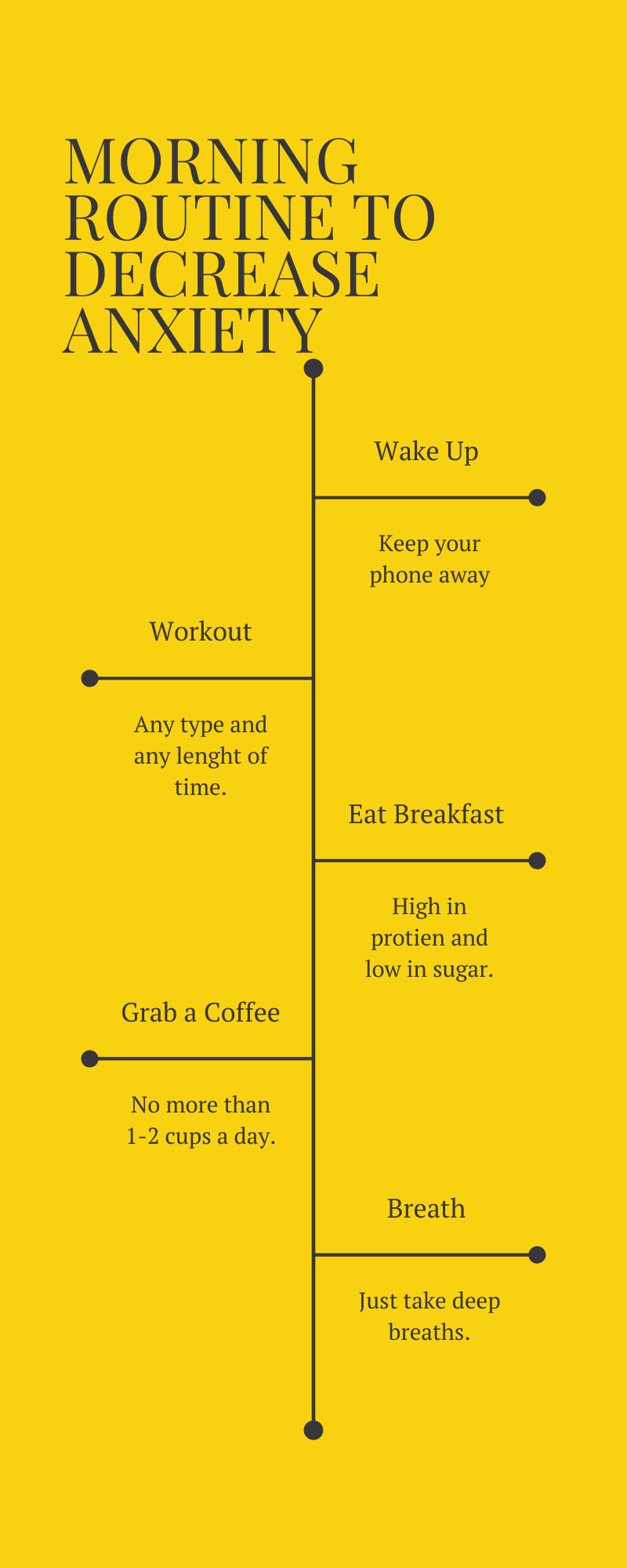
While you might not control the immediate feeling of anxiety, you can control what you do in the morning. Establishing a routine to ease into the day can help reduce the sensation.
First, let’s talk about what not to do. There are two things to avoid in the morning: one is looking at your phone the first thing in the morning, and the other is allowing negative thoughts that increase your anxiety. So start the day by doing something for yourself!
Now, let’s talk about what to do:
Workout
A morning workout doesn’t have to be strenuous or even take you out of the house. The goal is to release anxiety and get good endorphins running through your body. Even a 10-minute yoga routine will help.
Of course, if you wake up in the morning and like to do a full workout routine, go for it! Exercising early in the morning is one of the best ways to start the day.
A warning: don’t sacrifice sleep for a full workout. Aim for 7 to 9 hours of sleep every night. Plan ahead and go to sleep early to fit both into your routine. Sacrificing sleep for exercising can make anxiety worse and can make weight loss harder.
Wake Up a Little Early
Give yourself time in the morning instead of rushing to work or get your family out the door. Instead, give yourself time to work out, have a cup of herbal tea, or meditate.
Prepare the Night Before
Minimize the number of tasks you have to do in the morning. For example, lay out your clothes and have easy breakfast items ready. Fewer things to do can prevent the morning rush and help reduce your anxiety.
Meditate
Meditation is one of the best relaxation techniques to help you decrease anxiety at any time of the day. Starting your day with a short (or long) meditation can help you feel more relaxed. Several apps can make it easier to find a meditation method that works well for you.
Try Deep Breathing Techniques
Regular deep-breathing practice may have notable effects on your sense of relaxation. When anxiety hits, I often tell women to start with two deep breaths. It’s simple, and you can do it anywhere.
Establishing positive morning routines can help you reduce anxiety, support productivity throughout the day, and improve your overall mental health.
Eat Breakfast Foods Designed to Decrease Menopause Anxiety
Nutrition can help anxiety in many ways. First, eating a diet rich in whole grains, vegetables, and fruits can provide essential nutrients to combat anxiety.
Also, eating protein-rich foods can help you make key neurotransmitters that will help you feel more relaxed. There is also the likelihood that when you eat a protein-rich breakfast, you will skip high-sugar foods that can make anxiety worse.
Moreover, there is a connection between gut health and anxiety. A healthy gut can help you feel more relaxed and sleep better, further reducing morning anxiety.
Foods to Avoid
Added Sugar
Foods high in ADDED sugar can create spikes in blood sugar followed by a quick drop-off associated with anxiety. Popular breakfast items like traditional pancakes with syrup, pastries, muffins, and other foods are best to eat only from time to time. Save it for those days when you have time for a leisurely breakfast with friends or family.
Furthermore, excessive sugar consumption can increase cravings.
Last, a diet high in sugar can damage your gut health.
Please note that foods with naturally occurring sugars like fruit are healthy for you. While they contain sugar, they are also high in fiber, which slows down the speed at which sugar is absorbed. Eat whole fruits or juices with a higher vegetable-to-fruit ratio (use only a bit of fruit to sweeten your juice naturally).
Caffeine
Caffeine is a stimulant, and it can make you feel more jittery. Therefore, choose lower- or no-caffeine alternatives such as decaffeinated tea or decaf coffee in the mornings when anxiety is severe.
Other days, you can drink up to two cups of coffee or caffeinated drinks per day.
Alcohol
A glass of wine at night can feel relaxing, but alcohol can make anxiety worse once it wears off, and it disrupts your sleep. Both show up as a rougher morning. If you drink, keep it to a small amount and not too close to bedtime.
Talk to Your Doctor About Hormone Changes
Hormone changes are a normal part of this stage. If your symptoms are hard to manage, talk with your doctor about your options, including hormone therapy. Your doctor can tell you whether any tests make sense for you.
Therapy
Many women in perimenopause and menopause feel like they’re on an emotional roller coaster. Mood swings, anxiety, and depression are all common.
Therapy can help you cope with your emotions, which can help you manage and control your symptoms. It is all a big cycle. For example, when you control your anxiety levels and decrease your stress, you can sleep better, which can help you manage your anxiety and other common symptoms, such as weight gain.
There are many forms of therapy, including cognitive behavioral therapy, behavioral, psychodynamic, integrative, and humanistic therapy (4). So, you can feel confident that you will find one that works for you.
Regular Exercise
We talked about how physical activity is helpful in coping with morning anxiety. Still, regular exercise can also help you decrease your overall stress and manage other physical symptoms of menopause, such as sleep disturbances and weight gain. Again, handling these symptoms can result in lower morning anxiety.
When to Seek Medical Help
If anxiety is severe and persists throughout the day, it might be more than the common perimenopausal anxiety. Severe anxiety can signify a more serious condition, such as an anxiety or panic disorder, major depression, or a medical condition.
In Conclusion
Morning anxiety is a common experience during menopause. Hormone fluctuations and common life stressors can make a woman feel anxious and stressed in the morning and throughout the day.
The good news is that you have a lot under your control. It is a matter of changing one thing at a time. At first, you might not notice a big difference, but you will after some time. Start with the change that is easier for you or the one that will make the biggest difference.
Anxiety and weight are often connected, through sleep, stress, and cravings. To learn more, read Does Lack of Sleep Cause Weight Gain?
Dr. Su-Nui Escobar, DCN, RDN, FAND, is a Miami-based weight loss dietitian specializing in women in menopause who use GLP-1 medications. She holds a doctorate in clinical nutrition from the University of North Florida and is a national speaker, writer, and author of The GLP-1 Kitchen. She is a former spokesperson for the Academy of Nutrition and Dietetics.
2 thoughts on “Tips to Reduce Menopause Anxiety in the Morning”
I am 48 and 2 1/2 years peri menopause. Having horrible anxiety in the mornings. Do you see people online?
Hello Myla, unfortunately, I don’t.