

Ashwagandha for Menopause: Benefits, Risks, and What a Dietitian Thinks
Ashwagandha is one of the supplements I get asked about most. Women hear it can help with hot flashes, sleep, stress, and even weight, and they want to know if it’s worth trying.
The short answer: the research in menopause is promising, but it’s early, and ashwagandha isn’t right for everyone. Here’s what we know, what we don’t, and how to decide whether it makes sense for you.
Medical disclaimer: This content is for educational purposes only and is not a substitute for medical advice, diagnosis, or treatment.
What Is Ashwagandha?
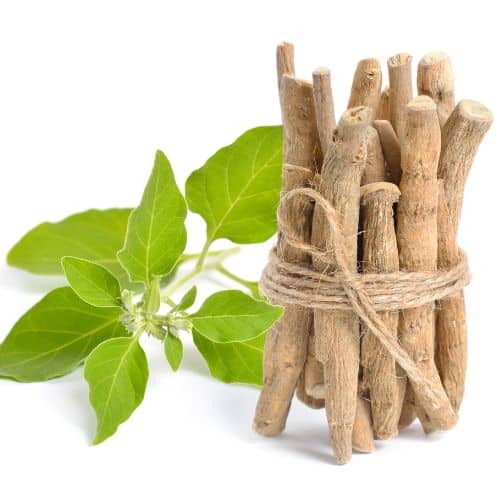
Ashwagandha (Withania somnifera) is a plant whose root has been used in Ayurvedic medicine in India for centuries. Today it’s sold mostly as a root extract in capsules or powders.
It’s often called an adaptogen, a term for herbs that may help your body handle stress. That label is a traditional one, so it’s more useful to look at what studies have actually measured.
What the Research Shows
Menopause Symptoms
Three small studies have tested ashwagandha in women going through menopause, each lasting 8 to 12 weeks with 60 to 100 women. Compared with a placebo, women taking ashwagandha had lower menopause symptom scores, and some saw fewer hot flashes. (Gopal 2021; Vani 2026; Obhrai 2026]
That’s encouraging. But these studies were small, short, and mostly done in India, and several used the same brand of extract. We need larger, independent studies before we can count on these results.
Sleep
In the most recent menopause study, women taking 600 mg a day for 12 weeks slept better than those taking a placebo. Studies in other adults point the same way.
Stress
Reviews of studies in adults show ashwagandha can lower cortisol, the stress hormone. Results for how stressed people actually feel are more mixed.
What It Won’t Do
- It’s not a weight loss supplement. One menopause study saw a very small drop in body fat (less than 1%), which isn’t enough to notice.
- It doesn’t “balance your hormones.” Some studies saw changes in hormone levels, but we don’t know what that means long term, which is one more reason to be careful.
- It doesn’t replace menopause treatment. If your symptoms are affecting your life, talk to your doctor about all your options.
Is Ashwagandha Safe?
For most healthy adults, short-term use in studies has been well tolerated. The most common side effects are an upset stomach, loose stools, and drowsiness.
But there are real safety concerns worth knowing:
- Liver injury. It’s rare, but there are documented cases, usually a few weeks after starting. Most people recovered after stopping, but people with existing liver disease had serious outcomes.
- Thyroid. Ashwagandha can raise thyroid hormone levels.
- Long-term safety is unknown. Most studies lasted 2 to 3 months.
- Regulation. Denmark banned ashwagandha supplements in 2023 over concerns about hormones and the thyroid. Other European countries are reviewing it, and the decision is debated.
Skip It or Talk to Your Doctor First If You:
- Have liver disease or a history of liver problems
- Have a thyroid condition or take thyroid medication
- Have an autoimmune condition
- Take sedatives, or medication for blood sugar or blood pressure
- Have a hormone-sensitive condition, or take hormone therapy
- Are planning surgery
Stop taking it and call your doctor if you notice yellowing of your skin or eyes, itching, dark urine, or unusual tiredness.
Taking Ashwagandha for Menopause: FAQs
How much should you take?
The menopause studies used 300 to 600 mg a day of ashwagandha root extract, often split into two doses. Stay in that range, and talk to your doctor or dietitian before starting.
What’s the best form?
Capsules of standardized root extract, the form used in the studies. Teas, powders, and tinctures haven’t been studied in menopause, and it’s hard to know how much you’re getting,
How long does it take to work?
The studies checked results after 8 to 12 weeks. Give it a set trial like that, then decide with your doctor whether it’s helping.
Can I take it with hormone therapy or other medications?
It hasn’t been studied with hormone therapy, and it can interact with thyroid, sedative, blood sugar, and blood pressure medications. Check with your doctor and pharmacist first.
Where should I buy ashwagandha?
Supplements aren't checked for safety or quality before they're sold, so look for a product tested by an independent lab, with a seal from USP, NSF, or Informed Choice.
More on Menopause and Supplements
Magnesium for Menopause
Supplements for Menopause Joint Pain
Is Omega-3 Good for Menopause?
Does Lack of Sleep Cause Weight Gain?
The Bottom Line
Ashwagandha shows promising results for menopause symptoms, sleep, and stress. Unfortunately, the studies aren’t large or conclusive yet, so I can’t fully recommend it. That said, plenty of women use it, and if you’re curious, you can try it wisely: stick to the amounts studied, choose a third-party tested product, check for interactions with your medications, and talk to your doctor first, especially if you have liver or thyroid concerns.
“Ashwagandha for Menopause” was written by holistic registered dietitian and clinical herbalist Jenna Volpe, RDN, LDN, CLT and reviewed & updated by Dr. Su-Nui Escobar, DCN, RDN, registered dietitian and doctor in clinical nutrition.

Dr. Su-Nui Escobar, a Registered Dietitian/Nutritionist in Miami, FL, is dedicated to empowering women in perimenopause and menopause to live healthier, more satisfying lives.
With a doctorate in clinical nutrition from the University of North Florida, she has expertise in menopause and weight loss, including the unique challenges faced by those on weight loss medications.
Su-Nui’s passion for her field is evident in her previous role as the Academy of Nutrition and Dietetics spokesperson.