

Magnesium is one of the supplements my clients ask about most, and the question is usually simple: “Should I be taking magnesium?”
It’s a fair question. You’ve probably heard that magnesium is good for menopause, but what does the research actually say? Below, you’ll find what magnesium can do for women in menopause, based on the research we have so far.
I’ll stick to the research, and I’ll tell you when I’m sharing what I see in my own practice.
Medical disclaimer: This content is for educational purposes only and is not a substitute for medical advice, diagnosis, or treatment.
Why Magnesium Matters in Menopause
One of the most common reasons women in menopause ask me about magnesium is sleep. And it makes sense. Lying in bed with your mind racing and unable to fall asleep is one of the most frustrating parts of this stage of life. Changing hormones, night sweats, and mood changes can all get in the way of a good night’s rest.
Magnesium has a reputation as the “relaxing mineral,” and there’s some truth to that. It helps your muscles and nerves work, keeps your heartbeat steady, and is part of your bones. Midlife also makes it a little harder to keep your levels up. Estrogen affects how your body absorbs and holds on to magnesium, and we absorb less from food as we age.
Then there’s constipation. Many women notice changes in digestion during perimenopause and menopause. On top of that, many women in their 50s are now taking GLP-1 medications, and constipation is one of the most common side effects. Magnesium can help here too.
Just know that the magnesium that helps you sleep is not the same one that helps you go. I’ll show you which is which below.
What Magnesium Can Help With
Sleep
Magnesium is popular for sleep, and the research is encouraging but modest. Small studies show it may help you fall asleep a little faster, especially if your diet is low in magnesium. It hasn’t been shown to help you stay asleep.
In my experience, and like many experts, I recommend taking magnesium glycinate about an hour before bed.
Constipation
Some types of magnesium pull water into your gut. That softens your stool and makes it easier to go. Gastroenterologists list magnesium as one option for constipation, and magnesium citrate is a common over-the-counter choice you can find at any pharmacy.
If you’re on a GLP-1, magnesium citrate is one of the first things I suggest to my clients dealing with constipation. Start with water, fiber, and foods like prunes, and if that’s not enough, magnesium citrate can be a helpful next step.
Bones
Bone loss speeds up around menopause, and magnesium is part of the bone itself. Women with osteoporosis tend to have lower magnesium levels. We don’t know yet whether magnesium supplements prevent osteoporosis, so calcium, vitamin D, protein, and strength training still come first.
Types of Magnesium: Which One Should You Take?
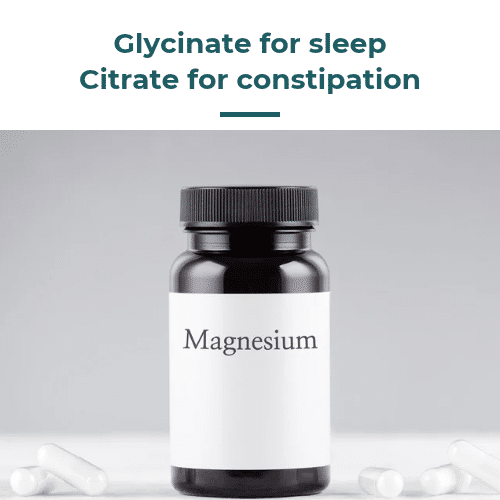
This is where most people get stuck. I match the type to what you want help with.
Magnesium glycinate: for relaxation and sleep. This is the one I usually suggest for women who feel tense or wound up and want help relaxing, especially at the end of the day.
Magnesium citrate: for constipation. Your body absorbs citrate well, and it also has a laxative effect, so it’s my pick when constipation is the main problem.
Magnesium oxide: also for constipation. Gastroenterologists studied this type for long-term constipation. Your body absorbs less of it than citrate, which is why it works well as a laxative but isn’t the best choice for raising your magnesium levels.
Two more things when you shop:
- Check the “elemental magnesium” on the label. That’s the amount of magnesium you’re actually getting, and it’s the number to use when you compare products.
- Brands vary. Even two glycinate products can deliver different amounts of magnesium, so look for a seal from USP, NSF, or Informed Choice. That means an independent lab tested it.
Food First: Magnesium-Rich Foods
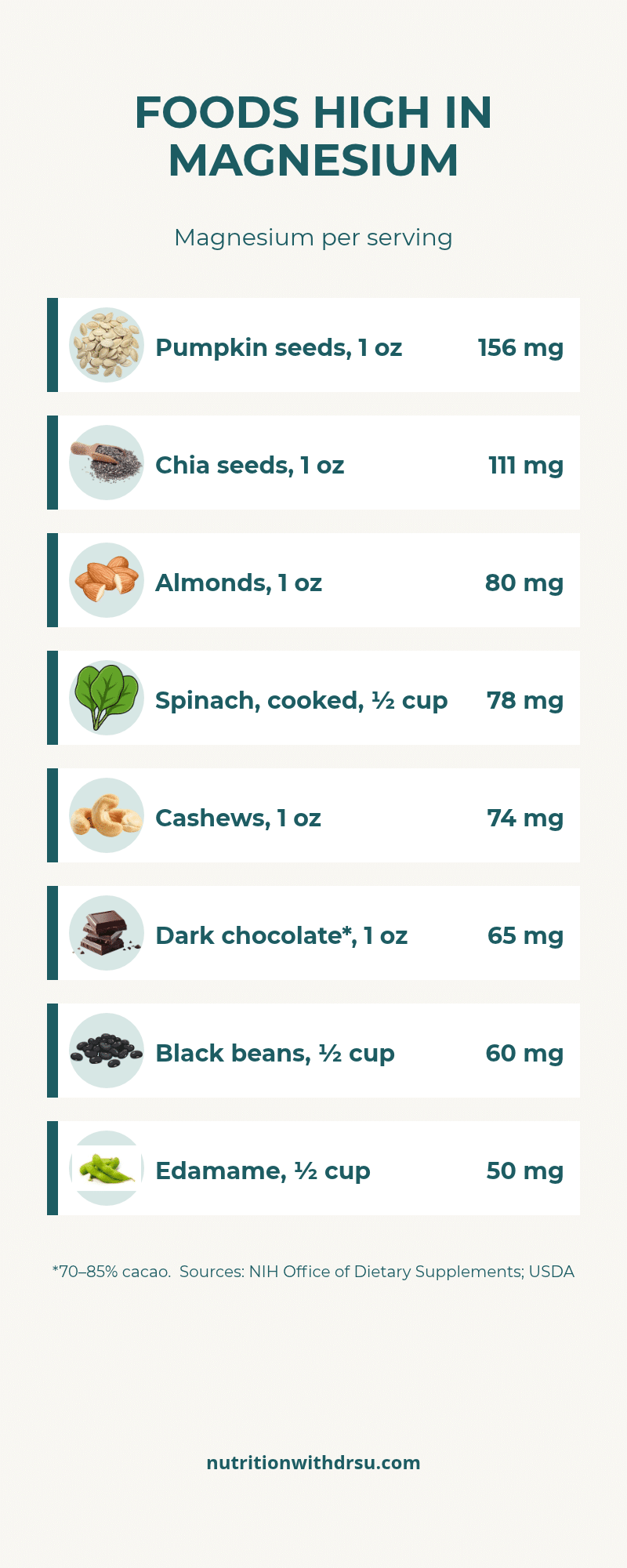
Food is the safest way to get more magnesium, because your kidneys clear any extra you get from food. Here are some of the richest sources, from most to least per serving. They bring fiber and protein along with them:
- Pumpkin seeds, 1 ounce: 156 mg
- Chia seeds, 1 ounce: 111 mg
- Almonds, 1 ounce: 80 mg
- Spinach, cooked, ½ cup: 78 mg
- Cashews, 1 ounce: 74 mg
- Dark chocolate (70–85% cacao), 1 ounce: 65 mg
- Soymilk, 1 cup: 61 mg
- Black beans, ½ cup: 60 mg
- Edamame, ½ cup: 50 mg
- Peanut butter, 2 tablespoons: 49 mg
- Brown rice, ½ cup: 42 mg
- Plain yogurt, 8 ounces: 42 mg
A tip for constipation: mineral water that’s naturally high in magnesium can help you go. In a 2026 review, magnesium-rich mineral water was one of the best-supported food options for constipation, along with psyllium fiber, kiwi, and prunes. Check the label for magnesium content, since it varies a lot by brand.
Is Magnesium Safe?
For most healthy women, magnesium supplements are safe when taken as directed. Stick to the label, don’t double up on products that both contain magnesium, and ask your dietitian or doctor how much is right for you. High doses can cause diarrhea, cramping, and nausea.
Talk to your doctor before starting if you:
- Have kidney disease, since your kidneys are what clear extra magnesium
- Take a diuretic (water pill) or a heartburn medicine like omeprazole long term, since these can change your magnesium levels
- Take an osteoporosis medication like alendronate (Fosamax). Take magnesium at least 2 hours before or after it.
- Take certain antibiotics, like doxycycline or ciprofloxacin. Take the antibiotic 2 hours before or 4 to 6 hours after magnesium.
A blood test for magnesium doesn’t show how much is stored in your body, so a “normal” result doesn’t always rule out low intake. Looking at what you eat is often more useful.
The Bottom Line
So, should you take magnesium? If you’re having trouble falling asleep or dealing with constipation, it’s worth a try, as long as you pick the right type. Glycinate is my go-to for relaxation and sleep. I recommend it to my patients often, and I take it myself. For constipation, citrate is part of my protocol for patients on GLP-1s. Start with magnesium-rich foods, and check with your doctor first if you have kidney disease or take medications that interact with it.
More on Menopause and Supplements

Dr. Su-Nui Escobar, DCN, RDN, FAND, is a Miami-based weight loss dietitian specializing in women in menopause who use GLP-1 medications. She holds a doctorate in clinical nutrition from the University of North Florida and is a national speaker, writer, and author of The GLP-1 Kitchen. She is a former spokesperson for the Academy of Nutrition and Dietetics.