
Irritable bowel syndrome (IBS) is uncomfortable, and it can be embarrassing to talk about. If you’ve lived with it for years, you may have finally found a routine that keeps it in check. Then perimenopause arrives, and suddenly your symptoms are back, or worse than ever.
You’re not imagining it. Perimenopause doesn’t cause IBS, but it can make it flare, even when it was under control for a long time. The good news is that most women can feel better again with the right food and lifestyle changes. It just takes some figuring out.
What is IBS?
IBS, or irritable bowel syndrome, is a disorder of the gastrointestinal (GI) system that specifically affects the large intestine. It’s not a rare condition; in fact, it affects millions of Americans.
IBS is a long-term problem that must be managed over time. Although the symptoms can be very uncomfortable and sometimes even debilitating, this disorder does not damage your intestines or increase the risk of colon cancer.
Symptoms of IBS
Women with IBS may have some or all of these symptoms:
- Constipation, diarrhea, or both
- Bloating
- Belly pain or cramping
- Gas
- Changes in how often you go
- Changes in how your stool looks
- Mucus in the stool
How Perimenopause Affects IBS
What we know: IBS is more common in women, and hormones play a part. Your gut actually has receptors for estrogen and progesterone, and these hormones affect how fast things move through your gut and how much pain you feel. In perimenopause, those hormones rise and fall unpredictably, so your gut can feel it, too.
Other changes add up. Your gut lining may become a little “leakier” across the menopause transition, with more inflammation. Sleep gets harder with night sweats, and stress often runs high in midlife. Poor sleep and stress can both make IBS symptoms worse.
What we don’t know: there’s still very little research on IBS in perimenopause specifically. We know hormones and the gut are connected, but not exactly how each change affects your symptoms.
What I see with my patients is that even women who had their IBS more or less under control can see a flare during this transition. It’s not something you did wrong. Your body is changing, and what worked before may need some adjusting.
Diagnosing IBS
If you think you have IBS, see your doctor before you change your diet. Your symptoms could be related to something else that needs different care. A gastroenterologist diagnoses IBS using the Rome IV criteria, which look at belly pain that’s linked to bowel movements and changes in how often you go or how your stool looks. Symptoms usually need to be there for at least three months.
If you have diarrhea, your doctor may also test you for celiac disease.
Treatment for Perimenopause IBS
Eating for IBS Is Personal
There’s no one IBS diet that works for everyone. Eating for IBS becomes a very personalized way to eat, and you have to figure out what works for you and what doesn’t. Sometimes it’s an easy fix, like cutting back on one food. Sometimes it’s a longer process. Either way, you should be front and center, not a food list.
Try a Low-FODMAP Diet, With Help
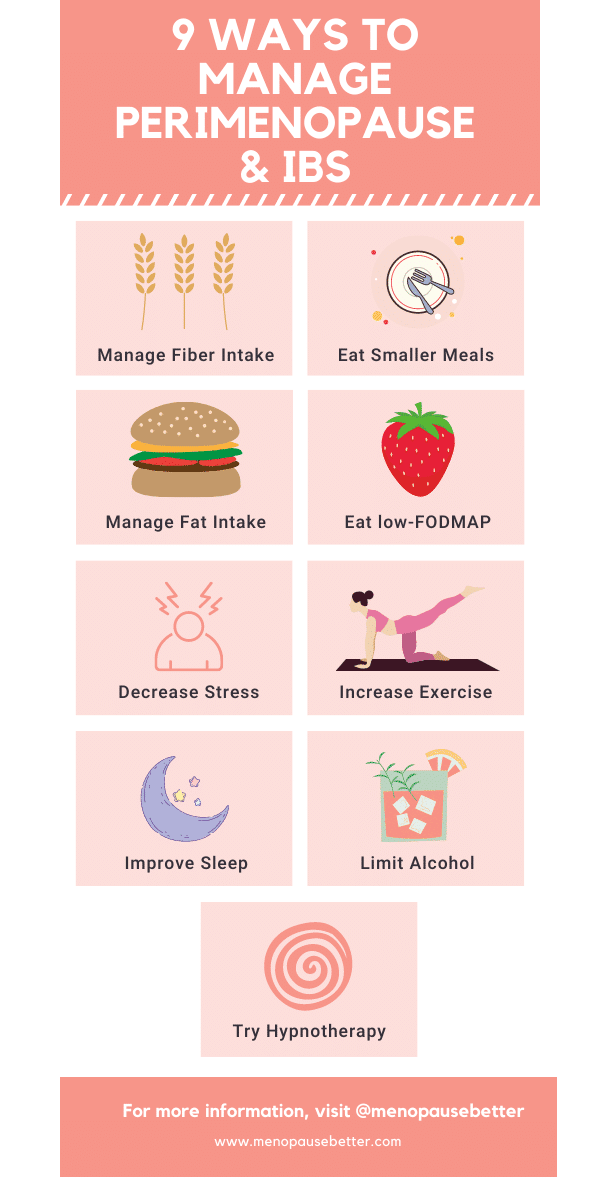
The low-FODMAP diet is one of the most studied ways to calm IBS symptoms, and gastroenterologists recommend a short trial. It doesn’t work for everyone, but it helps many people.
FODMAPs are certain carbs that your gut doesn’t absorb well, and they can trigger gas, bloating, and pain in people with IBS. Common high-FODMAP foods include garlic, onions, wheat, milk, beans, apples, mangoes, honey, and cashews.
The diet has three steps:
- Cut back on high-FODMAP foods for a few weeks.
- Add them back one at a time to see which ones bother you.
- Build a long-term way of eating around what you learned.
The goal is to find your triggers and then eat as wide a variety of foods as you can. Monash University, the group that created the diet, has a helpful low-FODMAP app and guide. Working with a registered dietitian makes this much easier and keeps you from cutting out more than you need to.
Choose the Right Fiber
Fiber can help or hurt with IBS, depending on the type. Soluble fiber, like psyllium husk, oats, and chia seeds, is the kind most often recommended for IBS, whether you tend toward constipation or diarrhea. Rough fiber, like wheat bran, can make bloating worse for some people.
Add fiber slowly and drink plenty of water. If constipation is your main issue, see my post on menopause and constipation.
Eat Smaller Meals
Smaller meals are easier on your gut than big, heavy ones. Eating slowly and paying attention to your hunger and fullness cues can help, too.
Watch Greasy Foods
For many people with IBS, greasy and fried foods trigger symptoms. Cooking at home more often and cutting back on fast food and takeout can make a difference.
Consider Peppermint Oil
Peppermint oil capsules may ease belly pain and other IBS symptoms. They can cause heartburn in some people, so talk to your doctor before trying them.
Lower Your Stress
Stress and your gut are closely connected, and stress can make IBS flare. Find what helps you relax: walks, time in nature, journaling, time with friends, yoga, a hobby, or talk therapy.
Try Gut-Directed Hypnotherapy or CBT
Gut-directed hypnotherapy and cognitive behavioral therapy (CBT) are two of the most proven ways to calm IBS, and the benefits can last. There are IBS-focused apps you can try at home.
Move More
Exercise helps lower stress and can ease IBS symptoms, along with fatigue and anxiety. Find something you enjoy, like a 30-minute walk, yoga, or dancing, and keep showing up.
Protect Your Sleep
Poor sleep can make IBS worse, and perimenopause makes sleep harder. A few things that help:
- Go to bed and wake up at the same time every day
- Keep your bedroom cool and dark
- Wear sweat-wicking pajamas if night sweats wake you up
- Avoid big meals, alcohol, and caffeine late in the day
- Put your phone away an hour or two before bed
Limit Alcohol
Alcohol can irritate your gut and disrupt your sleep, which can make IBS harder to manage. Read more about alcohol and menopause. If you like a drink in your hand at night, try sparkling water with lime or a warm, caffeine-free tea.
Work With Your Doctor From the Start
Your doctor should be part of your IBS care from the very beginning, not just when things get bad. Your doctor makes the diagnosis, rules out other conditions, and manages any medications. A registered dietitian can help with the food and lifestyle side, like a low-FODMAP trial and finding your triggers. The two work best together.
Between visits, call your doctor right away if you notice any of these:
- Weight loss you can’t explain
- Diarrhea that wakes you up at night
- Bleeding from your rectum
- Low iron (iron deficiency anemia)
- Vomiting you can’t explain
- Trouble swallowing
- Pain that doesn’t get better after you pass gas or have a bowel movement
These can be signs of something more serious, like inflammatory bowel disease.
The Bottom Line
Perimenopause doesn’t cause IBS, but the changes in your hormones, sleep, and stress can make it flare, even if you had it under control for years. A low-FODMAP diet, the right fiber, stress relief, and good sleep can all help. In the end, eating for IBS is personal, and finding what works for you is the goal.
A registered dietitian can help you figure out your triggers without cutting out more foods than you need to.
“Perimenopause and IBS” was originally written by Registered Dietitian Becky Rashidifard and updated by Dr. Su-Nui Escobar, DCN, RDN, FAND.

Dr. Su-Nui Escobar, DCN, RDN, FAND, is a Miami-based weight loss dietitian specializing in women in menopause who use GLP-1 medications. She holds a doctorate in clinical nutrition from the University of North Florida and is a national speaker, writer, and author of The GLP-1 Kitchen. She is a former spokesperson for the Academy of Nutrition and Dietetics.