
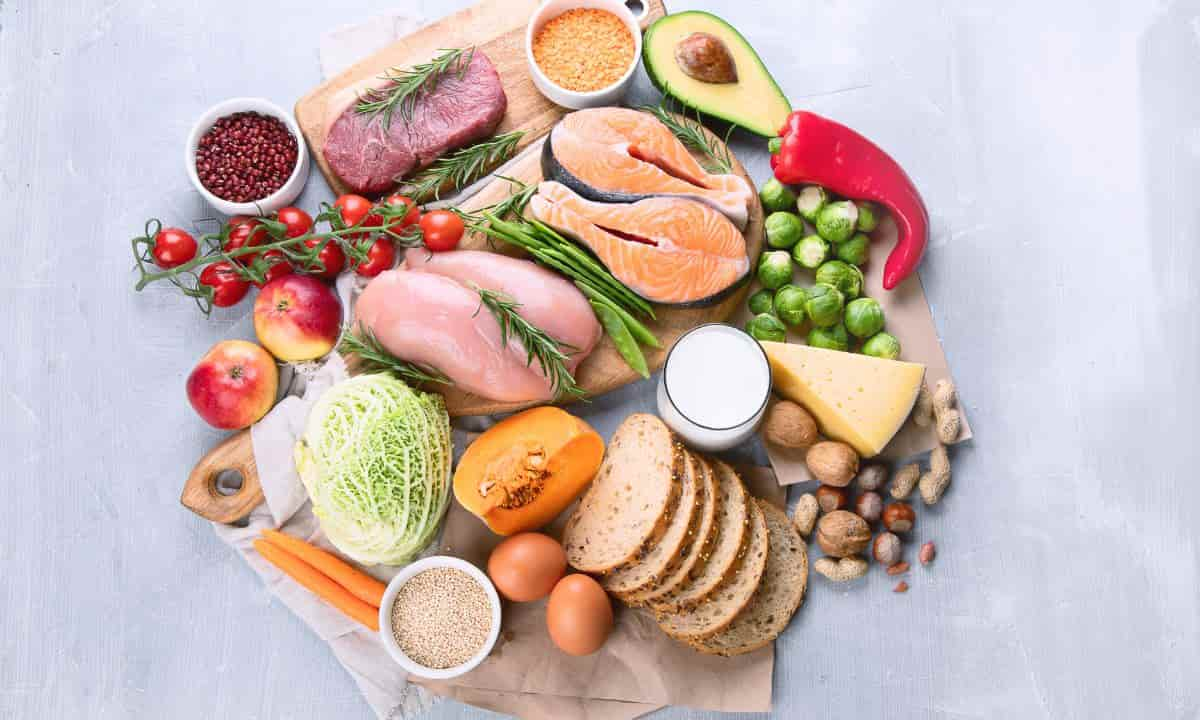
Macros, short for macronutrients, are the carbohydrates, protein, and fat in your food. Tracking them is one way to see what you’re really eating when you’re trying to lose weight.
Think of it like having a budget for your money. When you know where the calories and protein are coming from, it’s easier to make tweaks based on facts.
Is tracking for everyone? Absolutely not, and you don’t have to track to lose weight. It’s one of the tools in our toolbox, and for some women, it can really help. Here’s how to use it if you want to try it.
What Are Macros?
Macros, or macronutrients, are the three main nutrients that make up the foods we eat and provide us with energy: carbohydrates, proteins, and fats.
The right amounts vary from person to person, depending on things like your age, weight, activity level, and health. Tracking means keeping a record of what you eat so you can see how close you are to your goals.
Protein
One of the biggest issues in menopause is the change in body composition from more muscle and less fat to more fat and less muscle. As a result, it is much easier for women in menopause to gain weight.
As estrogen goes down, it gets easier to lose muscle and gain fat around your belly. Eating enough protein and strength training are the two best ways to protect your muscle.
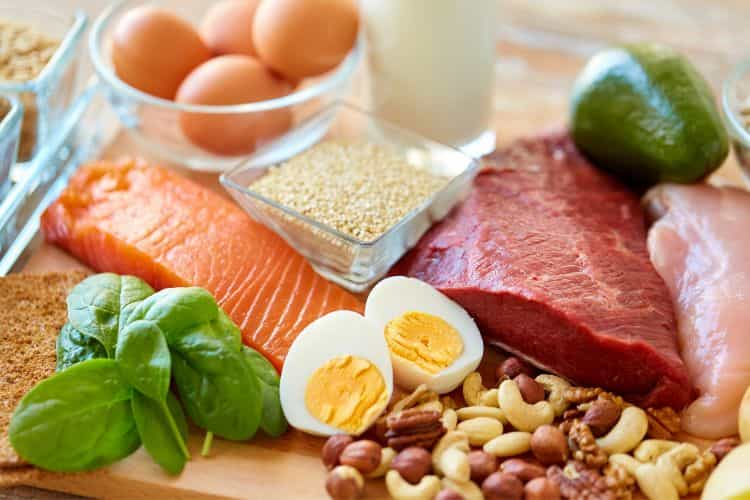
The Dietary Guidelines recommend 1.2 to 1.6 grams of protein per kilogram of body weight a day, which is about 0.5 to 0.7 grams per pound.
For most of the women I work with, that comes out to about 80 to 120 grams a day. An easy way to get there is 15 to 30 grams at breakfast, 30 to 40 grams at lunch, and 30 to 40 grams at dinner. Need ideas? Start with my High-Protein Foods List.
Fats
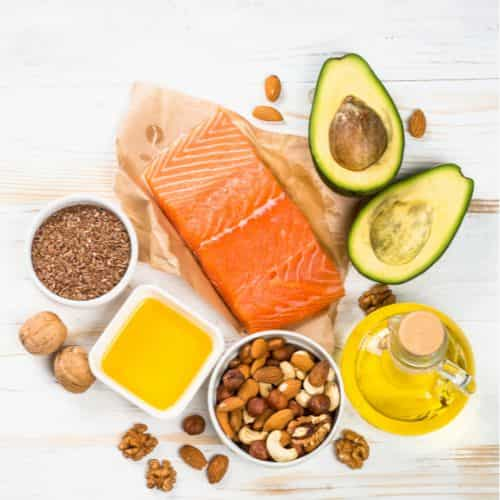
Healthy fats help you feel full after a meal, and your body needs them to absorb vitamins A, D, E, and K.
Focus on nuts, seeds, avocados, avocado oil, fatty fish like salmon, nut butter, and olive oil.
Aim for about 20 to 35% of your daily calories from fat.
Carbohydrates
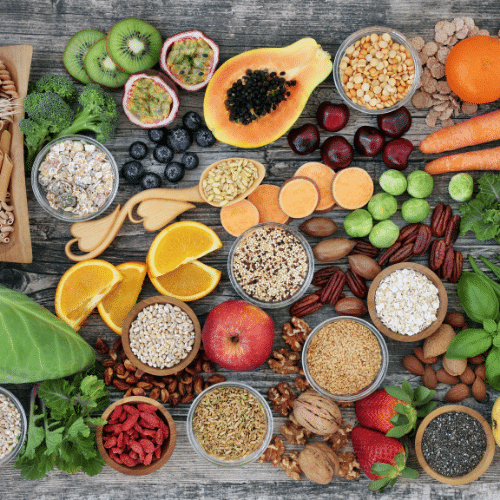
Carbohydrates are an important source of energy.
Very low-carbohydrate diets are a popular weight-loss method, but they can be restrictive and difficult to follow long term.
Instead of avoiding carbs, focus on eating healthy carbohydrates like fruit, vegetables, whole grains, legumes, and starchy vegetables in moderation.
When most of what you eat is nutrient-dense and has protein, fiber, and healthy fats, you’re supporting your overall health during menopause.
Should You Track Your Macros?
Tracking shows you where your calories and protein are really coming from. Many women are surprised by what they see, and once you have the facts, you know exactly what to tweak. Maybe breakfast needs more protein, or maybe the calories are coming from snacks you barely notice.
Tracking is just a tool, and there are other tools we can use. For some of my patients, I create a meal plan so they don’t have to think about it. They can just follow the plan. With others, I skip all of that, look at what they eat and how they move, and choose a couple of goals. It really depends on what each person needs.
Skip tracking if it makes you anxious about food or if you have a history of disordered eating. If you try it and it makes you feel worse about eating, stop. There are other ways to lose weight.
If you take a GLP-1 medication, tracking your protein for a few weeks can show you whether you’re getting enough now that your appetite is smaller.
Do You Need to Count Macros on a GLP-1?
Not necessarily, but it can help. GLP-1 medications lower your appetite, so many of my patients end up eating less protein and fiber than they need without realizing it. Protein matters because it helps protect your muscle while you lose weight, and fiber helps with side effects like constipation.
If you don’t want to track everything, track just your protein and fiber for a week or two. That’s usually enough to show you where you’re falling short. For meal ideas, see my 5-Day GLP-1 Meal Plan.
How to Track Macros
There are several apps and websites that can help you track your macros, for instance, MyFitnessPal, Lose It, or Cronometer. With these apps, you log your daily food intake, and the app will calculate your macros and calories.
For years, the biggest barrier to tracking has been the time it takes to log everything you eat. Now many of these apps have AI built in, so you can simply say what you ate instead of typing every food, which makes tracking a lot faster.
I’ve also seen more of my patients track their meals with tools like ChatGPT, Claude, or Gemini. AI estimates are often fairly close, especially for simple foods, and the tools keep getting better. Still, they can be off for mixed dishes, and a misheard amount can throw off your whole day. Whenever you use AI, double-check the results.
Do You Need to Weigh Your Food?
Portions are often bigger or smaller than we think, so measuring helps your numbers reflect what you really ate. A medium apple has around 25 grams of carbohydrates, and a large one has about 30. A bigger chicken breast has more protein than a small one.
You don’t have to do this forever. Measuring for a little while can train your eye, and then you can estimate.
Sample Macros for Menopause Weight Loss
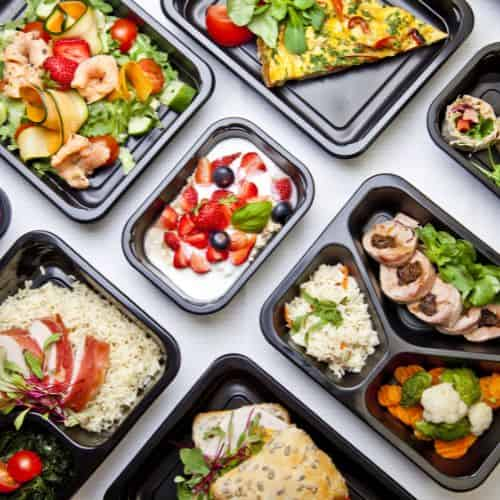
Here’s what this can look like in a day: three meals with the same amount of protein, plus a small snack. Choose any foods that fit the numbers.
| Calories | Protein | Carbohydrates | Fat | |
|---|---|---|---|---|
| Breakfast | 435 | 30 g | 45 g | 15 g |
| Lunch | 435 | 30 g | 45 g | 15 g |
| Dinner | 435 | 30 g | 45 g | 15 g |
| Snack | 125 | 10 g | 10 g | 5 g |
| Total for the day | 1,430 | 100 g | 145 g | 50 g |
Sample Meal Plan for Menopause Weight Loss
Breakfast: Protein overnight oats with 1/2 cup rolled oats, 1/2 cup sugar-free vanilla 2% Greek yogurt, 1/2 scoop unflavored protein powder, 1/2 cup raspberries, and 1 tablespoon chopped walnuts. Approximately 30 grams of protein, 42 grams of carbohydrates, 11 grams of fat, and 8 grams of fiber.
Lunch: Spicy tuna rice bowl with 3 ounces canned tuna, 3/4 cup cooked rice, 1/2 cup shelled edamame, cucumber, 1/4 avocado, sriracha, and crumbled nori. Approximately 33 grams of protein, 45 grams of carbohydrates, 12 grams of fat, and 8 grams of fiber.
Dinner: Sheet-pan hot honey chicken with 3 ounces cooked chicken breast, 3/4 cup roasted sweet potato, and 1 cup roasted Brussels sprouts, made with 2 teaspoons olive oil and 1 teaspoon hot honey. Approximately 33 grams of protein, 48 grams of carbohydrates, 13 grams of fat, and 8 grams of fiber.
Snack: 1/2 cup low-fat cottage cheese with cherry tomatoes, everything bagel seasoning, and a small handful of pistachios. Approximately 14 grams of protein, 10 grams of carbohydrates, 6 grams of fat, and 2 grams of fiber.
This is an example, and your calories and macros may be different. Need more ways to get to 30 grams? Start with my High-Protein Foods List.
Click here for macro-friendly snack ideas
Tips for Successful Menopause Weight Loss
- Emphasize consistency over perfection
- Add strength training and eat protein to protect your muscle
- Prioritize sleep and stress management
- Focus on nutrient-dense, whole foods
- Plan meals in advance to save time and prevent overeating
- Stick to a consistent meal schedule
- Set realistic goals that are achievable over time
- Track your progress regularly to stay motivated
- Seek support from family, friends, or healthcare professionals
The Bottom Line
Tracking macros is just a tool. It’s like a budget: when you can see where your calories and protein are coming from, it’s easier to make tweaks based on facts. It can really help some women, and you don’t have to do it to lose weight.
Want a place to start without doing the math? Try my free 5-Day Plan for Menopause.
Dr. Su-Nui Escobar, DCN, RDN, FAND, is a Miami-based weight loss dietitian specializing in women in menopause who use GLP-1 medications. She holds a doctorate in clinical nutrition from the University of North Florida and is a national speaker, writer, and author of The GLP-1 Kitchen. She is a former spokesperson for the Academy of Nutrition and Dietetics.