
Getting enough protein is one of the first goals I set with my patients, and the reason is muscle.
Most of the women I work with are on a GLP-1 and in the transition to menopause. Both change your body composition. When you lose weight, some of what you lose can be muscle. And the menopause transition itself makes it easier to lose muscle and gain fat, especially around the middle. Eating enough protein helps you keep the muscle you have as you lose weight.
Knowing that is the easy part. Actually reaching your protein goal is harder.
Some days your appetite is low, especially on a GLP-1. Some days the protein foods you usually eat just don’t sound good. And sometimes you have simply run out of ideas.
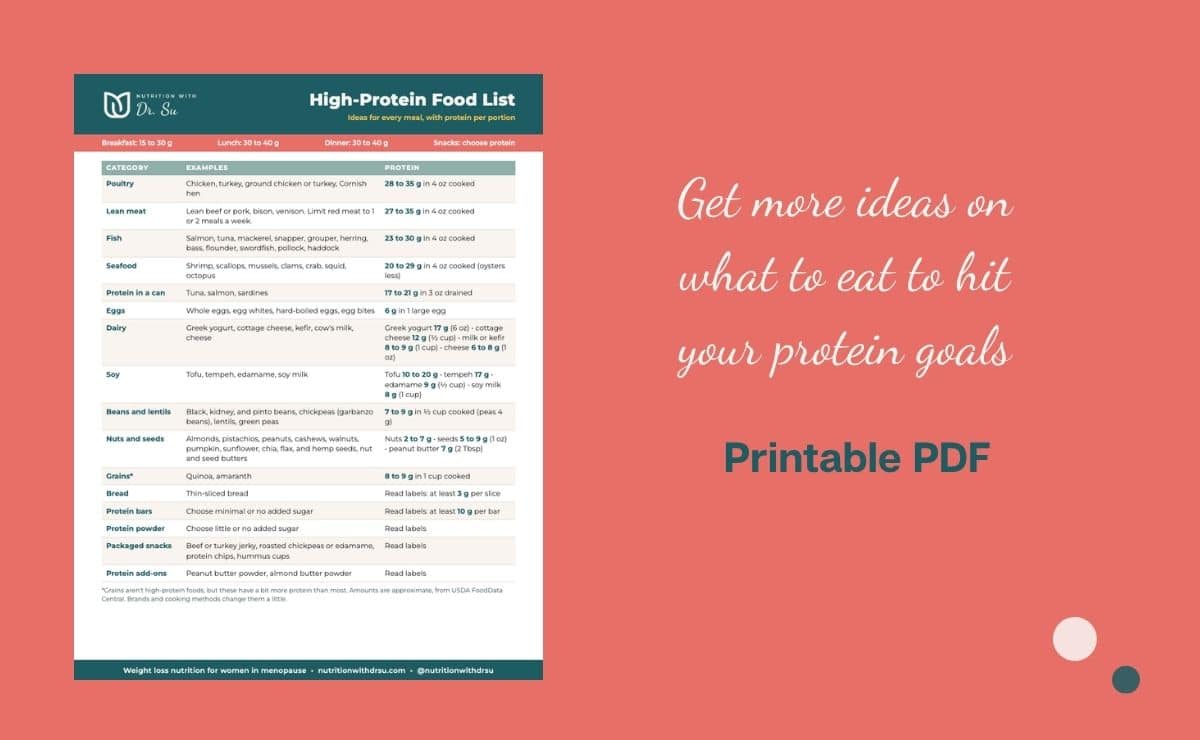
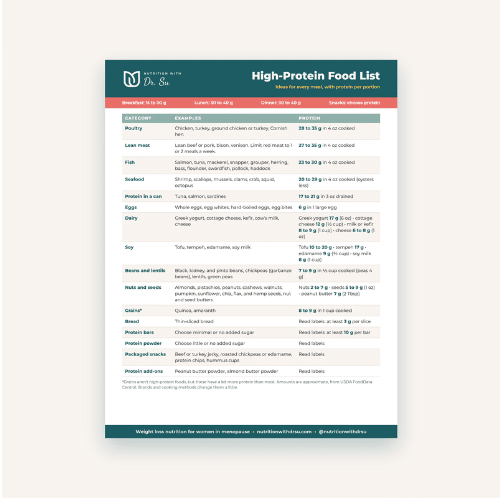
So I made a free printable list of high-protein foods you can keep on your fridge or take to the store. This post walks through each group, with a few more ideas and how much protein you get from a normal portion.
Medical disclaimer: This content is for educational purposes only and is not a substitute for medical advice, diagnosis, or treatment.
Get the free printable High-Protein Food List
How Much Protein Do You Need?
A good target for most women who are losing weight is 80 to 120 grams of protein a day.
That target comes from a 2025 nutrition advisory for people taking GLP-1 medications, written by four leading obesity and nutrition organizations.
Want a more personal number? Do the math: multiply your weight in pounds by 0.5 to 0.7. For example, a woman who weighs 160 pounds would aim for about 80 to 112 grams a day (160 x 0.5 = 80, and 160 x 0.7 = 112). If you have a lot of weight to lose, this math can give you a number that is higher than you need. Your registered dietitian can also calculate it for you.
A daily number can feel like a lot, so break it up by meal:
- Breakfast: 15 to 30 grams
- Lunch: 30 to 40 grams
- Dinner: 30 to 40 grams
- Snacks: if you snack, make it a protein food. A hard-boiled egg adds about 6 grams, and a container of Greek yogurt about 17.
Breakfast is where most people struggle. If you get at least 15 grams in the morning, that is a good start, and you can build from there.
High-Protein Food List
Scroll down for the full list, or download the free printable version here: get the free High-Protein Food List.
The protein amounts below are approximate. Brands and cooking methods change them a little, so use them to get a feel for portions, not to count every gram.
Poultry: Chicken and turkey are versatile and lean. They have about 28 to 35 grams of protein per 4 ounces cooked, about as much as four to five eggs.
Red meats: Beef, pork, lamb, and veal give you protein plus iron and B vitamins. Choose lean cuts and limit red meat to one or two meals per week. About 27 to 35 grams in 4 ounces cooked (lean cuts).
Game meats: Venison, bison, and other game meats are usually leaner than beef and have a different flavor. Ground bison has about 27 to 29 grams in 4 ounces cooked.
Fish: Salmon, cod, tilapia, mackerel, and swordfish are all great choices. Fatty fish like salmon, tuna, and sardines also give you omega-3 fats for heart health. About 23 to 30 grams in 4 ounces cooked.
Seafood: Shrimp, scallops, mussels, clams, and crab are high in protein and minerals. About 20 to 29 grams in 4 ounces cooked. Oysters have much less.
Canned fish: Tuna, salmon, and sardines are easy to keep on hand for busy days. About 17 to 21 grams in 3 ounces, drained.
Eggs: Eggs give you protein plus choline and vitamin D. About 6 grams in one large egg.
Dairy products: Greek yogurt, cottage cheese, milk, kefir, and cheese all count, but the amounts vary a lot:
- Plain nonfat Greek yogurt: about 17 grams in a 6-ounce container
- Cottage cheese (2%): about 12 grams in ½ cup
- Kefir: about 9 grams in 1 cup
- Milk: about 8 grams in 1 cup
- Cheese: about 6 to 8 grams in 1 ounce
Most milk alternatives are low in protein. Soy milk and high-protein milk alternatives are the exceptions, so check the label.
Processed meats: Ham, bacon, and sausage have protein, but they are high in sodium and preservatives, so keep them occasional.
Plant-Based Protein Sources
You don’t have to eat meat to get enough protein. These plant foods are good sources too:
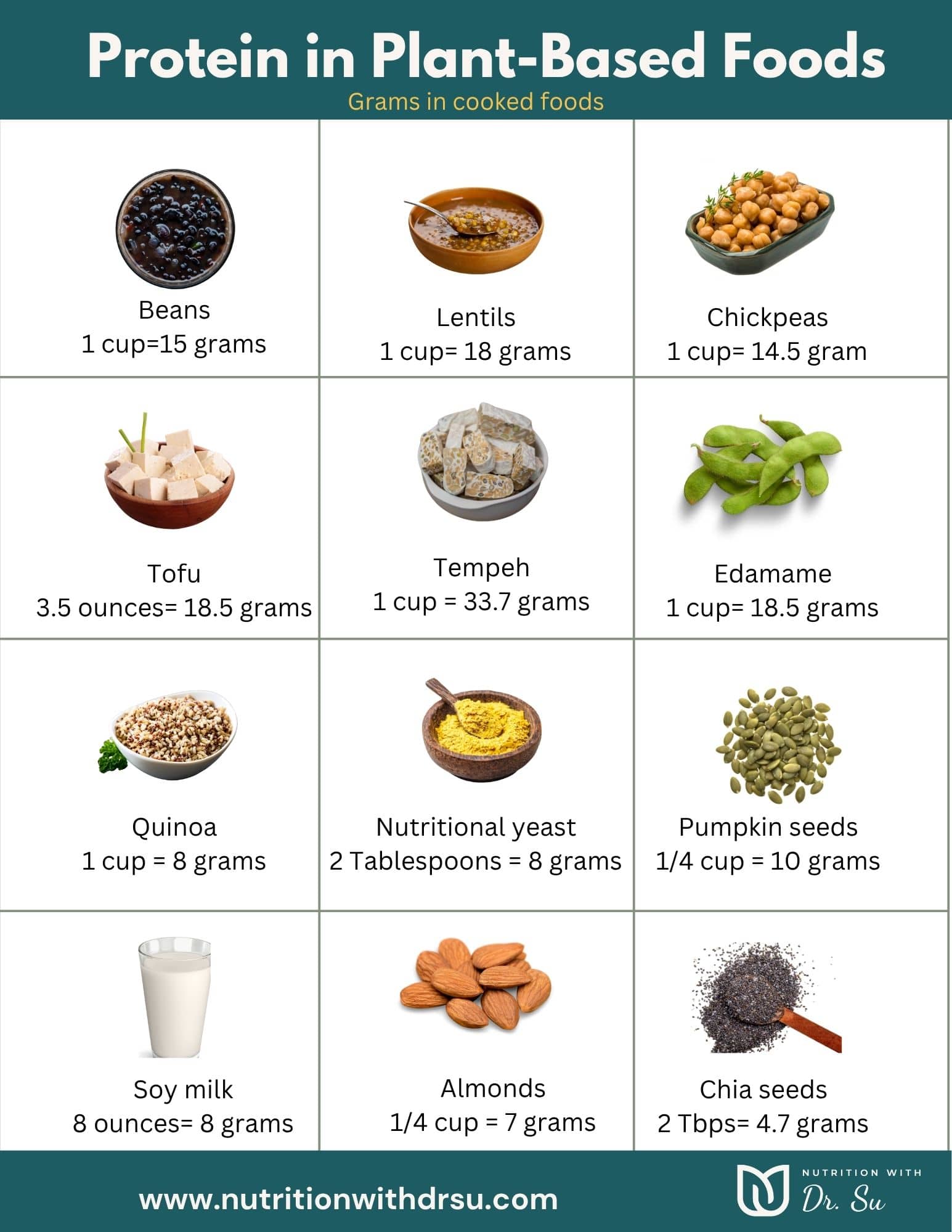
Beans and legumes: Black beans, chickpeas, kidney beans, pinto beans, and lentils. About 7 to 9 grams in ½ cup cooked. Green peas are a legume too, with about 4 grams in ½ cup.
Tofu and tempeh: Both are made from soybeans and are complete proteins, meaning they have all the essential amino acids. Firm tofu has about 10 to 20 grams in ½ cup, depending on the type, so check the label. Tempeh has about 17 grams in ½ cup.
Other soy foods: Edamame has about 9 grams in ½ cup shelled. Soy milk has about 8 grams in 1 cup.
Quinoa: A gluten-free grain with more protein than most, plus fiber. About 8 grams in 1 cup cooked. Amaranth is similar, with about 9 grams.
Nuts and seeds: Almonds, pistachios, peanuts, pumpkin seeds, and hemp hearts add protein, healthy fats, vitamin E, and magnesium. Nuts have about 2 to 7 grams in 1 ounce, and seeds about 5 to 9 grams. Peanut butter has about 7 grams in 2 tablespoons. They are mostly fat, so use them as a protein boost rather than the main protein of a meal.
Nutritional yeast: Often used as a vegan cheese substitute. It adds protein and B vitamins. Amounts vary by brand, so check the label.
Dietitian Tips to Eat Enough Protein
- Add protein to every meal and snack. This is the simplest tip on the list, and it works like a charm. Eggs or Greek yogurt at breakfast, beans or chicken at lunch, and fish or lean meat at dinner.
- Make protein the center of your meal. Plan the meal around the protein first, then add your vegetables and carbs around it.
- Start your day with protein, and get creative. Eggs, Greek yogurt, and cottage cheese are classics for a reason. When they get old, try:
- High-protein overnight oats, made with Greek yogurt or milk and a spoonful of chia seeds
- A protein shake or smoothie you can drink on the way out the door
- Cottage cheese toast with tomato and everything bagel seasoning, or with berries
- A breakfast taco with scrambled eggs and black beans
- Egg bites or a veggie egg muffin you make ahead for the week
- A Greek yogurt bowl with hemp hearts and peanut butter powder stirred in
- When your appetite is low, start with liquids. Drinking your protein is often easier than eating it. Try:
- A protein shake
- A smoothie made with Greek yogurt, milk, or soft tofu
- Kefir or a high-protein milk
- Drinkable yogurt
- When your usual protein doesn’t sound good, switch it up. Pick one new food from the list each week. If chicken sounds boring, try shrimp, tempeh, or a bean salad instead.
- Sprinkle seeds and nuts. They add crunch and a little extra protein to yogurt, salads, and oatmeal. Keep the portion small, since they are high in calories.
- Snack smart. Choose hummus, cottage cheese, jerky, or a small handful of almonds instead of chips or crackers.
- Drink your protein. A shake or smoothie can fill the gap on days when eating feels hard.
The Bottom Line
Getting enough protein gets easier when you have more than three foods in your rotation. Print the list, keep it on your fridge, and try one new food from it this week.
Get the free printable High-Protein Food List
Other helpful posts:

Dr. Su-Nui Escobar, DCN, RDN, FAND, is a Miami-based weight loss dietitian specializing in women in menopause who use GLP-1 medications. She holds a doctorate in clinical nutrition from the University of North Florida and is a national speaker, writer, and author of The GLP-1 Kitchen. She is a former spokesperson for the Academy of Nutrition and Dietetics.person.