
Semaglutide Diet Plan: What to Eat on Semaglutide [Free PDF]
Success with semaglutide comes from finding a healthy balance that feels right for you, without complicated rules or the latest diet trends.
To make the most of your weight loss efforts, focus on a few key things, like including protein and fiber in your meals. This protein-forward, fiber-supportive approach works whether you take Wegovy as tablets or injections, Ozempic (same medicine), or the newer semaglutide medications as they come out.
In this post, I’ll share simple, practical tips to help you create meals that fit your goals and everyday life. I’m also giving you a free printable cheat sheet with everything on one page, so you don’t have to remember it all.
Medical disclaimer: This content is for educational purposes only and is not a substitute for medical advice, diagnosis, or treatment.
Goals of the Semaglutide Diet Plan
- Get the most out of your medication: weight loss on a GLP-1 isn’t automatic for everyone, and paying attention to how much and what you eat helps you lose weight faster.
- Build healthy habits: create routines that are easy to stick with long term.
- Stay healthy: make sure your body gets all the nutrients it needs.
Download Your Free Cheat Sheet [PDF]
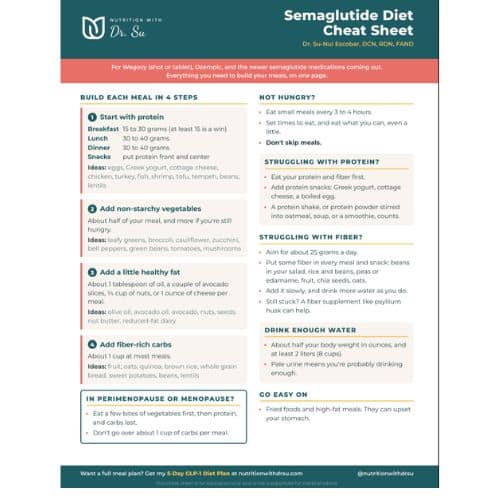
Get your free semaglutide diet cheat sheet. Keep it on your fridge or save it on your phone.
Prefer a full meal plan? If you’d rather not think about it at all, my 5-Day GLP-1 Diet Plan gives you five days of meals with recipes. Meal plans aren’t perfect, but they work, and I love them because they take away decision fatigue.
What Eating Feels Like on Semaglutide
The biggest difference I see between being on semaglutide and not is that you don’t constantly think about your next meal. You feel satisfied and full, so food takes up less space in your head.
Cravings go down too, especially for sugar. Many of my patients tell me they now crave salads and other foods they never used to want.
In my experience, the appetite suppression on semaglutide tends to be a little less intense than on tirzepatide (Zepbound). Many people on semaglutide can eat a bit more, which makes it easier to fit in your protein and fiber.
Create Your Own Meals
Build Your Meals
On semaglutide, the goal is a healthy, balanced way of eating that works for you. Your needs are different now than they were on any diet you’ve tried before.
This way of eating works with any weight loss medication on the market. It’s just one way to eat: it gives you goals to aim for and makes it easier to keep track of what you eat. My Zepbound Diet Plan uses the plate method instead. The medication doesn’t decide the method, so choose what feels easiest for you.
Start with Protein
Protein is key to weight loss. It helps you feel full longer, which can enhance the effects of your weight loss medication. It’s also essential for keeping your muscles strong as you lose weight. A body with more muscle burns a few more calories, too. It’s not a huge difference, but it matters.
So, for these reasons, make protein the center of your meal. Aim for 15 to 30 grams of protein at breakfast and 30 to 40 grams at lunch and dinner.
Breakfast is where most people struggle. Getting 30 grams in the morning is hard, so I’m happy when my patients get at least 15 grams. If they also eat 30 to 40 grams at lunch and dinner and put protein front and center when they snack, they get there.
Breakfast Protein Sources
Check labels to see how much protein is in your breakfast foods, making it easy to choose high-protein options. Here are some healthy breakfast choices:
- Chicken, turkey, and fish
- Eggs
- Beans (black beans, kidney beans, pinto beans, navy beans)
- Tofu, nutritional yeast
- Dairy products (milk, cottage cheese, Greek yogurt)
- Plant-based milk fortified with protein
- Seeds: hemp, chia, flaxseed, pumpkin
- Protein powder
It is easy to make higher-protein versions of foods you already eat. For example, add Greek yogurt or protein powder to your smoothies, choose higher-protein bread, or have beans or quinoa as a side dish.
Lunch & Dinner
Aim for 30 to 40 grams of protein for lunch and dinner to meet most of your protein needs. Great options include:
- Poultry: chicken (breast, thigh, drumsticks), turkey (ground, breast, or thigh)
- Fish: salmon, tuna, trout, cod, haddock, mackerel, sardines, tilapia, and halibut
- Lean meats: beef (sirloin, tenderloin, ground), lamb, and bison
- Pork: pork loin, pork chops, pork tenderloin, ground pork, and ham
- Plant-based proteins: beans (black beans, kidney beans, pinto beans, navy beans), lentils, chickpeas, edamame, tofu, tempeh, and seitan
- Shellfish: shrimp, crab, lobster, mussels, clams
To balance your meal and add fiber, load up on non-starchy vegetables.
Running out of ideas? My High-Protein Foods List has more than 60 protein foods, how much protein is in a normal portion, and a free printable.
Add Non-Starchy Vegetables
Incorporate a mix of these vegetables into your meals for a balanced and nutritious diet. Including a variety of colors and types ensures your body gets a wide range of vitamins and minerals.
Vegetables also add fiber to your meals, an important nutrient that can help minimize potential medication side effects.
Vegetables can also make your meals more flavorful and colorful, so you look forward to eating them. To keep things exciting and avoid boredom, explore new recipes and ways to prepare them. Experimenting with different cooking methods, seasonings, and combinations can make all the difference.
Make vegetables about half your meal, but feel free to eat more if you’re hungry.
Here are some non-starchy vegetables to include:
- Leafy greens: spinach, kale, lettuce, arugula, Swiss chard, collard greens, and mustard greens
- Cruciferous vegetables: broccoli, cauliflower, cabbage, bok choy, and radishes
- Fresh veggies: cucumber, zucchini, and yellow squash
- Colorful options: bell peppers (red, yellow, green, orange), asparagus, and snap peas
- Versatile picks: green beans, Brussels sprouts, and artichoke hearts
- More to try: tomatoes, eggplant, mushrooms, and okra
- Crunchy options: celery, jicama, fennel, and water chestnuts
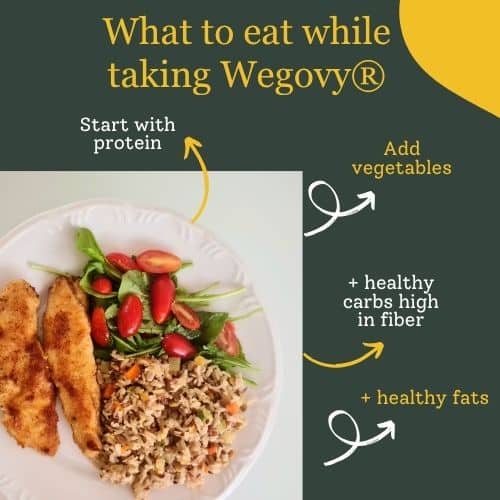
Now that you have protein and fiber, add healthy fats. Use them to cook or add flavor.
Healthy Fats Are Important Too
Dietary fat used to have a bad reputation, but we now know that healthy fats are essential to a balanced diet. The key is enjoying them in moderation. Aim for one tablespoon of oil or other fat per meal, a couple of avocado slices, or ¼ cup of nuts and seeds. For cheese, stick to one slice or about 1 ounce per serving.
Here are some examples of healthy fats to include in your meals:
- Avocados
- Olive oil
- Avocado oil
- Nuts like almonds, walnuts, and cashews
- Seeds such as chia, flax, and pumpkin seeds
- Nut butter like almond or peanut butter
- Reduced-fat or low-fat dairy products, including Greek yogurt and cheese
Healthy fats taste great and keep you feeling full and satisfied, so your meals are both nutritious and enjoyable.
Warning! Keep fried foods and high-fat meals to a minimum, as high-fat meals can upset your stomach.
Complex Carbohydrates in Moderation
Adding carbohydrates to your meals can feel intimidating, especially if you’ve spent years dieting and heard they’re “bad” for you. Many of us were taught that cutting out carbs is the fastest way to lose weight. While this might be true for losing pounds, it’s not the full story.
In reality, a moderate amount of fiber-rich carbohydrates can be incredibly beneficial. They provide the energy your body needs to function, plus fiber that supports digestion and overall health. Choosing the right kinds of carbs will fuel your day and can make a big difference in how you feel.
Keep portions to about one cup per meal.
Choose:
- Fruit: apples, berries, oranges, bananas, pears, peaches, mangoes, and kiwi
- Starchy vegetables: sweet potatoes, corn, peas, butternut squash, and acorn squash
- Whole grains: quinoa, brown rice, oats, farro, bulgur, barley, whole-grain bread, whole-grain pasta, and wild rice
- Legumes: lentils, chickpeas, black beans, kidney beans, pinto beans, and edamame
These options provide energy, nutrients, and fiber to keep you feeling satisfied and energized throughout the day.
Now that you know which foods to include in your meals, let’s talk about portion sizes.
Portion Sizes
As a dietitian who works with patients taking weight loss medication, I see semaglutide decrease appetite, and for many people, that helps keep portion sizes under control. But not everyone gets the same appetite suppression on semaglutide. Your experience is unique, so some people still need to pay attention to portion sizes.
That’s why I talk about portions with all my patients. Paying attention to them helps you do two things: make sure you eat enough to get the calories and nutrients you need, and make sure you’re not eating too much.
What If You’re Not Hungry?
If you find it difficult to eat big meals, try eating small meals every 3 to 4 hours. This can make eating feel less overwhelming while still helping you meet your nutrition needs.
Set times to eat during the day, and when that time comes, eat something, even if it’s just a little. Eat what you can. The biggest rule I give my patients is simple: don’t skip meals.
Focus on simple, nutrient-packed foods like Greek yogurt, a handful of nuts, a hard-boiled egg, or small portions of lean protein and veggies. These mini meals can give you energy and help you stay on track, even when your appetite isn’t strong.
The goal is to make eating feel manageable and nourishing without feeling too full or uncomfortable!
What If You’re Struggling to Eat Enough Protein?
If you’re taking weight loss medication, it’s normal to feel full quickly or not feel very hungry. To make the most of your meals, eat your protein and fiber first, then move on to the rest of your meal. This way, you’re prioritizing the nutrients your body needs most.
If you’re still not getting enough protein, don’t worry! You can add some high-protein snacks into your day, like Greek yogurt, a handful of nuts, or a boiled egg. Another great option is to include a protein shake or mix protein powder into your meals. You can stir it into oatmeal, soups, or smoothies. These small changes can make a big difference in helping you meet your protein goals while keeping meal planning easy and manageable.
What If You’re Struggling to Eat Enough Fiber?
Fiber is one of the hardest things to get enough of on semaglutide. You’re eating less food, so you’re also eating less fiber, and that’s one reason constipation is so common. Aim for about 25 grams of fiber a day.
Unless you put some thought into it, it just doesn’t happen. Make sure everything you eat has some fiber, including your snacks. Get creative with it. Add beans to your salad. Have rice and beans instead of plain rice. Toss some peas or edamame into whatever you’re making. Fruit like kiwis and berries, chia seeds, and oats all help too.
If your stomach is sensitive, add fiber slowly and drink more water. If you’re still struggling, a fiber supplement like psyllium husk can help.
Are There Foods to Avoid on Semaglutide?
Not really. You don’t have to give up any food completely. But a few foods can make side effects like nausea, reflux, and bloating worse, so I suggest keeping them small:
- Fried and greasy foods, like fries, fried chicken, and greasy takeout. They sit in your stomach even longer while your digestion is slower.
- Big, heavy meals. Eating past full is one of the fastest ways to feel sick, so stop at the first sign of fullness.
- Sugary drinks, like soda, juice, and sweetened coffee drinks. They don’t fill you up, and they take up room you need for protein.
- Fizzy drinks, if they make you bloated.
As for alcohol, most people on semaglutide don’t even feel like drinking. If you do, keep it small and have it with food.
Perimenopause or Menopause?
Give two things extra attention. Get protein at every meal, because you’re already losing muscle at this stage, and fast weight loss can take more. And watch your carbs. This plan is already moderate in carbs, so you don’t need to eat much less, but don’t go over about 1 cup per meal, since insulin resistance becomes more common as estrogen drops.
If you’re in perimenopause or menopause, the order of your meal changes slightly. Start with a small amount of vegetables before your protein, and save your carbs for last. I know that might sound different from what you’ve heard, but it can help lower post-meal blood sugar spikes, which matters when insulin resistance is more likely. I’m talking about a few bites, not a large salad. You don’t have to finish all your vegetables first, so you still have room to eat enough protein.
Learn more in Menopause and Insulin Resistance.
Drink Enough Water
In my practice, I tell patients to aim for about half their body weight in ounces of water a day, and at least 2 liters (about 8 cups) no matter what. Other drinks without sugar count too. A simple check is the color of your urine: if it’s pale, you’re probably drinking enough.
Sample Meal Plan
Here’s a sample day to give you an idea of what a full day of meals can look like:
- Breakfast: egg burrito made with 2 eggs, 1 slice of turkey bacon, a carb-controlled tortilla, jarred jalapeño peppers, coffee
- Snack: ½ cup of plain Greek yogurt with berries and stevia or honey
- Lunch: chicken bowl with 4 ounces grilled chicken breast, ½ cup quinoa or brown rice, roasted vegetables, 2 small slices of avocado
- Dinner: turkey meatballs in marinara sauce, ½ cup chickpea pasta, side salad
- Snack: ½ cup cottage cheese with strawberries
Remember, this is just an example to get you started. If your meals follow the general guidelines above, feel free to mix and match them according to your preferences.
Want more meals like these? Get five full days of meals in my 5-Day GLP-1 Diet Plan.
Should You Consult with a Registered Dietitian Nutritionist (RDN)?
An RDN can help tailor your meals to your needs. They can also help you manage common medication side effects and, more importantly, help you craft a plan for short- and long-term success.
I would encourage you to choose a dietitian who specializes in weight loss for people using GLP-1 medications.
Final Thoughts
Semaglutide and other weight-loss medications can quiet the food noise in your head. For most people, with hunger under control, your approach to eating will naturally shift. You don’t need to follow fad diets or be overly strict, but you do need to focus on eating nutritious foods most of the time.
That said, an occasional treat, like your favorite mac and cheese or a glass of wine, is completely okay. Balance is the goal!
Dr. Su-Nui Escobar, DCN, RDN, FAND, is a Miami-based weight loss dietitian specializing in women in menopause who use GLP-1 medications. She holds a doctorate in clinical nutrition from the University of North Florida and is a national speaker, writer, and author of The GLP-1 Kitchen. She is a former spokesperson for the Academy of Nutrition and Dietetics.person.
23 thoughts on “Semaglutide Diet Plan: What to Eat on Semaglutide [Free PDF]”
I have lost real good on the diet plus i walk daily.
Congratulations!! The medications work.
This is my third month on the shot. I went up to 40mg thinking that would help lose more weight, but I have plateaued. I am still eating healthy and I am not sure how to get the weight to move. I have been stuck on 226 since 2/21. Any help would be appreciated.
Hello, check my blog about why am I not losing weight on Wegovy- it might help- https://nutritionforweightlossmeds.com/why-am-i-not-losing-weight-on-semaglutide/
You continually suggest salmon as one of the lean options. I detest salmon. Realistically, what other types of fish do you suggest. I like Lake Michigan White Fish, Tuna, occasionally walleye or local lake fish.
It is true! I will include other sources. I often suggest it because of its anti-inflammatory properties, but variety and pleasure in food are key to healthy eating. Thank you for making my content better.
I’m having serious problems with what to eat because i easily have constipation once i eat any small thing. i need help with diet plan.
I have two things for you, one for constipation and the other one is a meal plan (which also will help) 1) https://nutritionwithdrsu.com/wegovy-constipation-relief/. 2) https://nutritionwithdrsu.com/semaglutide-diet-plan/. I hope it helps!
I would love to have a weekly food menu. I’m having a hard time with what foods will help me lose weight and be healthy!
HI Wanda, here is a sample menu plan with tons of good information to help you make good food choices. I am currently working on a more comprehensive plan. https://view.flodesk.com/pages/6480de3f6242f9e5ebb68b4a.
I am just starting this weight management drug and am concerned about getting enough nutrients. I currently do IF and only eat dinner. I know that that will not work with this drug as I cant eat big portions like I have been doing. What to you recommend. Also would like a sample menu plan.
Thank you for your comment. It will be hard to get enough nutrients with only one meal a day because it is hard to eat enough in this medication. I suggest moving to a 16:8 IF to allow yourself to have two meals and one snack (you will notice that the meals will be small). Here is a sample meal plan- https://view.flodesk.com/pages/6480de3f6242f9e5ebb68b4a
Any protein shakes? Any menu? Pleaseeeee
Protein shakes can help when you are not hungry. About the menu, here is one and a guide to help you with everyday meals. https://view.flodesk.com/pages/6480de3f6242f9e5ebb68b4a
Month 5. I have lost 22lbs. I do not eat near as much as I used to. I try to consume around 1200 calories per day. I noticed that bread and starches really make me nauseated and constipated.
I wanted to know if peanut butter is ok to put in smoothies while taking wegovy?
Peanut butter can create a more satisfying smoothie. If you are eating enough throughout the day, keep your portion size small (1 Tablespoon) to keep your calories under control. If you are not eating enough, then feel free to make it 2 Tablespoons.
I am just starting Wegovy and with the potential for major health problems is a scare for me. I know this is more so what to eat but when I’m ready I want to be completely comfortable to start. I’m mentally ready but want to make sure I’m safe and eating accordingly for my blood sugar not to bottom out. I have always gotten “sick” if I don’t eat in the mornings or wait too long in the evenings. I get headaches if I don’t eat but I’m sure that’s my body not getting the normal crap! Also, injection sites are stomach, arm and thigh but for someone new who’s never done this on their own where exactly in these areas do I inject? sorry for all the questions
Hi Michelle, you can keep eating at the times that work best for you. Most likely, what will happen is that you will start eating smaller portions. You can also keep healthy snacks in your purse to eat if you start not feeling great. Please make sure you mention this to the healthcare provider that is prescribing your Wegovy. They can also explain exactly where to inject and what are the signs of a hypoglycemic episode (low blood sugar). I hope this answer helps!
I would be very interested in that sample menu! I am into my second month on Wegovy but weight loss was only five pounds the first four weeks. My food intake is less than half with no carbs. I do have a problem with needed water and exercise. I have Congestive Heart Failure so walking or exercise is not an option as my breathing is deeply affected. I believe losing weight might help but I am getting very discouraged with only five pounds loss in four weeks. My Cardiologist and Family Physician insists that I walk but the distance is very short. Thank you!
I will have the sample meal plan ready very soon 🙂 However, I also recommend for you to seek the help of a Registered Dietitian to personalize your diet according to your needs. I am thinking low sodium too. Walking according to your physicans’ instructions is a great idea too. It can speed up the weight loss process and make you healthier too.
I’m finding it very difficult to consume enough food. My usual calorie count is about 800 calories. When I feel hungry even over hungry and try to eat I can eat two or three bites and I have to be done. . I’ve been looking for a sample menu of what other people are doing. is anyone else having the same problem? I’m feeling like I need higher Quality nutrition in a small quantity of food. Can you post a sample daily menu that might answer this question? what is spectacular to me about this drug is that my sure cravings are completely gone. I have no interest in a brownie or ice cream which have always been my major downfall.
Hello Bev, that is a common issue. I am actually working on a sample menu as it is one of the common concerns my clients have. I will let you know when the blog post is up.