
I always recommend an anti-inflammatory diet to my clients going through menopause, and your salad dressing is a place to start.
This anti-inflammatory salad dressing has ginger and turmeric, two spices we know have anti-inflammatory properties. It can also replace dressings with more saturated fat and sugar, two things that promote inflammation.
Best of all, it tastes great, and when food tastes great, it’s easy to keep eating it. When every bite counts, let’s make the dressing work for us, rather than against us.
Why an Anti-Inflammatory Diet Matters in Menopause
Inflammation is the body’s natural response to injury or infection, but when it stays high over time, it can contribute to a number of health issues. Research suggests inflammation tends to rise during perimenopause as estrogen declines, which is one reason this way of eating is so useful at this stage of life.
An anti-inflammatory diet is linked to many benefits, including:
- Easier weight management
- Better heart health
- A healthier gut
- Better brain health
- Healthier joints
- Lower risk of some chronic diseases
It’s also rich in the vitamins, minerals, and other nutrients essential for good health.
A dressing can’t do all of this by itself, but it is one part of the equation. It adds known anti-inflammatory ingredients to your plate and limits the ones that promote inflammation.
Ingredients of an Anti-Inflammatory Salad Dressing
The basic ingredients in salad dressing are oil and an acid such as vinegar, lemon juice, or lime juice.
A classic ratio is three parts oil to one part acid, but you can adjust it to your preference. My recipe below uses two parts oil to one part acid, which gives you a sharper flavor and fewer calories.
To this base, you can add herbs, spices, garlic, shallots, honey, mustard, salt, and pepper to create a wide variety of flavors.
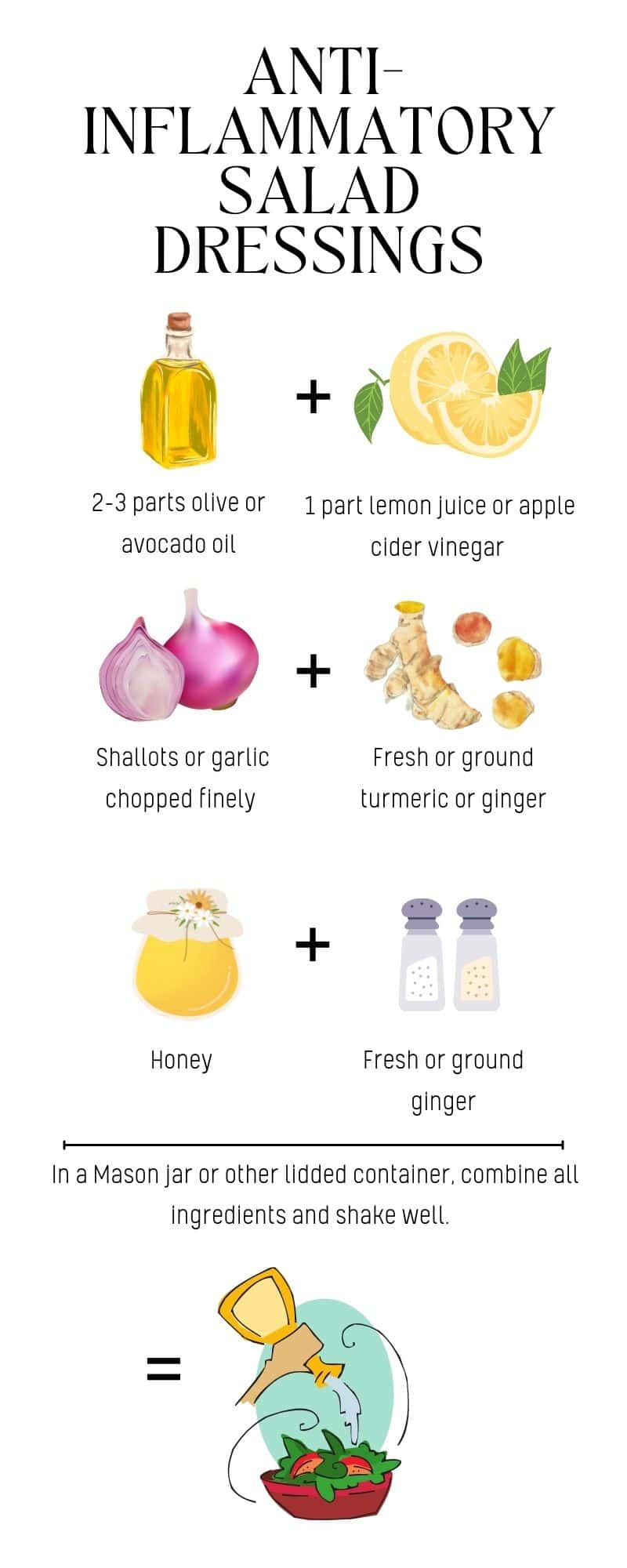
Here are some of the best ingredients for an anti-inflammatory salad dressing:
Olive Oil
Loaded with antioxidants and healthy monounsaturated fats, olive oil is probably the best oil for an anti-inflammatory salad dressing.
Olive oil contains a compound called oleocanthal, which has anti-inflammatory properties. It is also central to the Mediterranean diet, one of the best-studied ways of eating for heart health. That matters because heart disease risk rises after menopause.
It’s a good fat, but the calories add up if you pour without measuring. See How Much to Use below.
The Acids
Apple Cider Vinegar
Apple cider vinegar has been used for hundreds of years as a folk remedy, and more recently it has gained popularity for its possible anti-inflammatory properties. The research in people is still limited, so I think of it as a tangy, low-calorie way to add flavor.
Lemon Juice
Not only does lemon juice add a tart and tangy flavor to your salad, but it also contains antioxidants.
Lemons are a great source of vitamin C, which helps protect your cells from oxidative stress. Lemon juice also contains flavonoids, plant compounds studied for their anti-inflammatory effects.
Adding Flavor
Ginger
Ginger has a long history as a medicinal herb. Gingerol, its active compound, has been shown to reduce inflammation at the cellular level. It adds warmth to your dressing and is an easy way to cook with an anti-inflammatory ingredient.
Turmeric
Turmeric is a spice that has been used in Indian cuisine for centuries. Curcumin, its active compound, has anti-inflammatory effects.
My rule of thumb is foods first, supplements second, so cooking with turmeric is a great place to start.
Shallots
The shallot is a type of onion commonly used in cooking. Shallots have a milder flavor than onions and can be eaten raw or cooked.
They contain vitamin C, vitamin B6, and quercetin, a flavonoid studied for its anti-inflammatory effects.
Garlic
Garlic contains several compounds studied for their anti-inflammatory effects, including allicin and ajoene.
Mustard
A popular condiment, mustard is also an ingredient in many dishes. Did you know that it contains anti-inflammatory compounds? Mustard seeds contain an oil called allyl isothiocyanate (AITC), which has been studied for this effect. Mustard also helps your dressing stay mixed.
Honey
To make your salad dressing a little sweeter, try adding honey.
Like lemons, honey contains flavonoids, which have been shown to have anti-inflammatory effects. It may also support the growth of healthy bacteria in the gut. It is still an added sugar, so a little goes a long way. Skip it or use less if you are watching added sugar.
Black Pepper
Beyond adding flavor to your salad dressings, black pepper contains piperine, which also has anti-inflammatory properties. Freshly ground black pepper also improves your body’s absorption of curcumin, the active compound in turmeric.
Salt
Salt is only used to add flavor to the dressing and to balance out the acidity of the lemon juice or vinegar.
These ingredients are just a few of the many you can start adding to your meals today.
How Much to Use
One serving of the recipe below is about 2 tablespoons, with 175 calories and 18 grams of fat, mostly the healthy unsaturated kind. If you are working on weight loss, start with 1 tablespoon and toss the salad well so it goes further.
Then make the salad a meal by adding protein and fiber. For ideas, see my high-protein foods list and high-fiber foods list.
How to Make Anti-Inflammatory Salad Dressings
It’s easy!
In a Mason jar, add two parts oil, one part vinegar or lemon or lime juice, and your choice of spices, salt, and black pepper. If you’re using honey, you may need to warm it first to make it easier to mix.
Close the lid and shake well. You could also use a bowl and a whisk, if you prefer. Olive oil can thicken in the fridge, so let the jar sit out for a few minutes and shake it again before serving.
Serve as a dressing for The Ultimate Anti-Inflammatory Salad.
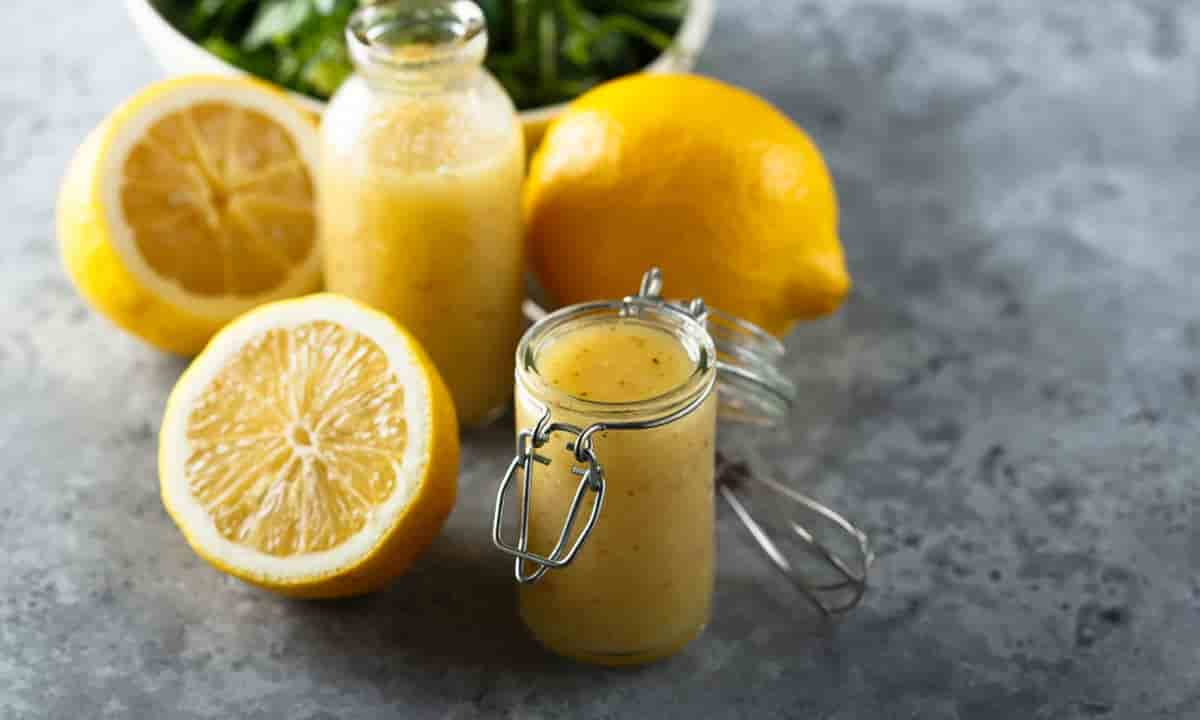
Turmeric Ginger Lemon Salad Dressing
Ingredients
- 1/2 cup olive oil extra virgin
- 1/4 cup lemon juice
- 1 tsp turmeric powder
- 1 tsp ginger powder
- 1 Tbsp honey
- 1 Tbsp shallot finely chopped
- Salt to taste
- Pepper to taste

Instructions
- In a Mason jar or other lidded container, combine all ingredients and shake well.
Notes
- Serve with the Ultimate Anti-Inflammatory Salad or your salad of choice
- Store in the fridge for up to 1 week.
- Fresh ginger and garlic version: Skip the turmeric, ginger powder, and shallot. Add 1 teaspoon grated fresh ginger, 1 teaspoon minced garlic, and 1/2 teaspoon lemon zest. It has a brighter, sharper flavor. To peel fresh ginger, use a peeler or a spoon.
Nutrition

Dr. Su-Nui Escobar, DCN, RDN, FAND, is a Miami-based weight loss dietitian specializing in women in menopause who use GLP-1 medications. She holds a doctorate in clinical nutrition from the University of North Florida and is a national speaker, writer, and author of The GLP-1 Kitchen. She is a former spokesperson for the Academy of Nutrition and Dietetics.
2 thoughts on “Anti-Inflammatory Salad Dressing: Turmeric Ginger Lemon”
Delicious and refreshing! Thank you for sharing. 🙂
Thank you Katie!