

The answer is yes! In fact, walking can help with weight loss in many ways. It is a low-impact exercise that can be done pretty much anywhere.
Plus, it’s FREE!
The benefits of walking for weight loss don’t stop with the calories you burn. It can also improve your mood and help to reduce stress levels. When you’re feeling good, you’re more likely to make healthier choices in other areas of your life, including in your eating habits.
So, if you’re looking for a simple way to start losing weight, begin by taking a one-mile walk a day and see what happens. Not only will it help with weight loss, but you will also feel better mentally and physically.
Give it a try and see for yourself!
Can You Lose Weight Walking?
Walking is a great way to lose weight and change your body composition.
Research shows walking can help you lose weight, especially when you pair it with changes to what you eat.
For best results, experts recommend 150 minutes of exercise per week or a little above 21 minutes a day. So you can see how taking that one-mile walk every day can help you get very close to such a goal.
How Walking Can Help With Weight Management
Walking can help you manage your weight in many different ways. It’s a great way to burn calories, improve your mood, and lower your stress.
Lower stress may also help with belly fat.
But let’s look at the benefits in more detail.
Walking Burns Calories
Taking a walk sounds simple, but it’s a great way to get exercise and burn calories. The amount of calories you will burn depends on many factors such as your age, gender, weight, and how fast you walk.
The table below shows you how many calories you burn depending on your weight and the number of miles you cover. This table considers a moderate-intensity pace of 15 minutes per mile.
There are many phone apps and trackers to measure your speed and calories if you want to be more accurate.
| Weight/Miles (walking 15/min mile) | 1 mile (15 min) | 2 miles (30 min) | 3 miles (45 min) | 4 miles (60 min) |
| 125 lbs | 68 | 135 | 202 | 270 |
| 150 lbs | 81 | 162 | 243 | 324 |
| 175 lbs | 95 | 189 | 284 | 378 |
| 200 lbs | 108 | 216 | 324 | 432 |
| 250 lbs | 136 | 270 | 404 | 540 |
This table was created using the calorie burn rate calculator by the University of Rochester Medical Center.
Apps and Fitness Trackers
There are many ways to measure your progress. If you want to get fancy, you can buy a pedometer or fitness tracker. But many people just use their cell phones. There are plenty of apps to choose from that can track your steps, distance, and calories burnt.
Alternatively, you can also use a smartwatch to track your progress. A common goal while using these apps is to reach 10,000 steps.
Walking Can Help Change Body Composition
Going for a walk is a great way to get some exercise and fresh air. When you walk, your muscles work against gravity to move your body forward. This helps keep your leg muscles strong and supports your bones.
Walking on its own won’t build much muscle, though. Want to make your walks work harder? Try a weighted vest. The extra weight adds resistance, so your muscles and bones work more with every step. Start light, around 5 to 10% of your body weight, and build up slowly. If you have back, knee, or joint problems, check with your doctor first.
To build and keep muscle, which matters more and more in menopause, add strength training a couple of times a week. Weightlifting, resistance bands, power yoga, and Pilates all count.
Walking Improves Your Mood
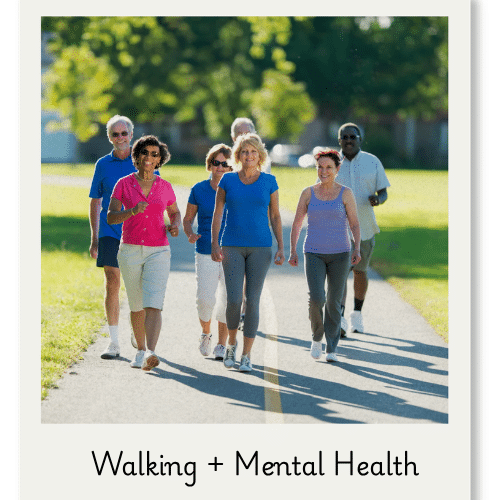
When it comes to lifting your mood, there’s no need to look further than your own two feet. Research shows that a simple stroll can profoundly impact your mental state, providing an instant and lasting boost of energy and happiness.
If you go out with others, the benefits are even more pronounced. Walking combined with positive interactions
Why is this important for weight loss? When you’re happy, taking good care of yourself is easier.
Additionally, depression can lead to changes in appetite, cravings for unhealthy foods, and a general lack of motivation to exercise. As a result, people who are depressed may find themselves gaining weight.
So gather your friends and set up a time to head out every week, or get your partner and just stroll around the block after dinner.
FAQs About Walking and Weight Loss
Can you lose weight by walking a mile every day?
Yes, it is possible to lose weight by covering a mile every day. However, what you eat is also important. Healthy eating, combined with exercise, will yield better results.
What can you do to see faster results? You can:
- Walk faster
- Walk longer
- Combine walking with other weight-bearing exercises such as power yoga, Pilates, or weightlifting.
How much weight can you lose by walking a mile every day?
It depends on many factors, like your weight, your pace, what you eat, and your hormones. There’s no exact number. What we know is that walking every day adds up over time, and it works best paired with changes to what you eat.
Can Walking Help Reduce Belly Fat?
A small study of overweight women who followed a 12-week walking program showed a significant reduction in visceral fat. These women walked three days a week, averaging 50-70 minutes.
It’s also entirely possible to have the same effects by doing less but more often.
At least part of the reason walking is good for fighting belly fat is because it helps to reduce stress as well as promotes better sleep, both of which are important in reducing abdominal fat.
How Far is a Mile?
To put it in perspective:
If you’re going at a brisk pace, one mile will take you approximately 15 minutes to complete.
A mile is:
- 1.6 kilometers
- 17.5 football fields
- 4 laps around a typical indoor track
As we’ve seen, it’s easy to measure how far you walk using a tracking device or a phone app.
How Fast Do You Need to Walk?
The CDC recommends at least 150 minutes of moderate-intensity exercise a week for your health. For weight loss, many people need more than that, along with changes to what they eat.
How to Incorporate Walking into Your Routine
If you’re new to any sort of physical activity, start slowly by walking for just 10 minutes a day. If that feels like too much, break it down into two five-minute walks. Once you’re comfortable with that, gradually start to increase your time and distance.
A good goal is 30 minutes most days of the week. Walking uninterrupted is great, but if you can’t fit in a 30-minute session, try three 10-minute walks instead.
To help make walking a part of your routine, here are a few tips:
- Schedule it into your day: Set aside time for a morning or after-dinner stroll. Or gather a group of co-workers and go out during your lunch break.
- Find a walking buddy: Invite a friend or family member to join you. It’s more fun — and motivating — than walking alone. Plus, you will probably be more likely to stick with it if someone’s counting on you to turn up.
- Make it enjoyable: Listen to music, a podcast, an audiobook, or call a friend while you’re out. Or try going somewhere different each day to mix things up and explore your community.
- Get the right gear: Comfortable shoes are key. But if you walk often, it’s also worth investing in weather-appropriate clothing and accessories, such as a hat or sunglasses.
- Walk after meals: a 10-minute walk after eating can help steady your blood sugar and is an easy habit to start with.
Do I Need Special Shoes?
If you’re only out for 15 minutes, you don’t need to worry about getting new shoes. But as you cover more territory, this is an important consideration.
A pair of supportive, comfortable shoes can make a big difference to your ability to go greater distances and prevent foot pain. So when you buy new shoes, go to the store and move around to see how you feel.
Leave about a thumb’s width of space between your longest toe and the front of the shoe, since your feet swell a little as you walk. Try shoes on later in the day, when your feet are at their largest.
Do I Need Special Gear for Walking?
If you travel long distances, you will need special gear. Don’t use a lack of gear as an excuse not to start.
The only truly important piece of equipment is a water bottle with you—any bottle!
These are the things that can make your exercise more pleasurable:
- Comfortable socks
- Dressing appropriately for the weather. If you’re in a colder climate, dress in layers so you can remove clothes as you warm up. If you’re in hot weather, dry-fit clothes work wonderfully.
- Water bottle
- Sunscreen, hats, and sunglasses
- Fitness tracker (optional)
Effects of Walking on Menopause Symptoms
Walking is a low-impact form of exercise with many benefits, including reducing menopause symptoms.
Some of the advantages of this type of exercise that are specifically beneficial for menopausal women include:
- Improving sleep quality
- Reducing stress and anxiety
- Reducing risk of heart disease
- Improving bone health
- Regular movement also helps calm inflammation, which tends to rise in menopause.
Some women find that regular exercise helps with hot flashes and night sweats, though the research is mixed.
Considering how easy it is to start walking and its many benefits, it’s definitely worth a try.
The Bottom Line
When it comes to your health, can you lose weight by walking a mile a day? The answer is yes! It is a great, low-impact way to get your body moving and start burning calories.
However, it does much more than just burn calories. It can help improve your mood and reduce stress, which can give you the spirit you need to take better care of yourself. Walking is great for your overall physical and mental health.
So, put on your comfortable shoes and hit the pavement!

Dr. Su-Nui Escobar, DCN, RDN, FAND, is a Miami-based weight loss dietitian specializing in women in menopause who use GLP-1 medications. She holds a doctorate in clinical nutrition from the University of North Florida and is a national speaker, writer, and author of The GLP-1 Kitchen. She is a former spokesperson for the Academy of Nutrition and Dietetics.