
Weight gain is one of the most frustrating parts of menopause. You try everything, you do everything right, and it’s still so hard to lose the weight. And it isn’t about vanity. We want to stay healthy, feel energetic, and keep doing the things we love.
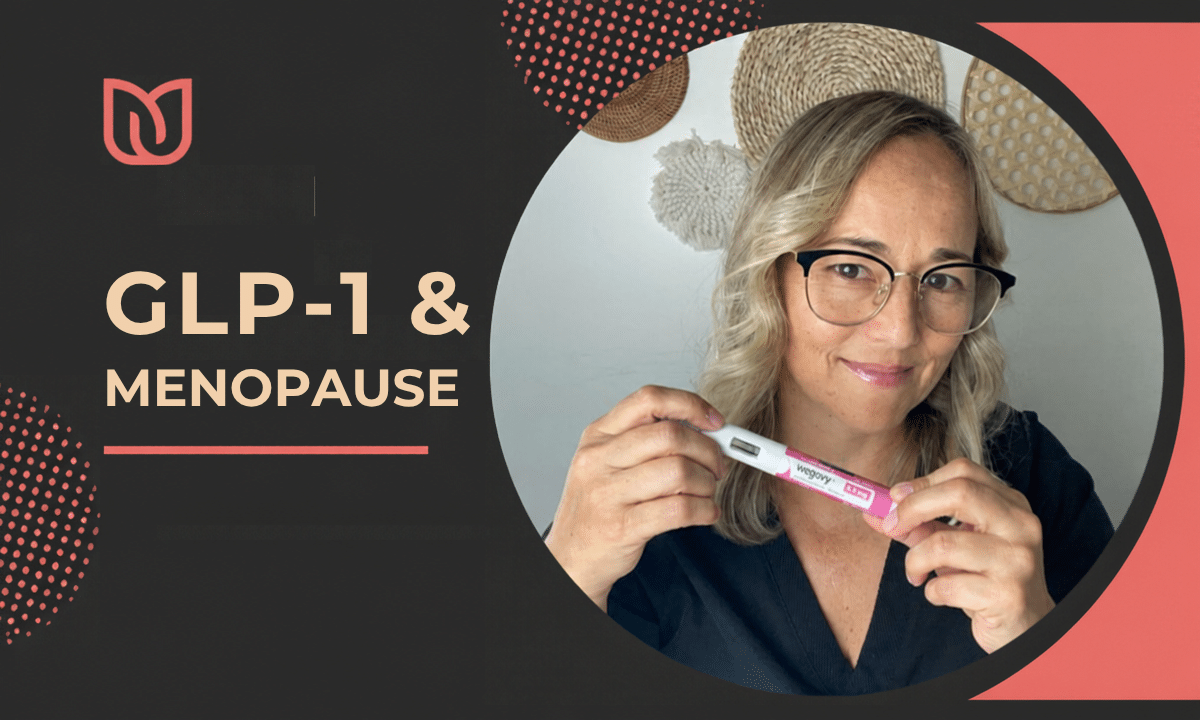
I hear it from almost every woman who comes to see me, whether she’s in the transition to menopause or recently through it. There are always things we can do with food, movement, and sleep. GLP-1 medications like Wegovy, Zepbound, and Foundayo give us another tool that really works, and I’m glad we have it.
If you’re in perimenopause or menopause and taking a GLP-1, or considering one, here’s what the research shows, what’s different for women your age, and what I tell my clients to eat.
Medical disclaimer: This content is for educational purposes only and is not a substitute for medical advice, diagnosis, or treatment.
Do GLP-1s Work for Women in Menopause?
Yes. In the big clinical trials, average weight loss looked like this:
- Wegovy shot (semaglutide): about 15% of body weight at 68 weeks.
- Zepbound (tirzepatide): up to about 21% at the highest dose, at 72 weeks.
- Wegovy pill (oral semaglutide): about 14% at 64 weeks.
- Foundayo (orforglipron): about 11% to 12% at the highest dose, at 72 weeks.
For a woman who starts at 180 pounds, 15% is 27 pounds. Women also tend to lose more than men on these medicines, and some people lose 30% or more.
Women your age are using them, too. According to a 2025 RAND survey, 1 in 5 women ages 50 to 64 have taken a GLP-1, more than any other age group of men or women.
What about women in menopause specifically? A 2026 review pulled together the research so far, and here’s what it found:
- Women in menopause lost weight and belly fat on GLP-1s. Semaglutide led to similar losses in weight, fat, and muscle before and after menopause.
- In one study, women on tirzepatide lost about 8 inches from their waist, compared with about 1.5 inches on a placebo.
- Hormone therapy may add to the benefits. A Mayo Clinic study of 106 postmenopausal women on semaglutide found that, after a year, the women also on menopause hormone therapy lost about 16% of their body weight, compared with about 12% for women who weren’t. Women on both also saw better cholesterol, triglycerides, and A1C. An early study on tirzepatide found more body fat loss with hormone therapy too.
These results are encouraging, but the research is still young. Most studies were small, many reviewed medical records, and most lasted only 3 to 6 months. They can’t prove hormone therapy caused the extra weight loss, and we don’t know yet how GLP-1s affect bone and heart health in menopause. If you’re curious about hormone therapy, that’s a great conversation to have with your doctor.
Why Menopause Makes Weight Loss Harder
Menopause weight gain isn’t just about eating too much or moving too little. Several things change at once:
- Body composition changes. Age and menopause both change your body composition. In perimenopause, women tend to lose muscle and gain more fat deep in the belly, even when the number on the scale barely moves. Less muscle means your body burns less energy.
- Hormone shifts. As estrogen drops, your body becomes less sensitive to insulin, which makes it easier to store fat, especially around the belly.
- Sleep problems. Poor sleep throws off the hormones that control hunger and fullness, so you feel hungrier and crave more sugary, high-fat foods.
- Stress and less time for yourself. Many women are caring for kids, aging parents, and a career all at once.
- Genetics. Your family history affects where your body stores fat and how it responds to these changes.
Every woman is different, and this isn’t a complete list. But it explains why so many women feel like the old tricks stopped working.
What about hot flashes? Losing weight may help. In one study, women who lost 10% or more of their body weight were more likely to stop having hot flashes. Researchers are now studying whether GLP-1s ease hot flashes directly, but we don’t know yet. So some women may notice fewer hot flashes as a side benefit, but nobody should take a GLP-1 for hot flashes.
What I Tell My Clients in Menopause Who Start a GLP-1
First, I look at how she’s eating and how the medication is changing her eating. Then our number one goal is to keep her muscle while she loses fat. Any weight loss includes some muscle, and when you’re eating less on a GLP-1, it’s harder to hold on to it. In menopause, we’re already losing muscle with age. So we start there, with protein and strength training. Then we work on fiber, the order you eat your food, and water.
Keep Your Muscle: Protein and Strength Training
Protein protects your muscle while you lose weight, and it helps you build eating habits that carry your results into the future. Aim for about 80 to 120 grams a day, spread across your meals and snacks.
Protein alone won’t protect your muscle, though. Pair it with strength training a few times a week. When the two go together, the results are much better: in a 2025 study of 200 adults on GLP-1s who got protein targets and strength training guidance, people lost about 13% of their body weight and only about 3% of their muscle in six months. Strength training is also good for your bones, which need extra care after menopause.
Fiber
Fiber helps with weight loss, but on a GLP-1 it’s even more important. The most common side effects are in the gut, like constipation and nausea. You might not avoid them completely, but fiber can help keep them down. Vegetables, fruit, beans, whole grains, nuts, and seeds all count. A Mediterranean-style way of eating is a great fit here.
Go slow at first. The days right after your dose can look very different, because your appetite and side effects change, and they can change from week to week. One dose may bring a lot of side effects and the next one fewer or none. Take it day by day and see how you feel, then add a little more fiber when your body is ready.
Food Order
When your appetite is small, the order you eat your food matters. Eat your protein and vegetables first, and save the starches and sweets for last. That way you get the protein and fiber in before you fill up. Eating carbs last can also help keep your blood sugar steadier after meals. Most of that research is in people with type 2 diabetes, and a 2025 review of 17 trials found blood sugar was lower after meals when carbs came last.
Water
Drink enough water. It’s very, very important, for the same reason as fiber: it helps with constipation and other gut side effects. GLP-1s can also make you less thirsty, so don’t wait until you feel thirsty to drink.
Eating With a Low Appetite
When you’re not hungry, it’s easy to skip meals and fall short on protein, fiber, and nutrients. Try small meals every 3 to 4 hours instead of waiting until you feel hungry.
Create routines, and try new foods. Since I started adding more fiber to my own diet, I’ve tried some crazy combinations, like beans in chocolate milk! Be open to expanding what you usually eat so you can find a way of eating that fits you and that you can stick with for a long time.
My Go-To Protein and Fiber Combos
- Breakfast: avocado toast with a sprinkle of hemp seeds and an egg. The avocado brings fiber, and the egg and hemp seeds add protein.
- Lunch: a cucumber and tomato salad with edamame for fiber, topped with chicken or shrimp. Keep it simple with a lemony dressing. They go so well together.
- Dinner: honey crispy air fryer salmon with brown rice and peas, plus a side of string beans. The salmon brings the protein, and the brown rice, peas, and string beans add fiber.
- Snack: a handful of almonds or other nuts with a piece of fruit. It’s not a lot of protein, but you get some, plus fiber.
Want more ideas? Try my 5-Day GLP-1 Meal Plan, the Semaglutide Diet Plan, or the Zepbound Diet Plan. My High-Protein Foods List and High-Fiber Foods List make shopping easier.
Side Effects to Watch For in Menopause
Women in menopause can get a double whammy. Estrogen plays a role in gut health, so as it drops, many women notice more constipation, bloating, and other gut changes. GLP-1s slow digestion and bring gut side effects of their own. Put the two together, and these side effects can hit harder. You can read more in Menopause and Gut Health.
In the RAND survey, among people who had taken a GLP-1, 52% had nausea, 34% had diarrhea, and 20% had vomiting. Most side effects were mild. These posts can help:
Eating too little. Some women eat so little on a GLP-1 that it’s hard to get enough calories, protein, vitamins, and minerals. This is one more reason to plan your meals around protein and fiber instead of just eating whatever sounds okay.
Serious side effects. Pancreatitis, gallbladder problems, and kidney problems are less common but possible. Low blood sugar can happen too, especially if you take other medicines that lower blood sugar. Know the warning signs, and call your healthcare provider if something feels off.
Mood. Depression and thoughts of suicide have been reported. This matters in menopause, when many women already struggle with mood changes. Tell your provider if you notice changes in how you feel.
Anyone taking a GLP-1 should be followed by a healthcare provider.
My Expert Opinion
Menopause is a hard time of life, and weight loss is the number one reason women come to see me. We’ll always have to work on lifestyle. But having the help of a GLP-1 can be life-changing. It moves women from “I’m working really hard and getting very little” to “It’s working!” They still put in a lot of effort, but now their hard work finally matches their results.

Dr. Su-Nui Escobar, DCN, RDN, FAND, is a Miami-based weight loss dietitian specializing in women in menopause who use GLP-1 medications. She holds a doctorate in clinical nutrition from the University of North Florida and is a national speaker, writer, and author of The GLP-1 Kitchen. She is a former spokesperson for the Academy of Nutrition and Dietetics.