
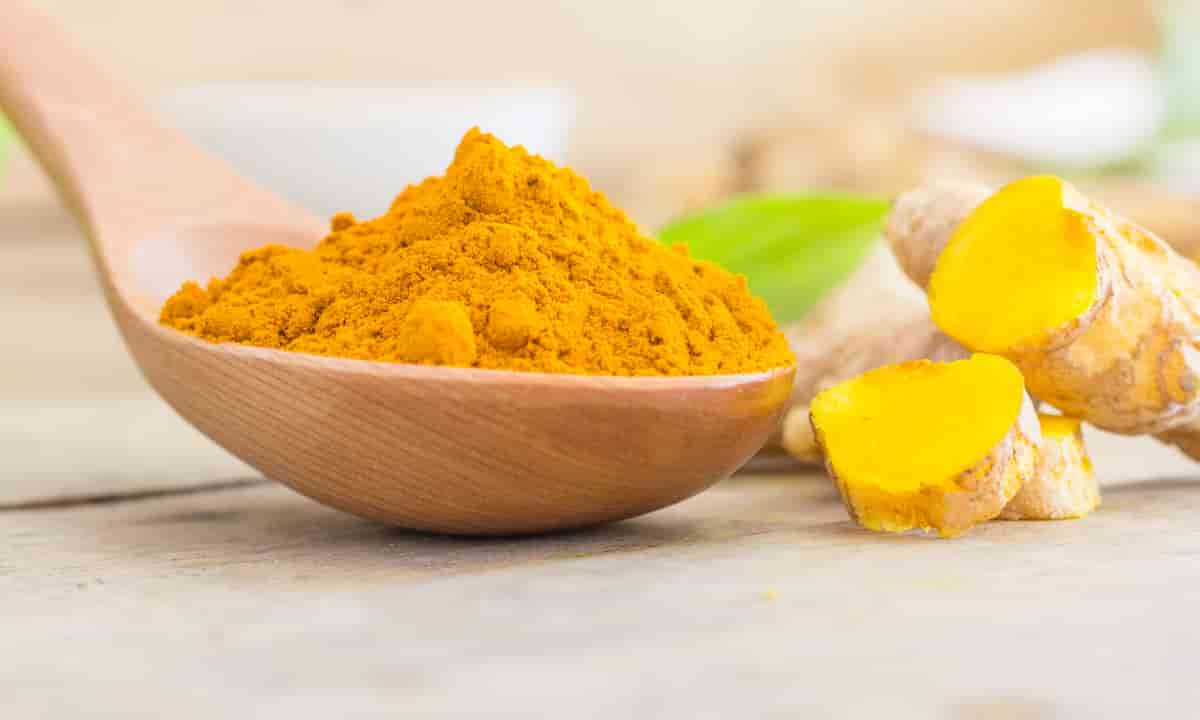
Turmeric is one of the spices and supplements you hear most often for menopause symptoms. Many women use it for hot flashes, joint pain, or weight.
It isn’t new. Turmeric has been used for thousands of years in Ayurveda, a traditional healing system from India, and it’s popular today in functional nutrition.
You can take turmeric as a supplement or use it as a spice in your food. Most studies have used supplements because they provide a concentrated dose. As a dietitian, I look at food first and supplements second. I’m always looking for ways to change your eating habits to support your well-being and make the transition through menopause easier.
What is Turmeric?
Turmeric comes from the root of a plant in the ginger family. It has a warm, slightly earthy flavor and a bright yellow-orange color. Its main active compound is curcumin, which is what most studies look at.
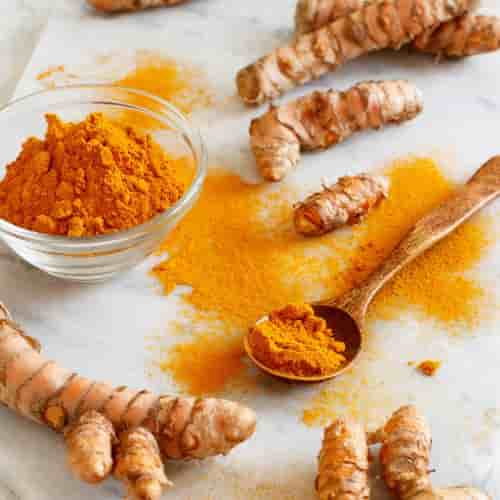
The turmeric you sprinkle on your food has much less curcumin than a supplement, and your body doesn’t absorb curcumin very well on its own. So you may not see the same benefits from food that the studies show. But turmeric adds flavor, it’s part of a healthy, anti-inflammatory way of eating, and it’s worth trying.
Turmeric for Menopause: What the Research Says
What we know: curcumin helps calm inflammation in the body, and a few small studies in women look promising.
What we don’t know: we don’t have strong evidence yet that turmeric treats menopause symptoms, and the studies that exist are small. This isn’t mainstream treatment. So don’t expect to add turmeric to your food and have zero hot flashes. Think of it as one small piece of a healthy lifestyle.
Hot Flashes
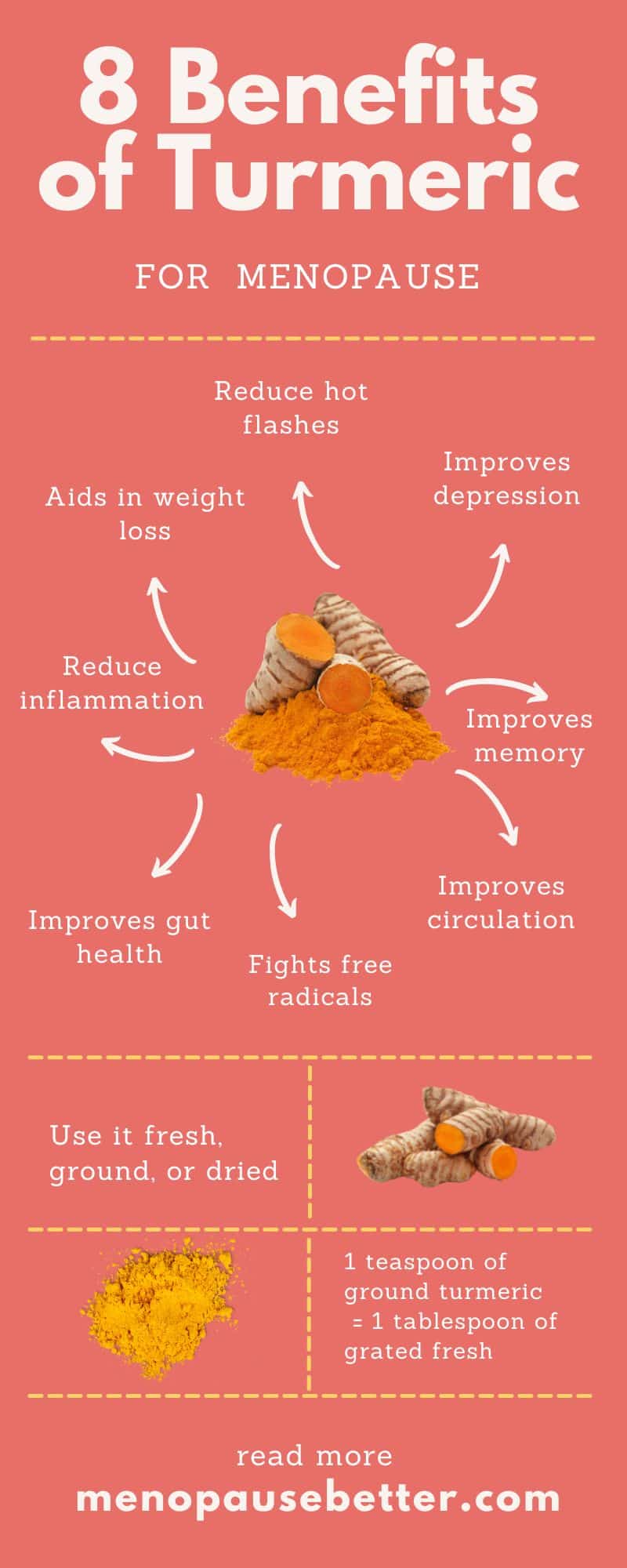
In one small study, 93 postmenopausal women took curcumin capsules twice a day for eight weeks. They had fewer hot flashes than women who took a placebo (a fake pill).
Weight Loss

Weight gain is one of the most common frustrations in menopause. In a large review of 103 studies, curcumin supplements were linked to small drops in weight and waist size, along with better blood sugar. These were supplements, not food, and the effects were modest.
Inflammation
Menopause tends to increase inflammation in the body. This is where turmeric shines. Curcumin helps calm inflammation, and in studies, curcumin supplements lowered CRP, a common blood marker of inflammation. Adding turmeric to your meals, as part of an anti-inflammatory diet, is one easy way to support your body.
Brain Fog

Many women notice brain fog in menopause. In one trial, curcumin supplements improved memory in adults without dementia. For more on eating for your brain, see my post on the MIND diet.
Easy Ways to Add Turmeric to Your Diet
Every little bit of work you put into your lifestyle adds up. Turmeric is an easy, tasty place to start, and you can find it in almost any grocery store. If you’ve ever had Indian, Persian, or Indonesian food, you’ve likely tried it.
Fresh, Dried, or Ground
You can buy turmeric fresh, as whole dried pieces, or ground. Fresh turmeric root looks a bit like ginger and has a bolder flavor. Ground turmeric is the easiest to find.
1 teaspoon of ground turmeric = 1 tablespoon of grated fresh turmeric
Add Black Pepper
Black pepper helps your body absorb curcumin. In one study, taking them together raised curcumin levels in the blood many times over. A pinch of pepper with your turmeric is all you need in
Ideas for Using Turmeric in Food
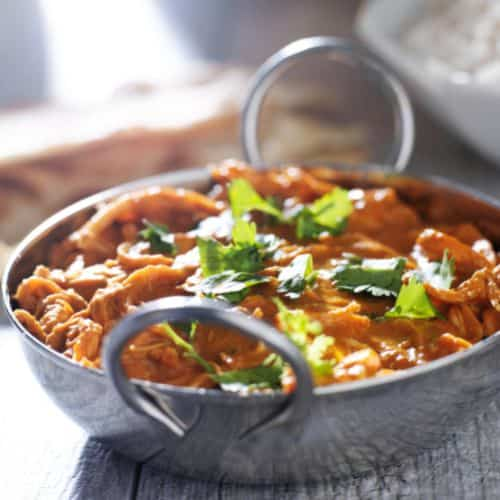
- In curries: if you’re new to the flavor, start with curry powder, which blends turmeric with other spices. Add it to stir-fries, chicken, and stews.
- On vegetables: sprinkle a teaspoon or two on cauliflower, sweet potatoes, or onions before roasting.
- In drinks: try turmeric tea, golden milk, or my ginger turmeric lemonade.
- In dressings: use it in homemade vinaigrettes.
- As a snack: roast chickpeas with curry powder, or turmeric, cumin, and chili flakes.
- In smoothies, soups, and scrambled eggs: a teaspoon goes a long way.
Recipes
For more foods that help calm inflammation, see my anti-inflammatory diet for menopause.
Is Turmeric Safe?
Turmeric in food is safe for most people. The concerns are mostly with supplements, which come in high, concentrated amounts.
Talk to your doctor or pharmacist before taking turmeric or curcumin supplements, especially if you:
- Take a blood thinner, like warfarin (Coumadin), or another medicine that affects bleeding. Turmeric can interact with some medicines and may add to the blood-thinning effect.
- Take tacrolimus (Prograf), a medicine used after an organ transplant. Turmeric can raise tacrolimus levels in the blood.
- Take medicine for diabetes. Curcumin can lower blood sugar, so the two together may drop it too low.
- Have liver problems. Some people have had liver damage from turmeric supplements. It’s one of the herbal supplements most often linked to liver problems.
- Have gallbladder problems or are having surgery soon.
Supplements with added black pepper extract absorb more curcumin, which also means more of it reaches your body. Always double-check that there’s no interaction between your medications and any supplement you take. Supplements aren’t tested the way medicines are, so choose brands with third-party testing.
The Bottom Line
Turmeric has been used for thousands of years, and it’s delicious. The studies on menopause are small, and most use concentrated curcumin supplements, so you may not see the same benefits from food. But as a dietitian, I promote foods first.
If you’re thinking about a supplement, talk with your doctor or pharmacist first to make sure it’s safe with your medications.

Dr. Su-Nui Escobar, DCN, RDN, FAND, is a Miami-based weight loss dietitian specializing in women in menopause who use GLP-1 medications. She holds a doctorate in clinical nutrition from the University of North Florida and is a national speaker, writer, and author of The GLP-1 Kitchen. She is a former spokesperson for the Academy of Nutrition and Dietetics.
2 thoughts on “Turmeric for Menopause: Benefits, Recipes, and How to Add It to Meals”
Hello! Great information. Very informative & helpful. Thanks for this!
My pleasure!